


Finding the Best Magnesium Supplement for Migraines
If you’ve ever found yourself deep in a search for migraine relief, you’ve probably come across magnesium. It’s not just another supplement fad; for many people, this essential mineral has become a genuine game-changer in managing head pain. But with so many different types on the shelf, how do you know which is the best magnesium supplement for you?
This guide cuts through the confusion. We'll explore why magnesium is so critical for migraine sufferers and help you figure out which form—like the highly-regarded magnesium glycinate or magnesium L-threonate—is right for your specific needs.
Your Guide to Choosing the Best Magnesium for Migraines

Think of magnesium as your nervous system’s peacekeeper. When levels are low, it’s like leaving the gate open for migraine triggers. Your brain’s delicate balance gets thrown off, making you far more vulnerable to the chain reaction that leads to a debilitating attack.
It's no surprise that research increasingly shows a strong link between magnesium deficiency and more frequent migraines. This puts the mineral front and centre as a foundational tool for proactive headache care.
Why Magnesium is a Focus for Migraine Sufferers
The excitement around magnesium isn't just based on stories; it’s grounded in science. This mineral is a workhorse, involved in over 300 different biochemical processes in your body. Many of these are directly responsible for keeping your brain's signals firing correctly and maintaining a sense of calm.
This growing understanding has fuelled a huge demand for mineral supplements here in Australia. In 2023 alone, the Australian market brought in USD 462.3 million, and it's expected to hit USD 654.8 million by 2030. It’s clear people are looking for effective, natural options.
Our goal is to demystify the different forms of magnesium so you can see that the "best" one is simply the one that works best for your body.
Magnesium acts as your brain's natural calming agent. By ensuring your levels are optimal, you're essentially reinforcing your body's defence system against the neurological overexcitement that can trigger a migraine.
Making an Informed Choice
We'll break down the most common types you’ll see on the shelf—glycinate, citrate, and oxide—and explain what makes each one different. Whether you need something with high absorption, a formula that’s gentle on the stomach, or a little extra help with sleep, we’ll help you match the right supplement to your personal needs.
Finding the right magnesium is a powerful step in building your complete toolkit for managing head pain. To get a bigger picture, you can also read our detailed guide on how to prevent migraines using other effective strategies. Ultimately, understanding your options is the first step toward regaining control and finding lasting relief.
How Magnesium Works to Prevent Migraine Attacks
To get why magnesium is such a game-changer for many migraine sufferers, it helps to see it as your brain's personal peacekeeper. When a migraine is on the horizon, your brain is essentially on high alert—a state of hyperexcitability. Magnesium is the mineral that steps in to gently dial down that neurological chaos before it spirals into a full-blown attack.
This humble mineral is a powerhouse, involved in over 300 different processes in your body. A huge number of these are directly tied to keeping your nervous system calm, cool, and collected. For anyone prone to migraines, this balancing act is absolutely critical.
The Brain's Gatekeeper for Pain Signals
One of magnesium’s most important jobs is to manage your neurotransmitters—the chemical messengers that your brain cells use to talk to each other. It acts like a gatekeeper for a very specific receptor called the NMDA receptor. When you're stressed or a migraine trigger hits, this gate can be flung open, letting in a flood of "excitatory" signals that ramp up pain.
Magnesium basically parks itself in this gateway, physically blocking those over-the-top signals. In doing so, it stops the chain reaction that would otherwise lead to the intense, throbbing pain of a migraine. It helps stop your brain from hitting that overstimulation tipping point.
On top of that, magnesium also helps regulate serotonin, another major player in mood and pain perception. Keeping serotonin levels stable is a well-known strategy for migraine prevention, and magnesium helps these crucial messengers do their job properly.
Think of magnesium as a bouncer at the door of your brain's nerve cells. It stops the rowdy, excitatory signals from crashing the party and causing the chaos that leads to a migraine.
Calming the Electrical Storm in Your Brain
Ever experienced a migraine with aura? Those flashing lights, zig-zag lines, or blind spots? Magnesium offers another layer of defence here. These auras are often caused by a slow-moving wave of intense brain activity known as cortical spreading depression (CSD).
This wave temporarily scrambles normal brain function, creating the strange visual and sensory symptoms that often precede the headache itself. Research strongly suggests that low magnesium levels in the brain make it far easier for a CSD wave to kick off and spread.
By keeping your magnesium levels topped up, you effectively raise the bar for what it takes to trigger this electrical disturbance. You're reinforcing your brain's natural defences, making it more resilient against that initial spark of a migraine aura. It's a key reason why the best magnesium supplement is often used as a preventative tool.
Relaxing Tense Blood Vessels
Another piece of the puzzle is magnesium’s effect on blood vessels. During a migraine, the blood vessels in your head can constrict (tighten) and then rapidly dilate (expand), a process that contributes significantly to that awful pulsating pain.
Magnesium is a natural calcium channel blocker. This simply means it helps relax the smooth muscles lining your blood vessel walls, preventing them from spasming and constricting so aggressively. By promoting more stable blood flow, it not only helps prevent an attack from starting but can also lessen the severity if one does get through.
Seeing how this one mineral works on so many fronts is key to understanding its profound impact on neurological health. To go even deeper into the "why," check out our article on the science of migraine relief and learn about other natural ways to manage pain. By stabilising neurotransmitters, preventing CSD, and relaxing blood vessels, magnesium offers a powerful, multi-pronged defence against migraines.
Comparing the Most Effective Forms of Magnesium
Walking down the supplement aisle can be overwhelming. The labels for magnesium all seem to blur together, but don't be fooled—the type of magnesium you choose makes a huge difference in how well it works for your migraines.
The secret lies in a concept called bioavailability. It’s just a fancy word for how much of the magnesium your body can actually absorb and use.
Think of it like watering a potted plant. If you dump a whole bucket of water on bone-dry, compacted soil, most of it will just run off the sides. Very little actually gets to the roots. Some forms of magnesium are like that—your body just can’t absorb them well. The best forms, however, are like a slow, gentle watering that soaks deep into the soil, nourishing the plant exactly where it needs it.
That's why it's so important to understand the difference between magnesium glycinate, citrate, oxide, and L-threonate. Each one is attached to another molecule, which changes everything: how it’s absorbed, where it goes in your body, and even what side effects you might experience. Let’s break down the best options for migraine sufferers.
H3: Which Type of Magnesium Is Right for Your Migraines?
To simplify your choice, I've put together a quick comparison of the most common forms you'll encounter. Each has its own strengths and is suited to different needs.
| Magnesium Form | Bioavailability (Absorption) | Primary Benefit for Migraines | Potential Side Effects | Best For |
|---|---|---|---|---|
| Magnesium Glycinate | Very High | Excellent absorption with calming effects; ideal for reducing neural excitability and promoting sleep. | Minimal; very gentle on the stomach. | Sensitive stomachs, stress-related migraines, and improving sleep quality. |
| Magnesium Citrate | High | Well-absorbed for raising overall magnesium levels effectively. | Can cause loose stools or diarrhoea in higher doses. | General migraine prevention, especially for those who also experience constipation. |
| Magnesium L-Threonate | High (crosses blood-brain barrier) | Specifically targets the brain, potentially boosting cognitive function and calming nerve signals. | Generally well-tolerated. | Individuals focused on cognitive support alongside migraine prevention. |
| Magnesium Oxide | Very Low | Primarily acts as a laxative; not effective for raising systemic magnesium levels. | High likelihood of digestive upset and diarrhoea. | Treating constipation, not recommended for migraine prevention. |
Ultimately, picking the right magnesium is the first critical step. You want a form your body can actually put to work, delivering those calming, preventative benefits directly to your brain and nervous system.
Magnesium Glycinate: The Gentle Powerhouse
Magnesium glycinate is often the first one experts recommend for migraines, and for good reason. It’s "chelated," which means the magnesium is bound to an amino acid called glycine. This special bond makes it incredibly easy for your body to absorb and, crucially, it’s known for being very gentle on the stomach.
Glycine itself is a calming neurotransmitter, giving you a brilliant two-for-one benefit. You get the magnesium working to calm overexcited brain cells, plus you get the relaxing effect of glycine, which can help with both sleep and stress—two of the biggest migraine triggers out there.
Its effectiveness and gentle nature have made it a standout. In fact, a recent look at the Australian Register of Therapeutic Goods (ARTG) found 121 listed complementary medicines containing magnesium glycinate. That number is only expected to grow as more people discover its benefits. You can read more about the trends in magnesium supplements in Australia.
This visual helps show where magnesium fits into your response when a migraine trigger strikes.
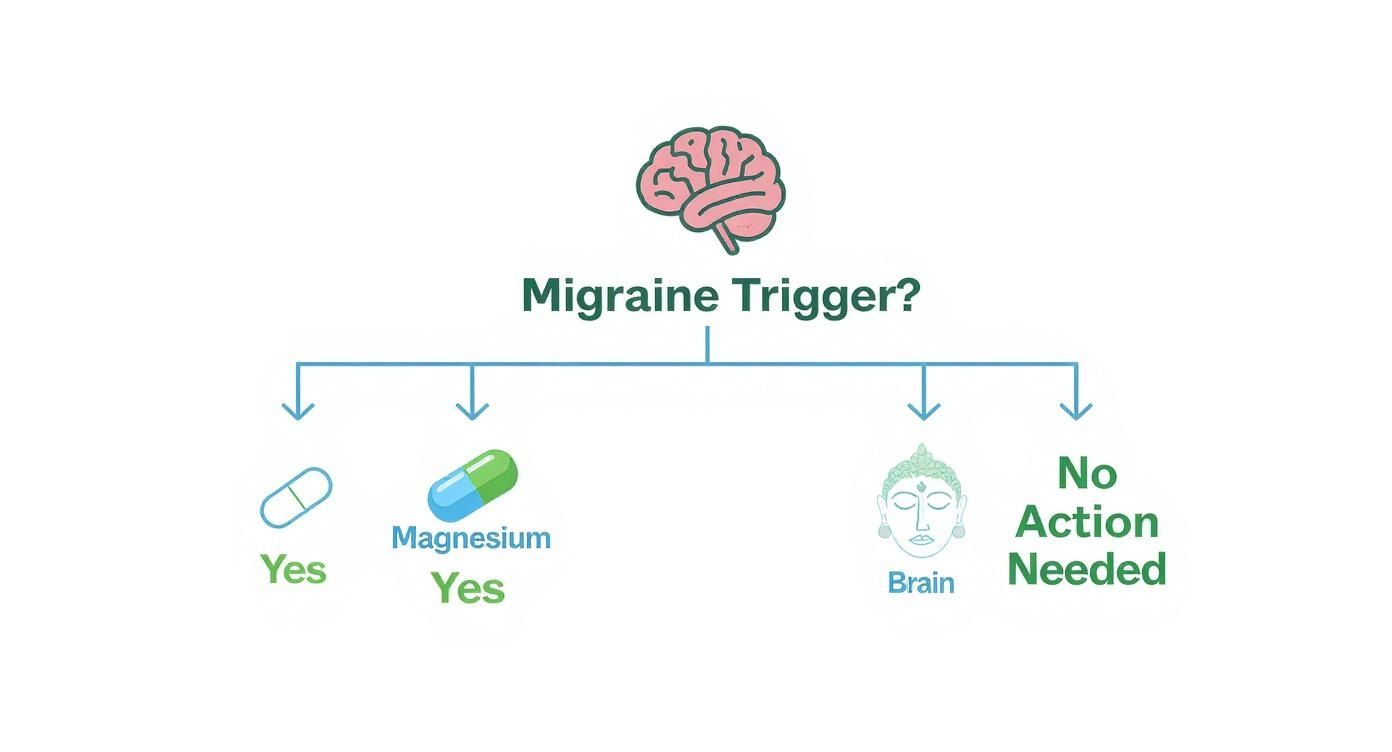
As you can see, reaching for magnesium is a direct path to calming your brain and heading off an attack.
Magnesium Citrate: The Absorption Star
Magnesium citrate is another fantastic, highly bioavailable option. Here, the magnesium is bound to citric acid. This form is absorbed very well, making it a great all-rounder for raising your overall magnesium levels to help prevent migraines.
It does come with a well-known side effect, though: it has a mild laxative effect. For some people, particularly those who struggle with constipation, this is a welcome bonus. For others, it’s a drawback. If you have a sensitive gut, it's best to start with a very low dose to see how you go.
Magnesium L-Threonate: The Brain Booster
This one is a bit of a newcomer, but it’s making waves. Magnesium L-threonate has a unique and very impressive skill: it can cross the blood-brain barrier. Think of this barrier as a super-strict bouncer for your brain—it lets very few things pass.
Because L-threonate gets a VIP pass, it's thought to be especially good at increasing magnesium levels right inside the brain. This makes it a really exciting option for anyone looking to support cognitive health and calm the neurological storm that can lead to a migraine attack.
Magnesium Oxide: The Common But Less Effective Choice
You'll see magnesium oxide everywhere. It’s cheap and common, but there’s a massive catch—it has terrible bioavailability. Your body can only absorb about 4% of it.
Because so little gets absorbed, most of it stays in your gut, where it pulls water into your intestines. This makes it a pretty effective laxative, but it does next to nothing for raising the magnesium levels in your cells and brain. For migraine prevention, it’s simply not the right tool for the job. You'll get far more bang for your buck with glycinate, citrate, or L-threonate.
How to Use Magnesium Safely and Effectively
https://www.youtube.com/embed/7lSQ2hnycLg
Choosing the right type of magnesium is a great start, but how you take it is what really unlocks its potential for migraine relief. It’s not just about popping a pill; timing, dosage, and safety all play a huge role in getting the results you want without the side effects you don't.
Think of it like tending a garden. You’ve picked the perfect seeds (the right magnesium form), but now you need to give them the right amount of water at the right time. This section is your guide to getting that balance just right.
Finding Your Ideal Dosage
For migraine prevention, you need a therapeutic dose. The clinical evidence consistently points to a target of 400–600 mg of elemental magnesium each day. It’s absolutely vital to check your supplement’s label for the "elemental" amount—this is the pure magnesium you’re actually getting, not the total weight of the compound.
The golden rule here is to start low and go slow. Begin with a smaller dose, maybe 200 mg per day, and gradually work your way up over a couple of weeks. This gives your digestive system time to adjust and dramatically cuts down the risk of side effects like diarrhoea, which can be an issue with forms like magnesium citrate.
Consistency is everything. Taking magnesium daily is a long-term strategy to build up your brain’s defences against migraines. It’s not an on-the-spot painkiller but a way to reduce the frequency and severity of future attacks.
Remember to be patient. While some people notice a difference sooner, it can often take up to three or four months of consistent daily use to see a real shift in your migraine patterns.
Timing Is Everything for Maximum Benefit
When you take your magnesium can make a surprising difference, both in how well it works and how well your body tolerates it. The goal is simple: get the most out of it with the least amount of hassle.
Here are a few tips that work for most people:
- Take It with Food: Always take your magnesium with a meal or a decent snack. Food acts as a buffer, making it much gentler on your stomach and helping to head off any digestive upset.
- Consider Evening Dosing: If you're using a calming form like magnesium glycinate, taking it an hour or two before bed can be a brilliant move. It supports relaxation and better sleep—which is a huge win, as poor sleep is a notorious migraine trigger.
- Split Your Dose: For anyone with a sensitive stomach, splitting your dose is a game-changer. Simply take half in the morning and the other half in the evening. This makes it much easier for your body to absorb and process.
Navigating Potential Side Effects and Interactions
Magnesium is generally very safe, but it's still smart to know how it might affect you and any other medications you’re on.
The most common side effect is digestive upset, particularly loose stools or diarrhoea. This is almost always related to the dose. If it happens, you can usually fix it by either lowering your dose slightly or switching to a more easily absorbed form like magnesium glycinate.
More importantly, magnesium can interact with certain medications. You need to be particularly careful if you take:
- Antibiotics: Specifically tetracyclines and quinolones. Magnesium can interfere with their absorption, making them less effective.
- Bisphosphonates: These are medications often used for osteoporosis.
- Blood Pressure Medications: Since magnesium can also lower blood pressure, the combined effect could make it drop too low.
- Diuretics: Some "water pills" can affect how much magnesium your body holds onto or gets rid of.
Because of these potential interactions, it's absolutely essential to talk to your doctor or pharmacist before adding a magnesium supplement to your routine. This is non-negotiable if you are pregnant, have a pre-existing health condition like kidney disease (as your kidneys filter out excess magnesium), or are taking any other medications. They can give you personalised advice to make sure you're using it both safely and effectively.
How to Read Supplement Labels in Australia

Stepping into the supplement aisle can feel a bit like trying to read a foreign language. With so many bottles making bold claims, it's easy to get overwhelmed. But learning how to decode an Australian supplement label is probably the most powerful skill you can have when choosing the best magnesium supplement for your migraine plan.
The good news is that Australia has some of the strongest regulations in the world. This means that with a little know-how, you can quickly become a confident and savvy consumer.
The Australian market for dietary supplements is absolutely booming, hitting a value of USD 3.59 billion in 2024 and projected to climb to USD 6.95 billion by 2033. This explosion shows just how many of us are turning to supplements for our health, making label literacy more critical than ever. You can read more about the trends driving the Australian supplements market if you're interested in the details.
The Most Important Number: Elemental Magnesium
When you look at a magnesium supplement, you’ll almost always see two numbers. For example, a label might say "Magnesium Glycinate 500mg" but then, in smaller print, list "Equivalent to Elemental Magnesium 50mg". That second number is the only one that truly matters.
Elemental magnesium is the actual amount of pure, usable magnesium your body gets. The first, bigger number is just the total weight of the entire compound—the magnesium plus the molecule it's bonded to (like glycinate or citrate).
For migraine prevention, your dosage goal of 400-600mg is all about the elemental amount.
Think of it like a cordial drink. The total weight is the cordial and water mixed together, but the elemental amount is just the concentrated cordial itself. You always need to base your dose on the elemental value to make sure you're getting the right therapeutic amount.
Understanding Australian Regulations
Here in Australia, supplements are regulated by the Therapeutic Goods Administration (TGA). This government body is our watchdog, ensuring that products sold are safe and of high quality. When you're shopping, keep an eye out for an "AUST L" or "AUST R" number on the label—it’s a crucial signpost.
- AUST L: This means the product is 'listed'. It has been assessed for safety and manufacturing quality, but the TGA hasn't individually verified its specific health claims. The vast majority of supplements fall into this category.
- AUST R: This indicates a 'registered' medicine. These products have been rigorously evaluated by the TGA for both safety and effectiveness.
This system gives us a baseline of trust that you just don't find in many other countries. It’s your assurance that what's on the label is actually in the bottle.
Your Checklist for a High-Quality Supplement
Use this simple checklist to cut through the noise and quickly evaluate any magnesium supplement on the shelf. It will help you spot the high-quality options and steer clear of those with unnecessary junk.
- Check for Elemental Magnesium: Is the elemental amount clearly listed? Does a single dose get you close to your needs, or will you have to take a handful of pills?
- Look for the TGA Number: Does the label have an AUST L or AUST R number? This is your non-negotiable mark of quality control.
- Review the 'Excipients' List: This section lists the inactive ingredients, often called 'fillers'. You want to see minimal, recognisable ingredients. Try to avoid products loaded with artificial colours, flavours, or unnecessary preservatives.
- Identify the Magnesium Form: Make sure the form (e.g., Glycinate, Citrate) lines up with your goals for absorption and digestive tolerance. As a rule of thumb, it's best to avoid Magnesium Oxide for migraine prevention.
A Holistic Approach to Migraine Management
While getting the right magnesium supplement on board is a huge step forward, it works best when it's part of a bigger picture. Think of magnesium as a key player on your team. It’s a star, for sure, but it can’t win the game alone. It needs a solid support crew.
Building a really strong defence against migraines means layering your magnesium supplementation with other smart, non-drug strategies. This creates a powerful combined effect where each piece of your plan makes the others work even better. When you add mindful lifestyle changes to your supplement routine, you build up your resilience and get back in the driver's seat of your own health.
Weaving a Wellness Safety Net
Your daily habits can have a massive impact on your neurological health. They can either supercharge the benefits of your magnesium supplement or cancel them out. Creating consistency in a few key areas helps stabilise your whole system, making it far less vulnerable to the triggers that can set off a migraine attack.
Think about these as the core pillars of your wellness plan:
- Prioritise Consistent Sleep: Try to stick to a regular sleep-wake cycle, even on weekends. This is one of the most powerful things you can do to regulate your body’s internal clock and key hormones, which are both closely tied to migraine patterns.
- Manage Stress Proactively: When you’re constantly stressed, your nervous system is stuck in high-alert mode. Bringing in practices like mindfulness, gentle exercise, or simple deep breathing techniques can help dial down that tension, giving your magnesium the space it needs to work properly.
- Identify Dietary Triggers: It might sound tedious, but keeping a basic food and migraine diary for a few weeks can reveal surprising patterns. Common culprits like aged cheeses, processed meats, and artificial sweeteners might be undermining all your good work.
By looking after these lifestyle factors, you’re not just trying to stop migraines; you’re creating an environment where magnesium can do its best job. It's all about lowering the total load on your nervous system so it's less likely to hit that tipping point.
Expanding Your Natural Toolkit
Pairing magnesium with other proven natural therapies can offer more complete relief. For example, many people find that combining their daily supplement routine with the immediate, soothing effects of cold therapy gives them both long-term prevention and in-the-moment comfort.
When a headache does break through, something like a Headache Cap can deliver targeted cold compression right where you need it, helping to reduce inflammation and dull the pain signals. It’s a fantastic one-two punch.
This combination lets you manage the acute symptoms as they happen, while your daily magnesium is working quietly in the background to lower the frequency and severity of future attacks. For anyone looking to build out their drug-free toolkit, it pays to explore a few different options. You can find more ideas in our guide on 10 natural remedies for migraines.
Ultimately, taking this kind of well-rounded approach shifts your migraine management from a reactive scramble for pills into a proactive strategy for long-term wellbeing.
Common Questions About Magnesium for Migraines
Starting any new supplement, even with a solid plan, naturally brings up a few questions. Let's run through some of the most common things people ask when they begin using magnesium as part of their migraine toolkit. My goal is to clear up these practical points so you can feel confident you're on the right track.
How Long Until Magnesium Starts Helping My Migraines?
This is a big one, and the key here is patience. Magnesium isn't like an acute painkiller that works in thirty minutes; it’s a long-term preventative. Think of it less like putting out a fire and more like reinforcing the walls of your house so it’s better protected against future storms.
While some lucky people notice improvements within a few weeks, the clinical evidence points to a longer game. You'll likely need to take it consistently for 3-4 months to really gauge its effect on your migraine frequency and severity. Keeping a simple migraine diary during this time is a fantastic way to track your progress objectively.
Can I Just Get Enough Magnesium From My Diet?
A healthy, magnesium-rich diet is a fantastic foundation for everything, and you should absolutely focus on it. Foods like spinach, almonds, pumpkin seeds, avocado, and even a little dark chocolate are all great sources.
But here's the reality: hitting the therapeutic doses of 400-600 mg per day recommended for migraine prevention through food alone is a huge challenge. It’s not impossible, but it’s very difficult for most of us. That’s where a supplement comes in—it’s simply a reliable and practical way to bridge that gap.
A diet full of magnesium-rich foods is non-negotiable for good health. But for migraine prevention, a supplement is often the only realistic way to get the consistent, high dose needed to make a difference.
What Are the Signs of Magnesium Deficiency?
Low magnesium levels can be sneaky, often showing up as symptoms you might brush off as just stress or fatigue. That annoying eye twitch? Muscle cramps that won't quit? Feeling unusually irritable, anxious, or just plain tired all the time? These can all be tell-tale signs.
Because magnesium is so central to how our nerves and muscles work, a shortfall can cause these kinds of disruptions. If any of this sounds familiar, it's a good idea to chat with your doctor. They can help figure out if magnesium is the culprit, as these symptoms can sometimes overlap with other health issues.
When Is the Best Time of Day to Take It?
The best time really depends on the type of magnesium you’re taking and how your stomach handles it. One universal tip is to always take it with food—this helps boost absorption and significantly reduces the chance of any digestive upset.
If you're using a form known for its calming effects, like magnesium glycinate, taking it in the evening can be a brilliant move. It can help you unwind and may even promote a more restful night's sleep. For anyone with a sensitive stomach, splitting the dose between morning and night is another great strategy to improve tolerance.
By adding a quality magnesium supplement into your broader wellness plan, you’re taking a powerful, proactive step in managing your migraines. To add another layer of drug-free support for when an attack does strike, see what the soothing power of the Headache Cap can do for you. Check out our range of targeted hot and cold therapy caps at https://headachecap.com.au.


