


How to get rid of hangover headache: Fast relief that works
When you wake up with that dreaded, throbbing headache, you need a game plan. The key to getting rid of a hangover headache fast is a three-pronged attack: aggressively rehydrate with water and electrolytes, stabilise your blood sugar with some simple carbs, and retreat to a quiet, dark space to let your body recover. This approach directly tackles the root causes of the pain and can seriously speed up your relief.
Your First Hour Action Plan for Hangover Headaches
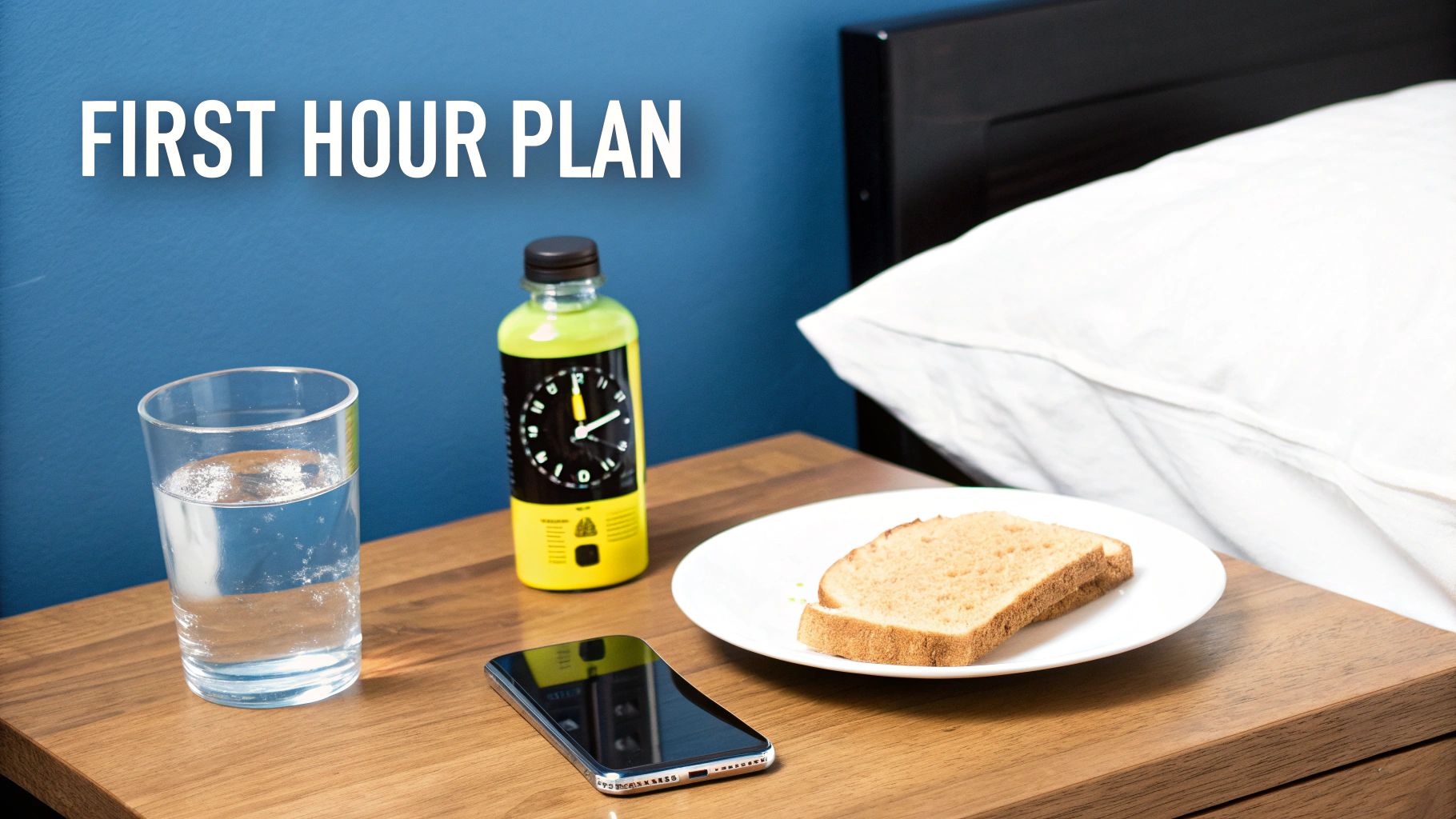
Waking up with a pounding head is your body’s not-so-subtle way of telling you it's in distress. Instead of fumbling through the morning and trying random "cures," follow this straightforward plan for your first 60 minutes. We're not aiming for a magical fix, but we are giving your body exactly what it's crying out for to kickstart the recovery process. Forget the old myths about a greasy fry-up or "hair of the dog"—this is all about practical, immediate relief.
To make it even clearer, here’s a quick-glance table of what to do the moment you wake up.
Immediate Hangover Headache Relief Plan
| Action Item | Why It Works | Practical Tip |
|---|---|---|
| Drink Water Immediately | Reverses the dehydration caused by alcohol, which is a primary source of headache pain. | Keep a full glass of water on your bedside table before you go to sleep. Drink it all as soon as you open your eyes. |
| Eat Simple Carbs | Alcohol tanks your blood sugar, and restoring it helps combat fatigue, weakness, and the headache itself. | A piece of toast, a banana, or a small glass of orange juice are all easy on a sensitive stomach and work quickly. |
| Rest in a Dark Room | Hangovers heighten sensitivity to light and sound. Reducing stimulation gives your brain a chance to calm down. | Close the blinds, dim your phone screen, and put your notifications on silent. Give your senses a break. |
Following these three simple steps can make a massive difference in how quickly you start to feel human again.
Focus on Rehydration First
Your absolute first move, before anything else, is to drink a large glass of water. Seriously. Before coffee, before food, before checking your phone—rehydrate. Alcohol is a diuretic, which is a fancy way of saying it makes you pee a lot, leading to significant fluid loss. This dehydration is a major culprit behind that throbbing in your head.
Here in Australia, alcohol-related headaches are one of the most common hangover symptoms. The diuretic effect of alcohol is actually responsible for up to 80% of hangover symptoms, including that nasty headache. Studies have shown that drinking 1.5 litres of water or an electrolyte drink in the first couple of hours after waking can slash headache severity by up to 60% within four hours.
Stabilise Your Blood Sugar
Once you've had some water, your next priority is to get some simple carbohydrates into your system. Drinking alcohol can make your blood sugar levels plummet, which contributes to those feelings of weakness, fatigue, and an even more intense headache.
You don't need a huge, greasy meal—in fact, that can often make a queasy stomach feel much worse. Instead, go for something light and easy to digest:
- A slice of plain toast or a few crackers
- A banana, which has the added bonus of replenishing lost potassium
- A small glass of fruit juice for a quick sugar hit
This simple step gives your brain and body the fuel they need to start functioning properly again. Think of it as a gentle nudge to get your system back on track.
Create a Recovery Environment
The final piece of your first-hour puzzle is to control your surroundings. Hangover headaches almost always come with a side of sensitivity to light and sound. So, turn down the lights, pull the blinds shut, and silence your phone.
Creating a dark, quiet space isn't just about being comfortable; it actively helps your overstimulated brain to calm down and recover. Think of it as giving your nervous system a much-needed break from the sensory overload that's making the pain worse.
For some targeted relief, a cold compress can work wonders on a throbbing head. You can read more about how a cold compress for a headache works, but the short story is that it helps constrict blood vessels and reduce inflammation. And if the headache is particularly severe or you're concerned about your symptoms, getting a quick professional opinion from a 24/7 telehealth doctor can provide peace of mind and expert guidance without you having to leave your recovery den.
Smart Hydration and Nutrition for Fast Relief
When you wake up with that tell-tale pounding in your head, your first instinct is probably to grab the biggest glass of water you can find. And while that’s a good start, getting rid of a hangover headache for good involves more than just guzzling H2O.
Alcohol is a diuretic, which means it makes you pee a lot more than usual. This process doesn't just strip away water; it flushes out vital electrolytes your body needs for everything from nerve function to maintaining fluid balance. That’s why simply drinking litres of plain water often feels like it's not quite hitting the spot.
What's actually happening in your head? The dehydration caused by alcohol can literally shrink the tissues in your brain. This causes them to pull away from your skull, triggering those sharp, throbbing pain receptors. To fix this, you need to rehydrate intelligently, which means putting back the electrolytes you’ve lost.
Why Electrolytes Are Your Best Friend
Think of electrolytes—minerals like sodium, potassium, and magnesium—as the gatekeepers for your cells. They're essential for helping your body actually absorb and hold onto the water you're drinking.
Without enough electrolytes, that water you’re chugging can pass right through your system without properly rehydrating your cells. Adding electrolytes back into the mix helps your body rebalance its fluids far more effectively, tackling the root cause of your headache.
- Sports Drinks: They’re an easy grab-and-go option, but check the label. Many are loaded with sugar, which can lead to an energy crash later on.
- Coconut Water: This is a great natural alternative, packed with potassium and other essential electrolytes.
- Electrolyte Powders: Just mix a sachet into your water for a concentrated, low-sugar dose of everything you need to get back on your feet.
If you want to get serious about your rehydration strategy, this Electrolyte Powder Comparison Guide for Hydration is a fantastic resource for comparing different options.
Choosing Foods That Heal, Not Harm
What you eat is just as critical as what you drink. Forget the old myth about a greasy fry-up soaking up the alcohol—that's just not how it works. A heavy, fatty meal is the last thing your sensitive stomach needs, and it forces your body to spend precious energy on digestion instead of recovery.
Your focus should be on gentle, nutrient-rich foods that your body can easily process.
The goal isn't to shock your system with a massive meal. It's about giving your body easily digestible fuel to replenish lost nutrients and help your liver process the remaining toxins.
The right foods can make a world of difference. Some contain specific amino acids that help break down acetaldehyde, the nasty toxic compound that's a major culprit behind your hangover symptoms. Others work to restore the vitamins and minerals that a night of drinking has depleted.
Your Hangover Recovery Menu
Aim for a combination of simple carbohydrates for a quick energy boost, lean protein for repair, and nutrients that specifically combat alcohol's effects.
- Bananas: They're gentle on the stomach and absolutely loaded with potassium, one of the main electrolytes you lose when you drink.
- Eggs: A true hangover superfood. Eggs are a brilliant source of cysteine, an amino acid that helps your body metabolise the headache-causing toxins from alcohol.
- Toast or Crackers: Simple carbs are your friend. They’ll help bring your blood sugar back up to a normal level without overwhelming your digestive system.
- Chicken Noodle Soup: It's not just for colds! The warm broth rehydrates and replenishes sodium, while the chicken provides that all-important cysteine.
- Salmon: Packed with B vitamins and powerful antioxidants, salmon can help fight the inflammation that's contributing to your pain.
By combining smart hydration with the right kinds of food, you’re giving your body the exact tools it needs to bounce back and finally kick that headache to the curb.
Choosing the Right Pain Relief Safely
When your head is absolutely pounding, it’s tempting to grab the first painkiller you see. But hold on a moment. What you choose actually matters, especially when your body is already in overdrive processing last night's drinks.
Your liver, in particular, has been working a marathon shift. The last thing you want to do is add unnecessary strain. Choosing the right medication is about giving your body a helping hand, not another problem to solve.
Understanding Your Options: Ibuprofen vs Paracetamol
Most of us have two go-to options in the medicine cabinet: ibuprofen and paracetamol. They both tackle pain, but they go about it in completely different ways.
Ibuprofen is a nonsteroidal anti-inflammatory drug (NSAID), which means it targets the inflammation that’s often a major culprit behind that throbbing headache. Paracetamol works differently, focusing on blocking pain signals in the brain.
So, which one is better for a hangover?
- Ibuprofen (like Nurofen): This is often a pretty good bet because it gets right to the source by reducing inflammation. The only catch is that NSAIDs can be a bit harsh on the stomach lining, which isn't great if you’re already feeling nauseous. My advice? Never take it on an empty stomach.
- Paracetamol (like Panadol): While it's generally gentler on the stomach, paracetamol is processed by the liver. And since your liver is already tied up dealing with alcohol, adding paracetamol can put it under serious pressure. You have to be incredibly careful to follow the dosage instructions to the letter.
Before you even think about pills, have a look at this flowchart. It walks you through the first things you should be doing.
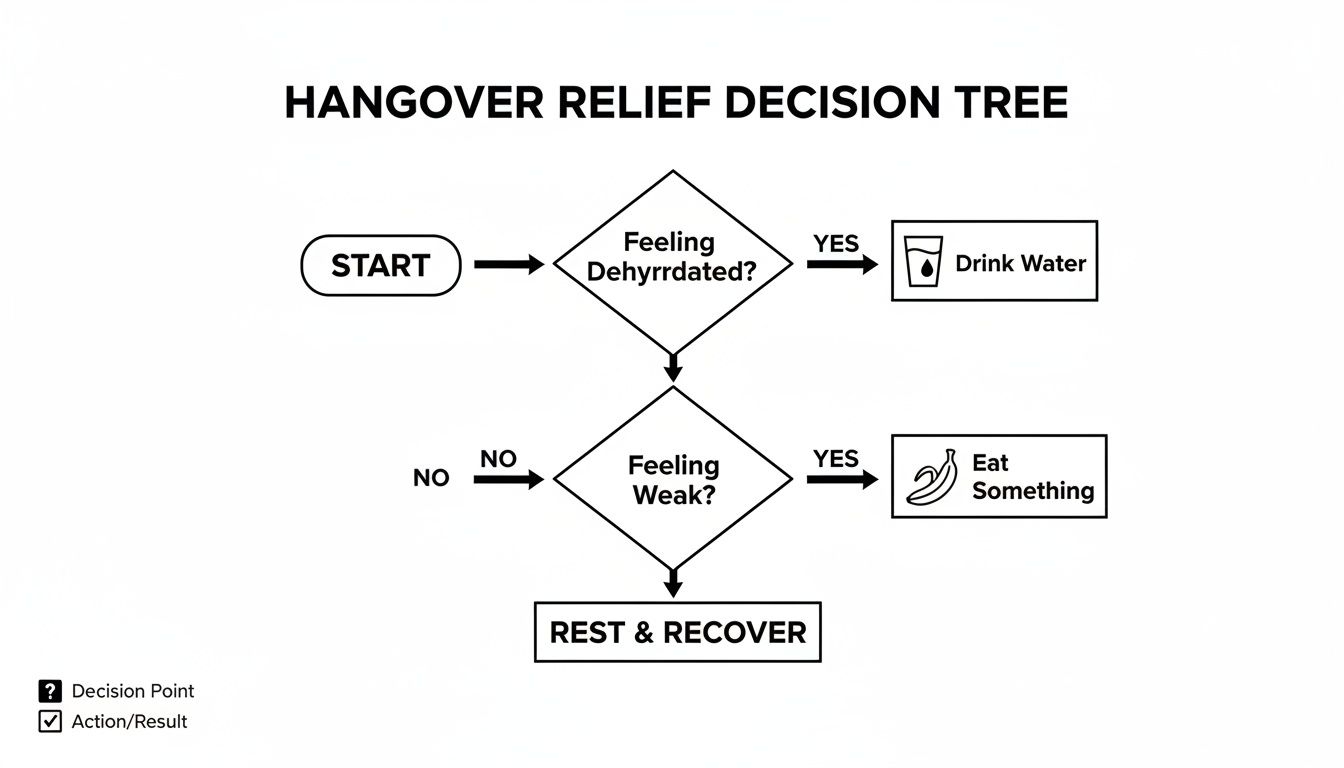
As you can see, tackling the root causes—dehydration and depleted energy—should always be your first move.
Making the Safest Choice for Your Body
So, what's the verdict? Many health experts lean towards an NSAID like ibuprofen as the slightly safer choice for your liver in this specific situation, as long as you take it with a bit of food.
But the real golden rule is this: never, ever take more than the recommended dose of any medication. And always give your body a chance to sort itself out naturally first.
Think of medication as your backup plan, not your frontline defence. Start with water, an electrolyte drink, and some simple food. If your head is still screaming after an hour or two, then you can consider a painkiller, following the directions precisely.
Getting your head around the differences between common painkillers is a good skill to have for any headache. If you want to get into the nitty-gritty, this detailed comparison of aspirin vs paracetamol is a great read. It'll help you make smarter choices, even on days when you're not feeling 100%.
The Underrated Power of Rest and Gentle Remedies
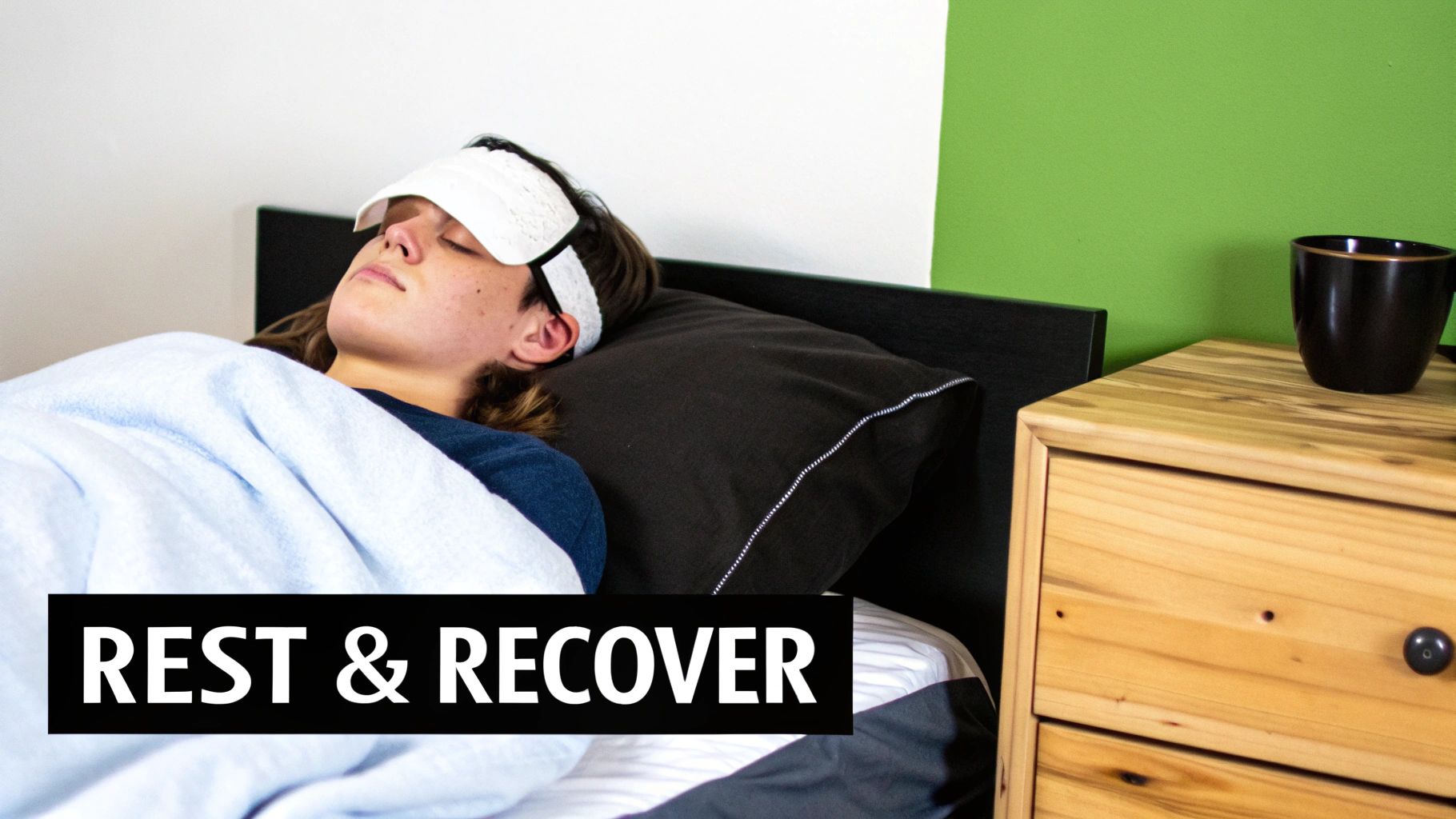
Sometimes the simplest solution is the best one. While you're busy chugging water and finding something to eat, don't overlook the most powerful tool in your recovery kit: quality rest. Your body does its best healing when it isn't being asked to do anything else.
That foggy, head-splitting feeling is your body's way of telling you it's been through the wringer. Alcohol absolutely wrecks your sleep quality, especially the REM (Rapid Eye Movement) cycle, which is crucial for feeling sharp and mentally balanced. So even if you were "asleep" for eight hours, it wasn't the restorative kind your brain and body desperately needed.
This is why "sleeping it off" is more than just an old wives' tale—it’s a biological necessity. Giving yourself a chance to get some proper, uninterrupted rest lets your system rebalance hormones, repair cellular damage, and finally tackle the inflammation causing that relentless pounding in your head.
Creating a Recovery Sanctuary
You don't need to write off the entire day. A solid 90-minute nap is often enough to get through a full sleep cycle, which can make a world of difference. The trick is to create an environment that actually promotes deep rest.
- Go Dark: Hangovers and light sensitivity go hand-in-hand. Blackout curtains or a good eye mask are non-negotiable. Blocking out light signals to your brain that it’s time to shut down.
- Embrace Quiet: Every little sound can feel like an ice pick to the brain. Silence your phone, kill the TV, and let your housemates know you need a bit of peace and quiet.
- Stay Cool: Research shows that a slightly cool room helps you fall asleep faster and stay asleep longer. Crack a window or dial down the thermostat a few degrees.
These small tweaks can turn your bedroom into a dedicated healing zone, giving your body the best possible chance to recover.
Gentle Remedies for Targeted Relief
While you’re resting, a few simple, non-medicinal remedies can directly target the pain. A cold compress on the forehead or the back of the neck is a classic for good reason. The cold helps constrict blood vessels and reduce inflammation, offering a soothing, numbing sensation that takes the edge off a throbbing headache.
For a less messy and more effective approach, a dedicated Headache Cap can be a game-changer. It provides 360-degree cold therapy, combining the benefits of a cold compress with gentle pressure and the ability to block out light. Think of it as a portable, cool, dark room just for your head.
With Australia’s per capita alcohol consumption hovering around 10.1 litres of pure alcohol, hangover headaches are a familiar problem for many. In fact, research from the Australian National University shows that getting 8+ hours of sleep after a night of drinking can cut the intensity of a headache by as much as 55%. Given that alcohol can disrupt REM sleep by up to 30%, that extra rest is vital for restoring serotonin levels and speeding up your recovery.
If you're curious, you can learn more about the global statistics on alcohol consumption to see how different countries compare. Ultimately, combining proper rest with these gentle remedies supports your body’s natural healing process, helping you kick that hangover to the curb without reaching for more medication.
Proactive Strategies to Prevent Future Hangovers
Let's be honest, the best way to deal with a brutal hangover headache is to sidestep it entirely. While "drink less" is obvious advice, there are genuinely practical things you can do to prepare your body and make smarter choices during the night.
It’s all about getting ahead of the game. Hydration, for instance, doesn't start with a panicked glass of water the morning after. It starts hours before your first drink. If you spend the day pre-hydrating, your body has a much better buffer against the dehydrating effects of alcohol later on.
Choose Your Drinks Wisely
Ever noticed how a night on red wine or whisky hits differently than one with vodka sodas? There’s a scientific reason for that, and it comes down to compounds called congeners.
These are byproducts of the fermentation and ageing process, and they’re notorious for making hangovers worse. As a rule of thumb, darker drinks are loaded with them.
- High-Congener Drinks: Think bourbon, dark rum, red wine, and whisky.
- Low-Congener Drinks: Vodka, gin, and white wine are much lower in congeners.
Switching to clearer spirits won't make you hangover-proof, but I’ve found it can genuinely dial down the intensity of that next-day headache. It’s a small change that makes a big difference.
The One-for-One Rule and Why Food Matters
Here’s a simple rule I swear by: the one-for-one rule. For every alcoholic drink, have a full glass of water. It’s an incredibly effective way to stay hydrated and, just as importantly, it naturally slows down your drinking pace.
Having a solid meal before you head out is also non-negotiable. Food in your stomach—especially something with fats, protein, and carbs—slows down how quickly your body absorbs alcohol. This helps prevent that rapid spike in blood alcohol that often leads to a world of pain the next day.
Combining these strategies is your best defence. For a deeper dive, our guide on how to prevent headaches naturally has even more tips. A little bit of planning means you can enjoy your night without dreading the morning.
Got Questions About Hangover Headaches? Let's Clear a Few Things Up
When your head feels like it's in a vice, you just want answers that work. Forget the myths and confusing advice; let's tackle the questions I hear all the time about getting rid of a hangover headache.
How Long Does a Hangover Headache Last?
Look, there's no single answer, but a typical hangover headache will stick around for a few hours, or in some truly regrettable cases, it can haunt you for a full 24 hours.
What makes the difference? It really comes down to a few things: how much you drank, how dehydrated you got, and how soon you start taking care of yourself. Most people find the pain is at its absolute worst in the morning and then slowly backs off as the day goes on—provided you're chugging water and getting some rest.
Does the "Hair of the Dog" Actually Work?
This is one of the most popular hangover myths out there, and I need to be blunt: it's a terrible idea.
Sure, having another drink might give you a fleeting moment of relief by temporarily boosting your endorphins, but you're just kicking the can down the road. All you're really doing is postponing the inevitable crash, making yourself even more dehydrated, and giving your liver another job to do. Trust me, it almost always leads to an even nastier headache later.
Drinking more alcohol to fix a hangover is like trying to put out a fire with petrol. It doesn’t address the root causes—dehydration and inflammation—and ultimately makes the problem worse. Stick to water and electrolytes.
Why Do Some People Seem to Get Worse Hangovers?
Ever wondered why your mate is bouncing around after a big night while you can barely function? It's not always about who drank more. A bunch of factors come into play, including genetics, body weight, and even your mood when you were drinking.
Some of us actually have a genetic quirk that makes us less efficient at breaking down acetaldehyde, which is the nasty, toxic compound alcohol turns into. On top of that, someone with a lower body weight will end up with a higher blood alcohol concentration from the exact same number of drinks.
Don't forget the other culprits, either. Poor sleep after a night out and not eating enough beforehand can make a massive difference in how you feel the next day. It’s never just one thing, but a perfect storm of all these elements that determines your fate.
For a hangover headache that just won’t quit, the Headache Cap offers targeted, drug-free relief. Its 360-degree cold therapy helps reduce inflammation and provides a soothing, dark environment to help you recover faster. Find your perfect fit and feel the difference at The Official Headache Cap Website.


