


Cold Compress for Headache A Simple How-To Guide
When your head is absolutely pounding, reaching for something cold just feels instinctively right. But have you ever stopped to wonder why that chilled gel pack or even a bag of frozen peas can feel like a miracle worker? It's not just a placebo effect; there’s some pretty straightforward science behind it.
The Science Behind Cold Compress Relief
At its core, a cold compress provides relief by constricting blood vessels, calming inflammation, and temporarily numbing the area. It’s a simple, drug-free approach that tackles the physical source of the pain, especially the throbbing kind common with migraines.
The magic really starts with a process called vasoconstriction. It sounds technical, but it simply means your blood vessels get narrower in response to the cold. Many headaches, particularly migraines, involve blood vessels in the head expanding or swelling, which creates that awful pulsing sensation. Applying cold helps to shrink them back down, directly easing that throbbing pain.
Reducing Inflammation and Numbing Pain
On top of managing blood flow, the cold temperature is a fantastic anti-inflammatory. It slows down the inflammatory processes in the tissue around your forehead, temples, and neck, which helps to reduce the overall pain. Think of it like putting ice on a sprained ankle – you're bringing down the swelling and calming the area.
At the same time, the cold has a welcome numbing effect on the local nerve endings. This sensation helps to interrupt the pain signals that are firing off to your brain, giving you an immediate break from the intensity of the headache. It’s like a temporary, targeted anaesthetic that brings a wave of relief. To get a better sense of the full picture, you can learn more about what cold therapy is and its various benefits.
Given how common headaches are, having effective, non-medicated options is crucial. For Australians between 15 and 49, headaches and migraines are a top-five cause of disability. It's no wonder health professionals are increasingly suggesting methods like cold therapy to help people manage their pain without always reaching for a pill bottle.
A cold compress for a headache is a dual-action weapon. It doesn't just distract you from the pain; it actively works on the physiological triggers—the blood vessels and nerves—that are causing it in the first place.
This powerful trio of vasoconstriction, reduced inflammation, and nerve numbing is what makes a simple cold pack such a reliable first responder for many types of headaches.
Picking the Right Cold Compress for Your Headaches
When a headache hits, reaching for a cold compress is often a natural first step. But not all cold packs are created equal, and what works best really comes down to your specific pain, your lifestyle, and what feels most soothing during an attack. From a quick DIY solution to a specially designed cap, let's break down the options.
The classic go-to is often whatever's in the freezer. A bag of frozen peas or some ice cubes wrapped in a tea towel can certainly do the trick in a pinch. It’s a fast, free, and surprisingly effective way to get some immediate relief when you’re caught off guard.
But anyone who's tried it knows the drawbacks. A bag of veg thaws out fast, the lumps can be awkward, and you often end up with a drippy mess. While it’s a great emergency measure, it’s not the most practical or comfortable solution if you deal with headaches regularly.
A Step Up: Reusable Gel Packs
Reusable gel packs are a fantastic upgrade from the frozen food aisle. You can keep them in the freezer so they’re always ready, they stay cold for much longer, and they're far more flexible than a solid block of ice. This means they can mould nicely to your forehead or the back of your neck, delivering more consistent, controlled cooling.
The biggest limitation here is coverage. A standard gel pack is designed to target one specific spot. If your migraine pain starts at your temple but wraps around to the base of your skull, you'll be constantly shifting the pack around. That’s the last thing you want to be doing when all you crave is to lie down and rest.
The All-in-One Solution: Wearable Caps
For anyone who needs serious, all-over relief—especially from those truly debilitating migraines—wearable caps are a completely different experience. These are specifically designed to deliver gentle, consistent cooling and a bit of light compression to your entire head. This 360-degree coverage means you can soothe multiple pain points at once, without having to awkwardly hold a pack in place.
By combining cold therapy with gentle pressure and darkness, a wearable cap creates a calming cocoon. This multi-sensory approach can be incredibly effective for turning down the volume on a severe migraine.
These caps are typically made from a soft, stretchy material filled with a medical-grade gel, which ensures the cold is distributed evenly. Many people find that this combination of cooling, gentle pressure, and the ability to block out light helps them feel better in just a few minutes. If you’re after a hands-free solution that provides total relief, a purpose-built headache relief cap could completely change how you get through your headache days.
Ultimately, the best cold compress for you is the one you’ll actually reach for. Think about what matters most when the pain strikes:
- Convenience: Do you need something you can grab instantly, or are you looking for a more dedicated tool?
- Coverage: Is your pain usually in one spot, or does it wrap around your head?
- Consistency: How important is it that your compress stays properly cold for the recommended 15-20 minutes?
- Comfort: Do you prefer a simple pack, or would the secure, gentle squeeze of a wearable cap feel better?
So, you’ve got your cold compress ready to go. But knowing how to use it is just as crucial as having one in the first place. The right technique can make a world of difference, turning a simple cold pack into a seriously effective weapon against head pain. It really comes down to hitting the right spots for the right amount of time.
This quick visual guide breaks down the options, from a basic DIY fix to more specialised solutions like a headache cap.
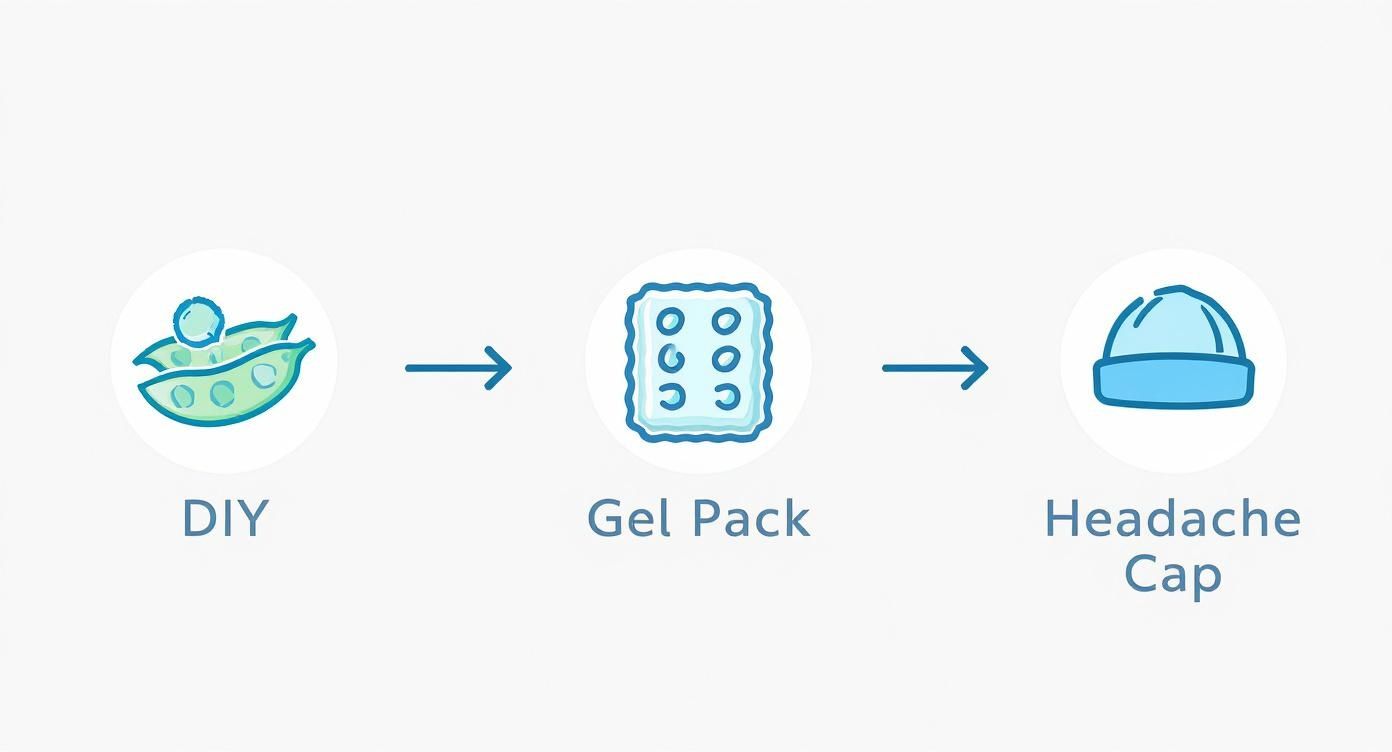
As you can see, while a homemade compress is handy in a pinch, products designed for the job—like gel packs and headache caps—tend to deliver more consistent and targeted relief when you're dealing with frequent or severe pain.
Targeting Your Pain Points
Most people instinctively reach for their forehead, and that’s a fantastic place to start. The forehead and temples are classic pain zones for both migraines and tension headaches. Applying cold there helps to constrict blood vessels, which can ease that awful throbbing sensation.
But don’t stop there. For tension headaches, placing the compress on the back of your neck, right at the base of your skull, can be a game-changer. This is where we often hold a lot of muscle tightness that fuels the pain, and cooling this area helps release that tension.
Another spot that often gets overlooked is the sides of your neck, targeting the carotid arteries. These are the main highways supplying blood to your brain. Cooling them down can have a surprisingly fast impact, especially on the vascular side of a migraine. A flexible gel pack or a cap that provides coverage here is a massive plus.
In Australia, this is particularly relevant, with migraines affecting around 4.9 million people. Cold therapy isn't just an old wives' tale; it’s a widely used and evidence-backed remedy. Reviews of scientific studies have consistently shown that cold treatments, like a gel headband, can significantly dial down migraine pain soon after application. One analysis found cold therapy dropped pain scores by up to -3.21 on a standard scale in just 30 minutes. If you're interested in the science, you can read the full research about these findings for a deeper dive.
Finding the Right Timing and Technique
The aim here is simple: get maximum relief without irritating your skin. Stick to these guidelines, and you’ll get it right every time.
- Protect Your Skin: This is non-negotiable. Never put a frozen pack directly onto your skin. Always wrap it in a thin, dry cloth or a tea towel. This simple barrier prevents nasty surprises like skin irritation or even frostbite.
- Optimal Duration: The sweet spot is 15 to 20 minutes per session. That’s long enough for the cold to penetrate and start working its magic without over-chilling the area.
- Take Breaks: It's so important to give your skin a rest. After a 20-minute session, take the compress off for at least an hour before you think about reapplying. This lets your skin temperature and blood flow get back to normal.
The rule of thumb is easy to remember: 15-20 minutes on, at least 60 minutes off. Sticking to these breaks is the key to using a cold compress safely and effectively for headache relief over several hours.
By paying a little attention to where you place the compress and for how long, you can ensure every session gives you the best possible shot at feeling better, faster.
Targeting Tension and Sinus Headache Pain
While cold therapy is a well-known hero for migraines, it's just as effective for other common culprits like tension and sinus headaches. The secret isn't just using a cold compress, but how you use it. You need to adapt your technique to target the specific source of your pain.
Tension headaches often feel like a tight band squeezing your head. To get relief, you need to go after the tense muscles causing that sensation. Applying a cold pack to your forehead is a good start, but the real magic often happens elsewhere.
Try placing the compress right at the base of your skull, where your neck meets your head. This spot is a major hub for the muscle tightness that triggers or worsens tension headaches. Cooling these strained muscles helps to release that constricting grip.
Soothing Sinus Pressure
Sinus headaches bring their own brand of misery—that deep, unrelenting pressure behind your eyes, nose, and cheeks. This pain comes from inflamed and swollen sinus passages, and a well-placed cold compress can be a lifesaver.
Drape a flexible gel pack or your Headache Cap across your forehead and over the bridge of your nose, making sure it covers your cheeks. The cold works to reduce the inflammation, which in turn eases the pressure and dulls that constant ache. For a deeper dive, check out our guide on acute sinus headache symptoms and treatments.
The Neck Connection
Don't underestimate the role your neck plays in head pain. For many headaches, especially tension types, the neck is a key player. Applying a cold compress to the sides of your neck, directly over the carotid arteries, can bring surprisingly fast relief.
This technique cools the blood flowing up to your brain, directly impacting the vascular system involved in head pain. It's not just a folk remedy, either. Clinical research backs this up. One study showed that a frozen neck wrap reduced migraine pain by nearly 32% within just 30 minutes. A staggering 77% of participants felt the cold wrap helped them. You can discover more insights about these findings and see the data for yourself.
Key Takeaway: No matter what type of headache you have, the principle is simple: find the source of the pain and apply the cold directly to that spot. For tension headaches, that’s the tight muscles. For sinus headaches, it’s the inflamed passages.
By tailoring your approach, you turn a simple cold compress from a generic remedy into a targeted treatment. This makes a huge difference, helping you get faster, more effective relief by addressing the root cause of your specific headache.
Common Mistakes and Safety Precautions
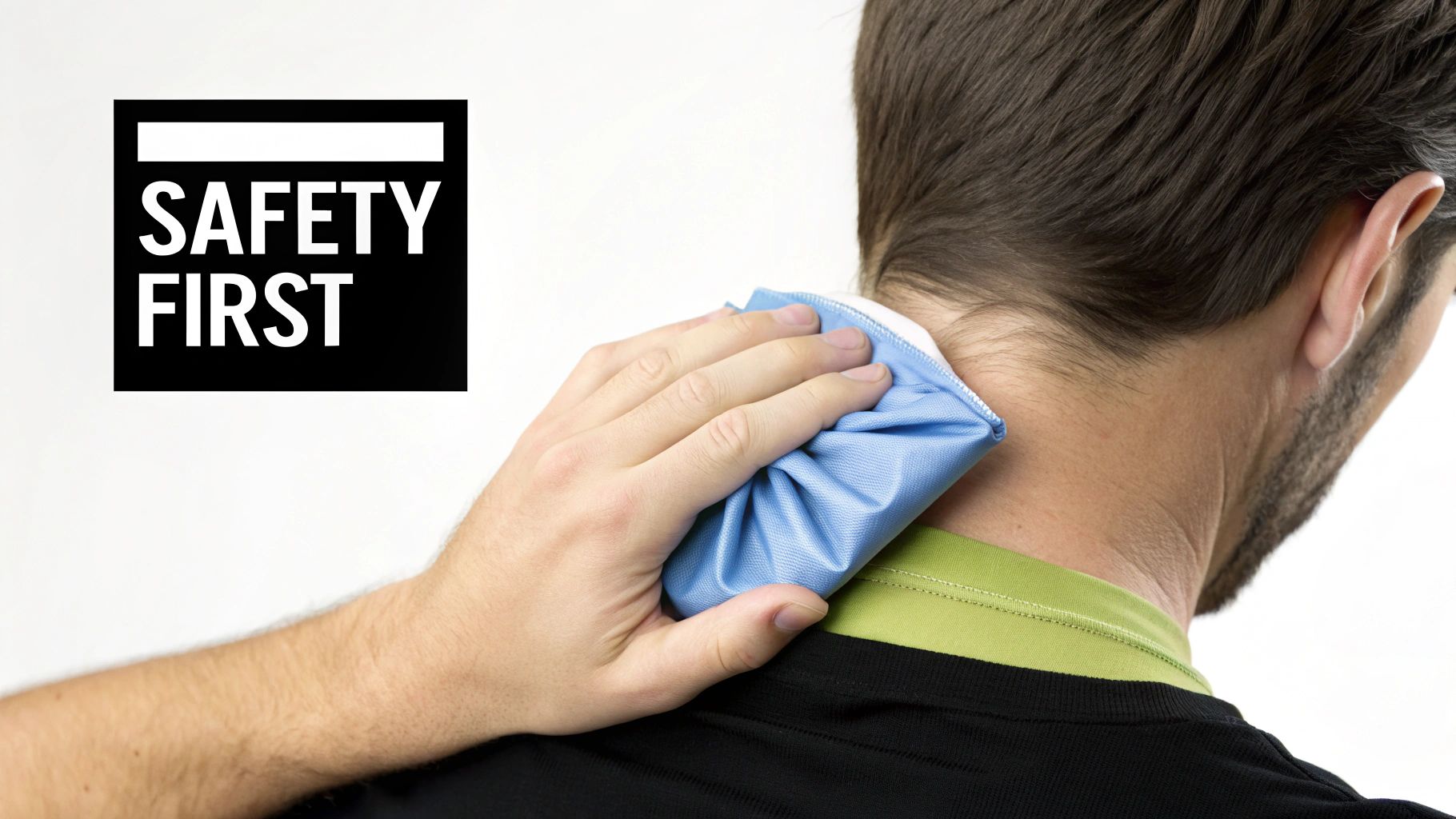
Grabbing a cold compress when a headache hits is one of the safest home remedies out there. But a few simple precautions can make the difference between sweet relief and a nasty skin reaction. Knowing the do's and don'ts will help you get the most out of your cold therapy every time.
The most common mistake I see is also the easiest to fix: putting a frozen pack directly on your skin. That intense cold can actually damage skin cells, leading to irritation, redness, or even a mild form of frostbite called an ice burn. A protective barrier is non-negotiable.
Always, always wrap your gel pack or ice bag in a thin, dry cloth—a tea towel or a soft t-shirt works perfectly. This simple layer lets the therapeutic cold do its job without putting your skin at risk.
Timing is Everything
It's easy to think that leaving a cold pack on for longer means more relief, but that’s a common trap. Overdoing it doesn't help and can actually cause problems. For effective cold therapy, you want to aim for 15 to 20 minutes at a time.
This is the sweet spot. It's long enough for the cold to constrict blood vessels and numb the area, but not so long that it over-chills the tissue. After your 20 minutes are up, give your skin a rest for at least an hour before you think about reapplying. This lets your circulation get back to normal.
The golden rule for safe and effective cold therapy is simple: always use a barrier and stick to the 15-20 minute rule. This prevents skin damage and ensures you get the maximum therapeutic benefit from each session.
When to Be Cautious
While cold therapy is a fantastic tool for most of us, there are a few situations where you need to be a bit more careful. It really comes down to being mindful of your own health.
- Circulatory Issues: If you have a condition that affects your circulation, like Raynaud's phenomenon, applying intense cold might not be the best idea.
- Reduced Skin Sensitivity: For anyone with nerve damage or reduced feeling in their skin (like with peripheral neuropathy), it’s tough to gauge if the compress is too cold. This seriously ups the risk of accidental skin damage.
- Open Wounds: Never put a cold pack directly on broken or irritated skin. It can slow down healing and potentially introduce bacteria.
If any of these sound like you, or if you're just not sure if a cold compress for headache relief is right for you, it's always worth having a quick chat with your doctor. By sidestepping these common mistakes, you can feel confident using cold therapy as a powerful part of your headache management toolkit.
Knowing When to See a Doctor for Your Headaches
A cold compress can be a lifesaver for head pain, but it's important to know its place. While it’s a fantastic tool for dealing with the usual, run-of-the-mill headache, it’s not a substitute for proper medical advice.
Knowing when to switch from a home remedy to a doctor’s visit is absolutely crucial, especially when your headache symptoms start to change or ramp up in intensity.
Urgent Red Flag Symptoms
Some headache symptoms are more than just a nuisance; they're warning signs. If you experience any of the following, don't just reach for a cold compress for headache relief. It's time to get professional help, and fast.
- A sudden, explosive headache that hits you out of nowhere, often called a "thunderclap headache".
- A headache that comes with a stiff neck, fever, seizures, or a feeling of confusion.
- Any head pain that starts after a knock or injury to your head.
- A brand new type of headache that you've never felt before, especially if you're over the age of 50.
If you ever have a headache that you'd describe as the "worst pain of your life," treat it as a medical emergency. This is not the time to wait and see—call for immediate help or get to an emergency department.
When to Book a Doctor's Appointment
Even if it's not an emergency, you shouldn't just put up with persistent headaches. It's a good idea to chat with your doctor if your head pain is becoming a regular unwanted visitor.
Book an appointment if your headaches are getting more frequent, more severe, or are starting to get in the way of your work, family, or social life. A doctor can help figure out what’s really going on and set you up with a proper treatment plan that gets to the root cause.
Common Questions About Using Cold Compresses
When you're dealing with a nasty headache, you want answers fast. I get asked a lot about the best ways to use cold therapy, so let's clear up a few of the most common questions.
What About a Headache From a Fever? Can I Use a Cold Compress?
Absolutely. A cool compress on your forehead can feel incredibly soothing when you're running a fever. It helps to bring down your skin's surface temperature and just provides that comforting sensation when you feel hot and flushed.
Just remember, this is purely for comfort. It's not a cure for whatever is causing the fever in the first place. If you have a high or persistent fever, it's always best to chat with your doctor to figure out and treat the root cause.
Cold or Hot for a Headache – Which One is Better?
This is the classic question, and the answer really comes down to what type of headache you have.
For migraines, cold is almost always the winner. That throbbing, pulsating pain is often from dilated blood vessels, and the cold helps to constrict them, which can significantly dull the ache.
Tension headaches, on the other hand, often respond better to heat. That’s because they’re usually caused by tight, contracted muscles in your neck and shoulders. A warm pack can help those muscles relax and release their grip.
If you're ever in doubt, a cold compress for headache relief is generally the safest and most effective starting point for most kinds of head pain.
How Do I Keep My Reusable Headache Cap Clean?
Keeping your cap fresh and ready for action is straightforward. A little bit of care goes a long way in making sure it's hygienic and effective for years to come.
- After you've used it, just give it a gentle wipe-down with a damp cloth and a touch of mild soap.
- Let it air dry completely before popping it back into its storage bag and into the freezer.
- Steer clear of harsh chemical cleaners, and don't ever throw it in the washing machine unless the manufacturer's instructions specifically give you the green light.
Taking these simple steps will really extend the life of your cap.
Ready to experience 360-degree relief that's always on hand? The Headache Cap offers a drug-free, comfortable solution for migraines and headaches, combining gentle compression with soothing cold therapy. Find your perfect fit and feel the difference today at headachecap.com.au.


