


Do Ear Piercings for Migraines Really Work?
When you're trapped in the grip of a debilitating migraine, the search for relief can feel desperate. It’s this desperation that often leads people to explore every possible solution, including one that’s become a hot topic in recent years: an ear piercing for migraines. While social media is filled with personal success stories, the medical community isn't so sure. Let's dig into the theory, the evidence, and the risks to help you figure out if it's right for you.
Can a Daith Piercing Really Stop Migraines?

The idea of a single, simple fix for chronic pain is incredibly appealing, and that’s what has pushed the daith piercing into the migraine relief conversation. If you're not familiar with it, a daith piercing goes through the small, inner fold of cartilage right above your ear canal. It’s a popular cosmetic piercing, but its reputation as a migraine cure comes from a constant stream of anecdotal reports where people share amazing stories of fewer, less intense migraines after getting it done.
The concept isn’t just a random shot in the dark; it’s actually borrowed from the ancient practice of acupuncture. The theory goes that the piercing provides constant stimulation to a specific pressure point in the ear. This particular point is believed to be linked to the vagus nerve, a major player in the body's nervous system that helps manage things like mood, digestion, and, importantly, pain signals. The hope is that by applying this continuous pressure, the piercing helps to interrupt or calm the nerve pathways that trigger migraines.
Hope Versus Scientific Reality
While the personal stories are compelling, it’s really important to draw a line between hopeful anecdotes and proven medical facts. As it stands, there is no large-scale scientific evidence that confirms daith piercings are a reliable treatment for migraines.
Many experts believe the positive results people experience could be due to the placebo effect. This is a fascinating and very real phenomenon where your belief in a treatment can lead to genuine physical improvement, even if the treatment itself has no therapeutic value.
To give you the full picture, this guide will walk you through:
- A closer look at the theory linking daith piercings to migraine relief.
- An honest assessment of the scientific studies that exist and what they're missing.
- The real risks and significant aftercare involved with any cartilage piercing.
- Safer, evidence-backed alternatives you can try for managing migraine pain.
Our aim here is to arm you with clear, practical information. We want you to be able to weigh the potential upside against the genuine risks before you make a decision that feels right for your health.
Where Did This Idea Even Come From?
So, how on earth could a tiny piece of jewellery stop something as brutal as a migraine in its tracks? It sounds a bit far-fetched, but the idea isn't completely out of the blue. It’s actually borrowed from the world of acupuncture, an ancient practice that’s been around for thousands of years.
Think of a daith piercing as a kind of permanent acupuncture needle. The whole theory revolves around the piercing hitting a very specific pressure point in the innermost fold of your ear cartilage. In traditional Chinese medicine, this exact spot is considered a key point for relieving pain, not just in the head, but throughout the body.
It's All About the Vagus Nerve
The supposed secret lies in a major nerve pathway that runs through that part of the ear: the vagus nerve. This isn't just any nerve; it's one of the longest and most complex in your body, acting like a massive information highway between your brain and your organs. It has a hand in everything from your heart rate to your mood and, crucially, how your body processes pain.
The logic goes something like this:
- The daith piercing applies constant, low-level pressure to this specific auricular point.
- This steady stimulation is thought to help regulate, or "calm down," the signals travelling along the vagus nerve.
- By soothing this nerve, the piercing might interrupt the chaotic pain signals that cause a migraine to start or continue.
In simple terms, the piercing is meant to keep that acupuncture point constantly activated, helping to manage your nervous system’s over-the-top reaction to migraine triggers. The goal is to reduce how often migraines hit and how bad they are when they do.
The Great Divide: Personal Stories vs. Hard Science
This link between ear-based pressure points and pain relief is what has people so intrigued. It bridges an ancient wellness practice with a modern-day problem. But while the theory sounds pretty convincing, it’s crucial to understand where the line between personal experience and scientific proof lies. Right now, most of the support comes from people sharing their own success stories, not from large-scale, controlled clinical trials.
For example, a fascinating case study from Italy followed a 54-year-old man who had suffered from chronic migraines that didn't respond to normal treatments. After getting daith piercings in both ears, he experienced a significant improvement. This story lines up with survey data suggesting around 47% of people with the piercing report fewer migraines.
But—and it's a big but—researchers are quick to point out that we don't have scientific proof of why this might be happening. The placebo effect is a powerful thing, and without more rigorous research, it’s impossible to rule it out. You can read the full case study on daith piercings and migraine relief for yourself.
At the end of the day, while the theory offers a plausible reason for the relief some people experience, it remains an experimental approach. Within the Australian medical community, and globally, it’s not yet considered an evidence-based treatment for migraines.
Weighing the Evidence: What Do the Studies Actually Say?
If you spend any time online looking into ear piercings for migraines, you’ll find a mountain of personal stories. People swear their new piercing was a life-changer, and it’s these powerful anecdotes that have really propelled the trend, offering a glimmer of hope to others stuck in a cycle of chronic pain.
But when you step away from personal experience and into the world of scientific research, the picture gets a lot murkier. The main issue is a serious lack of large-scale, controlled clinical trials—the kind of studies that are considered the gold standard for medical proof. Without them, it’s tough to know if any relief is from the piercing itself or something else entirely.
The Power of the Placebo Effect
One of the biggest "something elses" to consider is the placebo effect. This isn't imaginary; it’s a real and potent phenomenon where simply believing a treatment will work can lead to a genuine improvement in symptoms, even if the treatment has no direct medical benefit.
Migraine pain is incredibly complex and deeply connected to brain activity. For some people, the strong belief that a daith piercing will bring relief can be enough to dial down the intensity or frequency of their attacks. This doesn't make their relief any less real, but it does suggest the piercing might not be the direct cause.
The mind is an incredibly powerful tool in managing pain. If someone strongly believes a procedure will help them, their brain can release natural pain-relieving chemicals, leading to tangible relief—a key reason why rigorous scientific studies are needed to confirm effectiveness.
Breaking Down the Survey Data
While we don't have those big clinical trials, we do have some survey data that gives us a peek into what people are reporting. This infographic lays out the results from one survey on daith piercings for migraine relief.
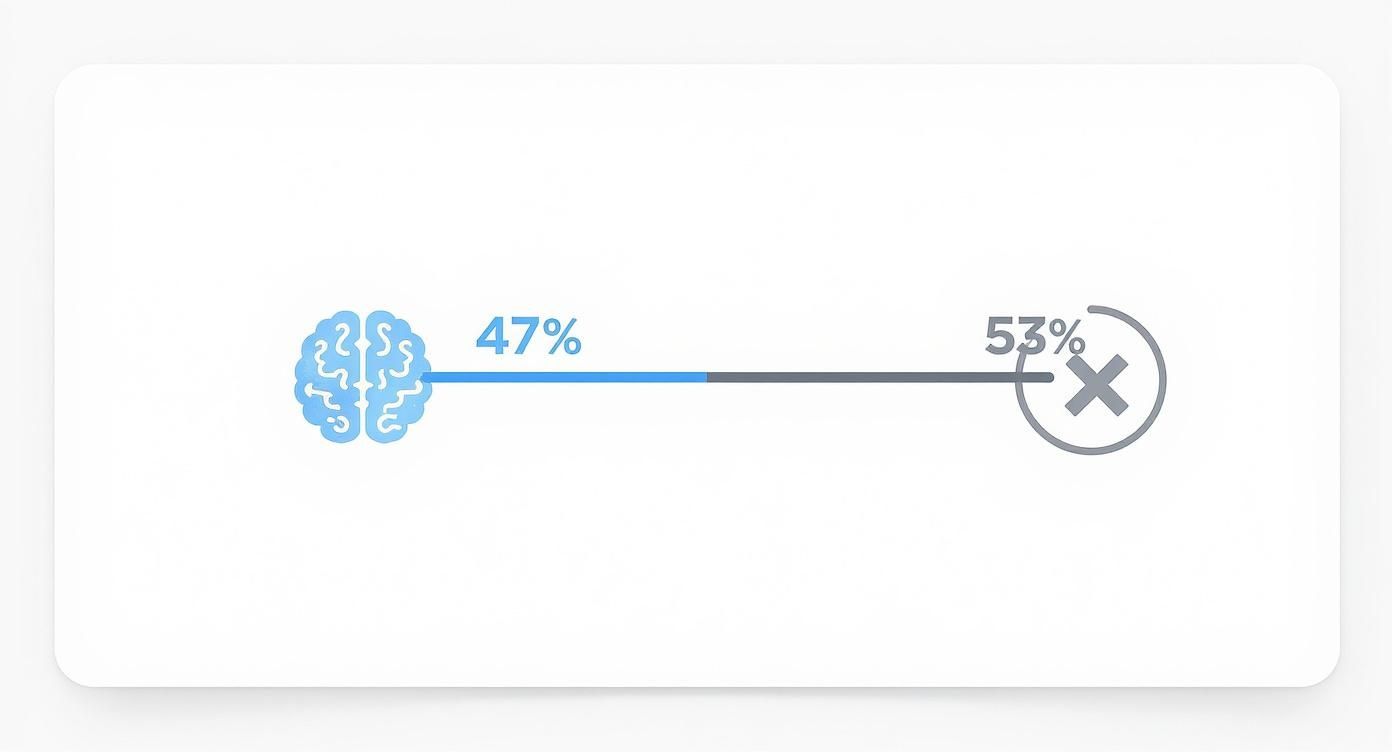
As you can see, the results are almost a 50/50 split. That alone shows just how inconsistent and unpredictable this approach is for managing migraines.
A larger anonymous survey of over 1,100 people who got the piercing specifically for migraines offers a bit more detail. It found that 64% reported some drop in migraine frequency. On the other hand, 29% saw no change whatsoever, and a worrying 5% said their migraines actually got worse. These mixed results really drive home that it's far from a sure thing.
For now, the evidence is a jumble of compelling personal stories and inconclusive survey results. Until proper clinical research is done, getting an ear piercing for migraines is an experimental choice, one that's based more on hope than on proven science. Taking the time to understand the different symptoms, causes, and options for migraine remedy can help you make a more informed decision for yourself.
Navigating the Risks and Aftercare Process
Before you rush to book an appointment, it's really important to see a daith piercing for what it is: a significant body modification, not a simple, overnight fix for migraines. The idea of getting relief is tempting, of course, but your primary focus needs to be on safety and understanding the real commitment involved in healing.
Cartilage piercings, like the daith, are a whole different ball game compared to a standard lobe piercing. They are notoriously slow to heal. You’re looking at a long journey, often taking anywhere from 6 to 12 months to fully settle down. Throughout this entire time, your piercing is an open door to a range of potential problems.
Understanding the Potential Complications
The biggest and most common risk is infection. It’s a serious concern. In Australia, health authorities warn that about one in three cartilage piercings become infected. An infection isn't just a bit of redness; it can lead to serious pain, swelling, and in worst-case scenarios, even nerve damage if you don't get it treated. Given the lack of solid clinical trials backing these piercings as a migraine cure, you're taking on very real health risks for something that's still considered anecdotal. For more on this, you can read the Australian perspective on daith piercings for migraines from health professionals.
Infection isn't the only thing to watch out for, though. Other issues can easily crop up:
- Allergic Reactions: Cheap, low-quality metals containing nickel are a common culprit for irritation, redness, and relentless itching, which only makes healing harder.
- Keloid Scarring: Some people are simply more prone to developing keloids—those raised, bumpy scars that can form around the piercing site and become permanent.
- Piercing Rejection or Migration: It doesn't happen to everyone, but sometimes the body just decides it doesn't like the foreign object and will slowly push the jewellery out. The piercing can also shift or 'migrate' from its original spot.
A piercing is an open wound that demands your attention. Treating it casually is the fastest way to run into complications that could end up making you feel worse, not better.
A Practical Aftercare Plan for Healing
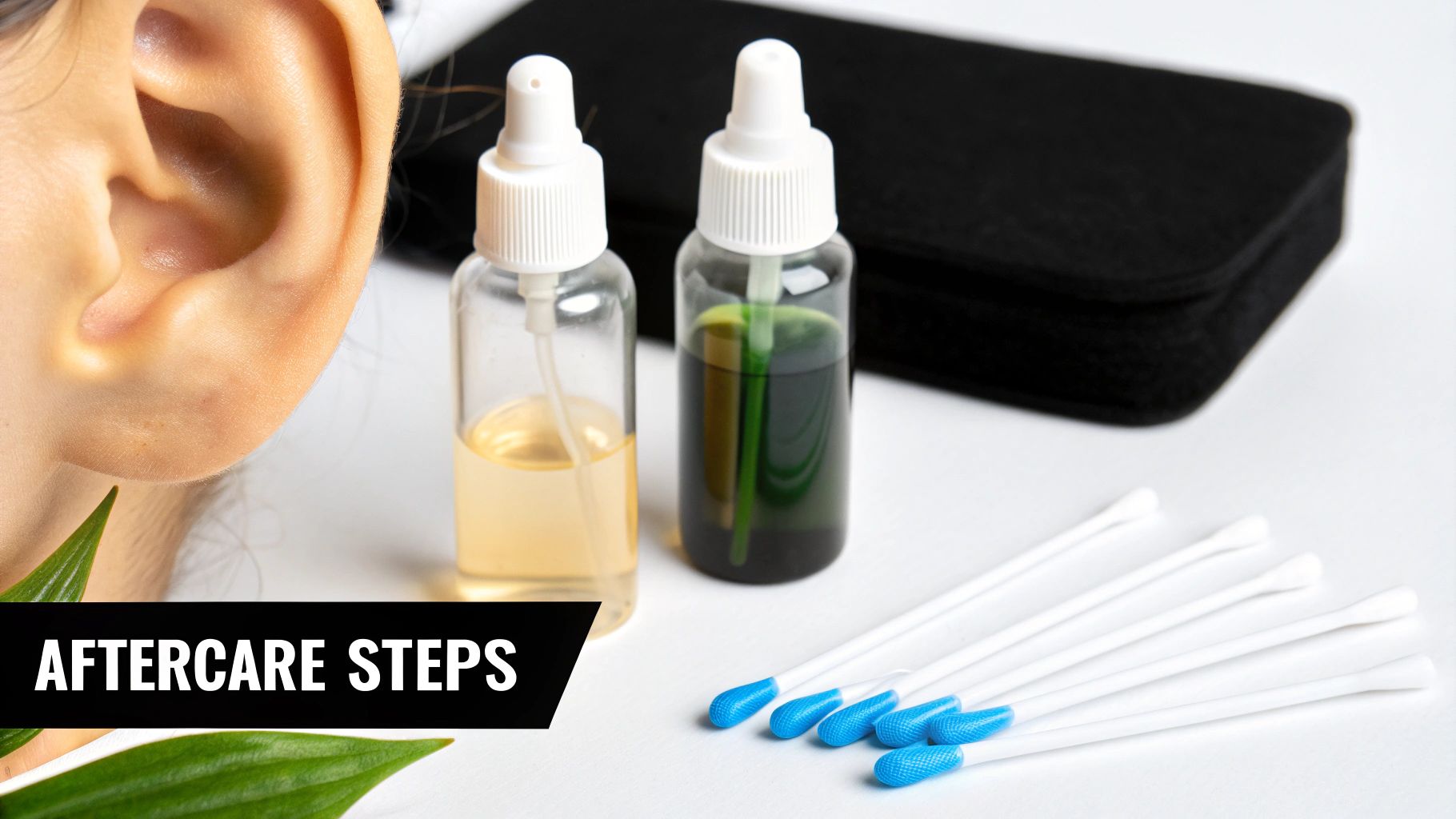
Good aftercare is your number one defence against all these risks. Your piercer should give you detailed instructions, but a solid daily routine is completely non-negotiable. This isn't a one-week thing; it's a daily commitment for months on end.
Here’s a straightforward guide to get you through it:
- Clean Twice Daily: Get a sterile saline solution and gently clean the front and back of the piercing. Steer clear of harsh stuff like alcohol or hydrogen peroxide—they’re too aggressive and can damage the delicate healing tissue.
- Don't Touch or Twist: This is a golden rule. The only time you should touch your piercing is with freshly washed hands during cleaning. Twisting the jewellery doesn't help it heal; it actually irritates the new tissue and can introduce nasty bacteria.
- Keep it Dry: After cleaning or showering, gently pat the area dry with a clean paper towel. A damp environment is a perfect breeding ground for bacteria.
- Be Mindful of Irritants: For the next few months, you'll need to be careful. Protect your piercing from getting snagged on hair, snagged by headphones, or squashed while you sleep.
Healing a daith piercing requires a lot of patience. If you start experiencing constant pain, notice a foul-smelling discharge, or develop a fever, it's time to see a doctor right away. It's a stark reminder that sometimes, non-invasive options offer relief without these long-term risks, like those we explore in our guide to cold therapy.
Exploring Safer Alternatives for Migraine Management
If the idea of a long healing process and the potential risks of a daith piercing are giving you pause, don't worry. There are plenty of other effective options out there. Thankfully, managing migraine pain doesn’t have to mean an invasive procedure.
Let's look at some evidence-backed, safer alternatives you can add to your relief toolkit. Many of these strategies tap into the same principles as the piercing theory but without ever breaking the skin, giving you control and comfort when you need it most.
Targeting Pressure Points Without Piercing
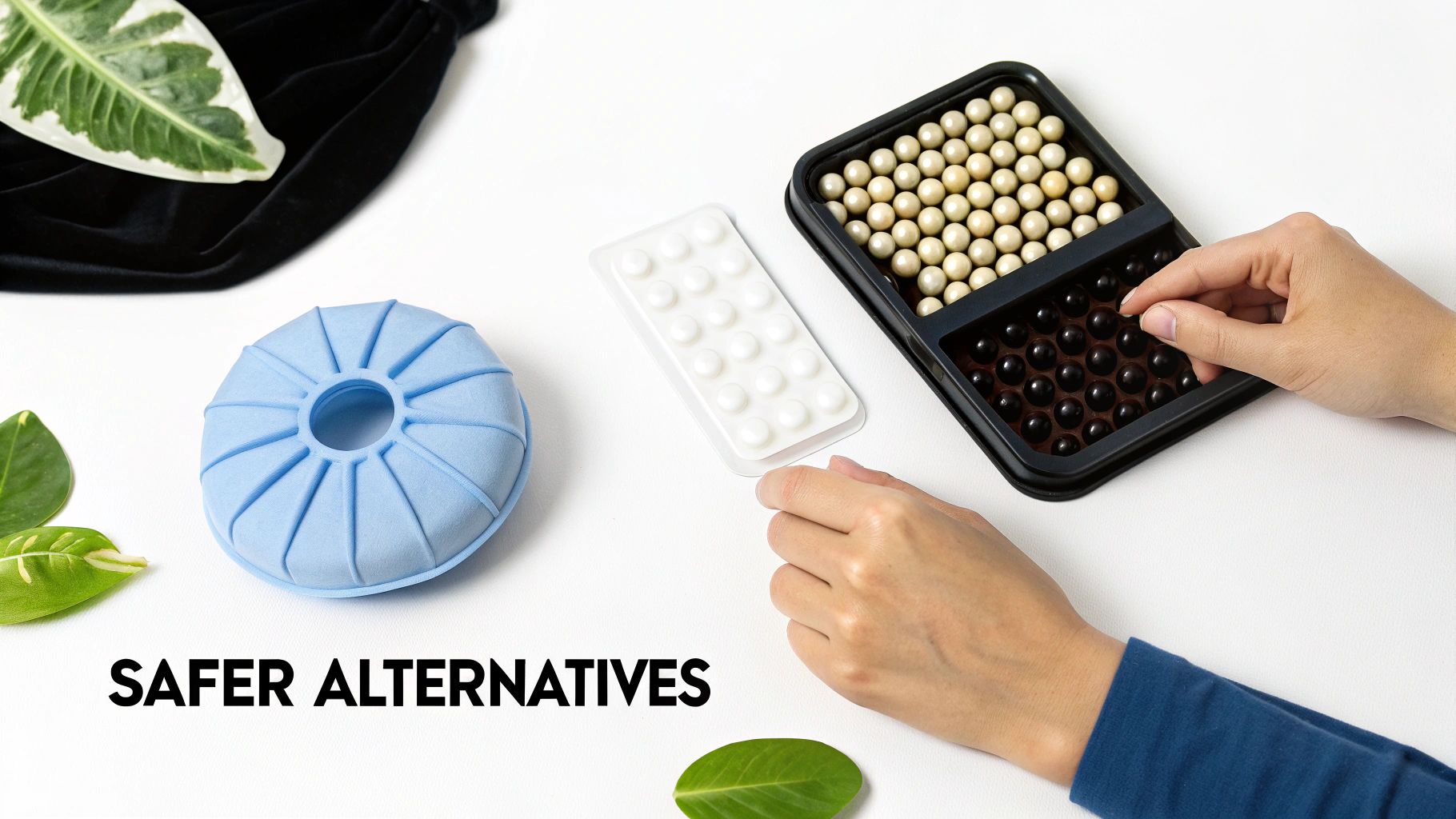
One of the most direct alternatives is auricular acupressure. You can think of it as a temporary, needle-free version of what a daith piercing aims to do. Small beads or seeds are simply taped to specific pressure points on your ear—including the daith area—instead of using permanent jewellery.
This technique lets you apply gentle, focused pressure to the very same nerve pathways that are thought to play a role in migraine pain. The advantages here are pretty clear:
- No Infection Risk: Because the skin isn't broken, the danger of infection is completely off the table.
- It’s Not Permanent: You have total control. The beads can be removed whenever you like.
- Targeted Application: You can apply pressure only when you feel the first signs of a migraine.
This approach is a brilliant way to safely test the pressure point theory for yourself. Even a simple self-administered technique, like using your thumb and index finger to gently pinch the daith area for a minute, can offer a bit of temporary relief during an attack.
Harnessing Cold and Compression Therapy
Beyond acupressure, there are other powerful, drug-free methods that are tried and true. Targeted cold therapy, for instance, is an incredibly effective way to dull the sharp, throbbing pain of a migraine. The cold helps constrict blood vessels and reduce inflammation, which in turn numbs the nerve endings that are firing off pain signals.
For so many people living with migraine, the perfect combination of cold and gentle compression creates an instant soothing sensation. It’s like having a portable, dark, quiet room you can wrap around your head.
This is exactly where tools like headache caps shine. They’re designed to provide 360-degree cooling coverage and mild compression all around the head. This dual-action approach doesn't just target the source of the pain; it also helps block out light and muffle sound, tackling several migraine triggers at once.
You can dive deeper into how a Headache Cap helps with migraine relief and see how it might fit into your own pain management plan.
Final Checklist: Is an Ear Piercing for Migraines Right for You?
It’s easy to get swept up in the hope of finding a cure when you're dealing with debilitating migraines. An ear piercing seems like a simple, one-and-done solution, but the reality is a little more complex. It's a real commitment with genuine risks and a long healing journey.
Before you dial up the piercing studio, let's run through a final checklist. Think of this as a moment to pause and really consider if this is the right path for you. This isn't about talking you out of it, but making sure you go in with a clear head.
Your Personal Reality Check
Let's get honest about where you are in your migraine journey and what you’re really signing up for.
- Have I spoken to my doctor? This is non-negotiable. Your GP or a neurologist needs to be your first port of call to discuss your migraine patterns and all your options, including a piercing.
- Have I tried the proven stuff first? It’s worth asking if you've given less invasive, evidence-backed treatments a proper go. Think things like targeted cold therapy, acupressure, or prescribed medications.
- Am I prepared for a 6-12 month healing process? This isn't a quick fix. You'll be on the hook for daily aftercare for a long time to sidestep infection and other issues. It’s a serious commitment.
- Do I actually understand the risks? We're talking about the real possibility of infection (which hits about one in three cartilage piercings in Australia), nasty keloid scarring, and allergic reactions to the jewellery.
- Am I okay with it just being a placebo? You need to be honest with yourself. If you get some relief, but it’s purely because you believe it will work, are you truly okay with that outcome?
At the end of the day, this is your call and your call alone. By thinking through these points, you can make a decision you feel good about, one where you’ve properly balanced the potential hope against the very real risks. Your health has to come first.
Got Questions? We've Got Answers
It’s completely normal to have a few questions when you're looking into alternative options for migraine relief. Let's clear up some of the most common ones about getting an ear piercing to tackle migraines.
Which Ear Should I Get Pierced for Migraines?
This is probably the most-asked question, and the common advice you'll hear is to pierce the ear on the same side you usually get your migraines. The logic seems sound, right?
But here's the thing: because there's no solid scientific evidence that piercings work for migraines, there's no clinical rulebook on which side is "correct". Some people opt to get both ears done, but that means double the healing time and double the risk of things like infection. A good piercer might point to an acupressure chart, but that’s just a guide, not a substitute for advice from your doctor.
How Much Does a Daith Piercing Cost in Australia?
So, what’s the damage to the wallet? In Australia, you can expect the piercing procedure itself to set you back anywhere between AUD $50 and $120. As you'd expect, prices can be a bit higher in a well-known city studio compared to a smaller regional one.
Don't forget to factor in the cost of the jewellery itself. This is not the place to skimp! You’ll want high-quality, implant-grade materials like titanium or solid gold to avoid irritation or nasty allergic reactions. When it comes to your health, always choose a clean, experienced studio over a bargain-basement price.
What Happens If the Piercing Doesn't Help My Migraines?
It's the big "what if," isn't it? If the piercing doesn't bring any relief, you're left with... well, a new cartilage piercing. You can either embrace the look or simply take the jewellery out.
Once removed, the hole will gradually close up, though it might leave behind a small, permanent mark. It's really important to go into this with your eyes open, seeing it as a body modification first and a potential therapy second. This is exactly why it’s so crucial to chat with your doctor about proven treatments before you head to the piercing studio.
If you're looking for a proven, non-invasive way to manage migraine pain, the Headache Cap offers targeted cold and compression therapy for fast relief. Explore our drug-free solutions today at https://headachecap.com.au.


