


A Guide to Histamines in Food
Have you ever enjoyed a beautiful platter of aged cheese and cured meats, perhaps with a glass of red wine, only to find a headache creeping in later? You might not be alone. The culprit could be histamines in food, naturally occurring compounds that build up in certain delicious items and can trigger some really unpleasant symptoms for sensitive people.
Getting to the bottom of what histamines are and where they come from is the first real step in connecting the dots between what you eat and how you feel.
What Are Histamines in Food?
Let's break it down with an analogy. Think of histamine as your body's personal security guard. It's a vital chemical that patrols your immune system, digestive tract, and central nervous system. It’s the gatekeeper that jumps into action during an allergic reaction or helps regulate your stomach acid. It's usually a force for good.
The problem starts when that lone security guard is suddenly faced with a massive, rowdy crowd showing up unannounced. In this case, the "crowd" is a flood of histamine from your diet. Your body simply can't process it all at once, and this overload can trigger a wide range of issues, from headaches and skin rashes to digestive chaos.
How Do Histamines End Up in Our Food?
Histamines don't just appear out of thin air. They're created when an amino acid called histidine, found in many proteins, is converted into histamine by certain bacteria or yeasts. It’s a completely natural process.
This conversion gets supercharged under a few common conditions:
- Fermentation: This is a big one. Think of foods like sauerkraut, yoghurt, beer, and wine. The very microbes that give these foods their unique flavours are often fantastic at churning out histamine.
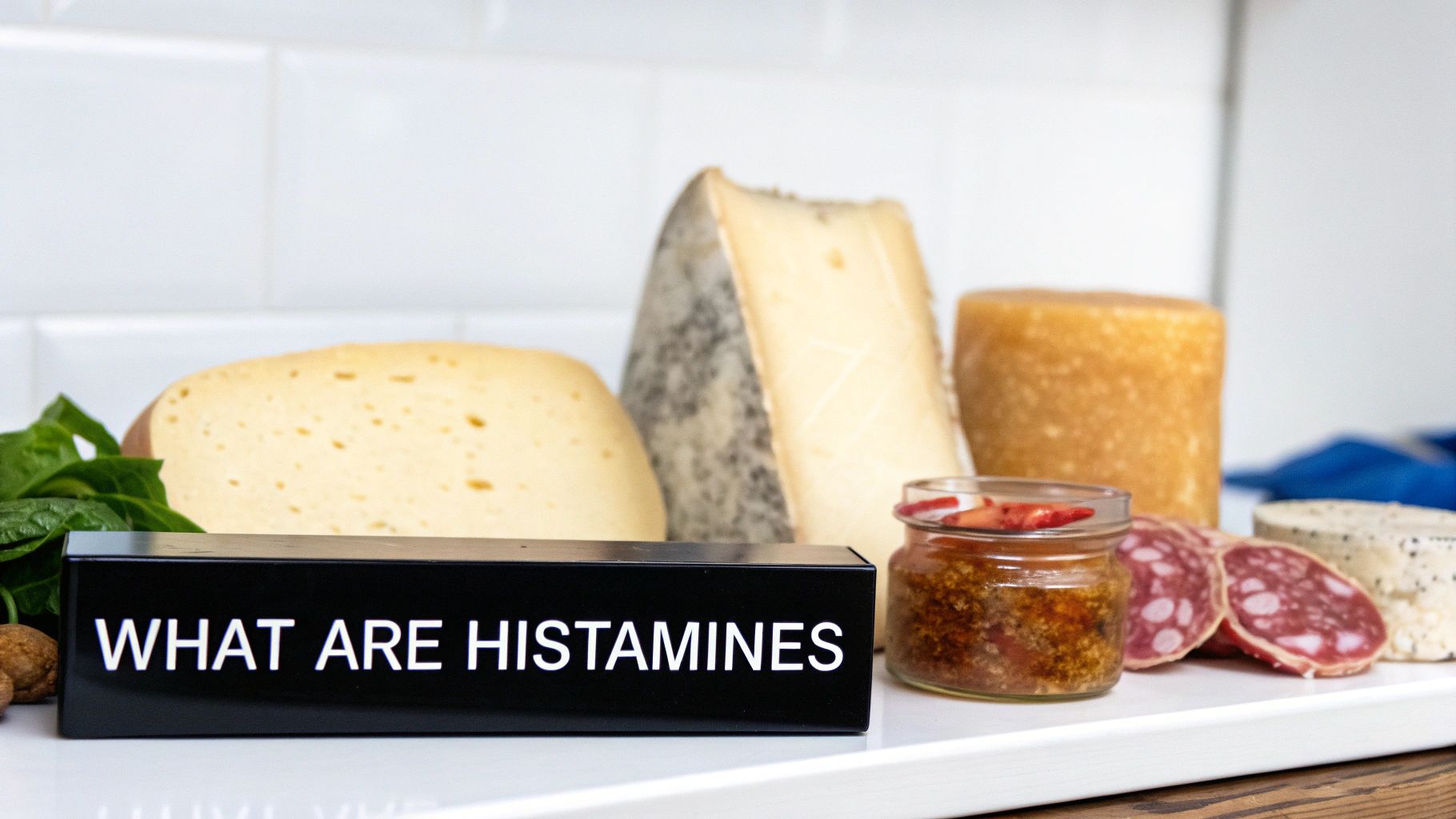
- Ageing and Curing: The long, slow process used to make hard cheeses and cured meats like salami or prosciutto is the perfect breeding ground for histamine. The longer it ages, the higher the levels can get.
- Time and Temperature: This catches a lot of people out. Even fresh, low-histamine foods can become problematic if they're not stored correctly. Leftovers are a classic example. The longer food sits, the more opportunity bacteria have to do their work. A freshly grilled piece of fish is fine, but that same piece of fish might trigger a reaction after a day or two in the fridge.
The single most important factor you can control is freshness. A meal that's perfectly safe when freshly cooked can easily become a high-histamine trigger after sitting in the fridge for just 24 hours.
At its core, any food that is aged, fermented, cured, or simply left sitting for a while has the potential to accumulate significant amounts of histamine. This explains why some of our most beloved foods—a sharp cheddar, a rich red wine, or a flavourful prosciutto—are often the main offenders. Understanding this gives you the power to make smarter choices, not just about what you eat, but also how you prepare and store it.
Identifying High-Histamine Foods in Your Diet
Pinpointing exactly which foods are causing trouble is the most important first step toward feeling better. The culprits are almost always foods that have been aged, fermented, cured, or even just stored a bit too long. These processes create the perfect environment for histamine-producing bacteria to thrive.
Once you know what to look for, spotting these foods on your plate becomes much easier. Let's walk through the most common sources of dietary histamine, group by group, so you can start making more informed choices at the supermarket and in your kitchen.
Aged and Fermented Products
For many people, this category is the biggest source of trouble. The very processes that give these foods their rich, complex flavours are the same ones that generate sky-high levels of histamine.
- Aged Cheeses: Think of those hard, flavourful cheeses like Parmesan, sharp cheddar, Gruyère, and blue cheese. The rule of thumb is simple: the longer a cheese is aged, the more time bacteria have had to convert histidine into histamine.
- Cured Meats: Salami, prosciutto, pepperoni, and chorizo are all loaded with histamines thanks to the long curing and ageing processes they undergo.
- Fermented Foods: Things like sauerkraut, kimchi, kefir, kombucha, and even yoghurt are made using bacterial fermentation, a process that naturally produces histamine.
- Alcoholic Beverages: Wine (especially red), beer, and champagne are all fermented and can be major triggers for anyone sensitive to histamines.
Fish and Seafood
When it comes to fish, freshness is everything. Histamine levels in fish can shoot up incredibly fast after it’s caught if it isn't chilled or frozen straight away.
Smoked, canned, or dried fish tend to be the most problematic. A survey by the NSW Food Authority on anchovies, for instance, found that while most samples were within the legal limit of 200 mg/kg, some were much higher. One sample even clocked in at a massive 518 mg/kg. This just goes to show how much histamine content can vary, even in the same type of product.
Certain Fruits and Vegetables
While most fresh produce is perfectly fine, a few common fruits and veggies are known troublemakers. They either contain a fair bit of histamine themselves or can actually trigger your body to release its own histamine stores.
- Avocado: Becomes higher in histamine the riper it gets.
- Spinach: A well-known high-histamine vegetable.
- Tomatoes: This includes everything made from them, like ketchup, tomato sauce, and paste.
- Eggplant: Another vegetable that's naturally on the higher side.
- Citrus Fruits: Lemons, limes, and oranges are often called "histamine liberators" for their ability to prompt your body to release histamine.
Key Takeaway: It’s not just about what you eat, but also how it’s prepared and stored. Even a perfectly safe, low-histamine food can become a trigger if it isn't fresh. Leftovers are a classic, often overlooked, source of histamine build-up.
Other Potential Triggers
Beyond these main groups, a few other everyday foods can add to your overall histamine load. Knowing about these can help you connect the dots if you’ve cut out the big offenders but are still experiencing symptoms.
This includes things like nuts (especially walnuts and cashews), dried fruits, and certain spices like cinnamon and cloves. If headaches or migraines are your main symptom, understanding these dietary triggers is a crucial piece of the puzzle. You can explore more natural migraine relief strategies from diet to relaxation techniques in our detailed guide.
Getting familiar with this list of high-histamine foods is a huge practical step forward. It gives you the power to start tracking what you eat and noticing how your body reacts, which is the foundation of a personalised and truly effective diet plan.
The Link Between What You Eat and That Pounding in Your Head
Ever found yourself with a throbbing headache after a perfectly lovely meal of wine and cheese? It's a surprisingly common complaint, and it highlights just how closely what we eat is tied to how we feel. For many people, certain headaches—and even severe migraines—can be directly triggered by dietary histamines in food.
So, how exactly does a bit of aged cheddar or a glass of red wine turn into head pain? The process is quite direct. Histamine is a natural vasodilator, a compound that makes your blood vessels widen. When you take in more histamine than your body can manage, the excess makes its way into your bloodstream.
This surge of histamine causes blood vessels all over your body to expand, including the ones in your brain. As they widen, blood flow increases, which can trigger inflammation and build pressure inside your skull. The result is that all-too-familiar, painful throbbing of a headache or migraine.
How to Spot a Histamine Headache
Not all headaches are the same, and one brought on by histamines in food often has a few distinguishing features. Learning to spot these clues can help you make the connection between your plate and your pain.
Keep an eye out for these tell-tale signs:
- The Timing: A histamine headache usually doesn't wait long to show up. It typically starts within 30 minutes to a couple of hours after you've eaten a high-histamine meal.
- The Company It Keeps: It's rarely just about the head pain. You might also notice your face feels flushed, your nose suddenly gets stuffy or runny, your skin starts to itch, or your stomach feels a bit off.
- The Type of Pain: People often describe the sensation as a pulsating or throbbing pain, which lines up perfectly with the whole blood vessel-widening effect.
The main culprits are often foods that have been aged or fermented, which gives microbes plenty of time to produce histamine.

As you can see, anything that’s been aged, fermented, or even just left to sit for a while tends to be a major source of dietary histamine.
Tying Your Diet to Your Headaches
Let's paint a picture. You've just enjoyed a classic Italian dinner: pizza with cured salami, aged Parmesan, and a rich tomato base, all washed down with a glass of red wine. A few hours later, your head is pounding. It's no coincidence. Every single one of those items—the cured meat, the aged cheese, the tomatoes, and the fermented wine—is packed with histamine.
By acting as a vasodilator, histamine directly impacts blood vessels in the brain. This expansion is a key physiological event that can initiate the pain and pressure of a headache or migraine attack.
Realising this connection is the first real step towards getting some control back. The next time a headache hits, take a moment to trace back what you ate in the hours before. A simple food and symptom diary can be an incredibly powerful tool for uncovering your personal triggers.
Of course, the relationship between food and pain can be complex. You can learn more about the many reasons why headaches happen in our other guides. But by understanding how histamines in food can be a direct cause, you’re already in a much better position to make choices that help you feel your best.
Histamine Intolerance vs a True Food Allergy
When you feel unwell after eating certain foods, it’s easy to jump to the conclusion you have an allergy. But when histamines in food are the culprit, the problem is often an intolerance—a completely different biological process. Getting this distinction right is the key to finding effective relief.
Let's think of it like this: imagine your body’s capacity for histamine is a bathtub. The water flowing from the tap is all the histamine you get from your diet, plus what your body makes naturally. The drain is an enzyme called diamine oxidase (DAO), which breaks down histamine and "drains" it from your system.
The Bathtub Analogy Explained
For someone with histamine intolerance, that drain is partially blocked. It still works, just very slowly. So, if you turn the tap on full blast by eating a meal high in histamine, the water level rises much faster than the drain can handle. Before long, the tub overflows. That overflow is what triggers symptoms like headaches, flushing, and digestive upset.
This makes it a metabolic, dose-dependent issue. A small amount of histamine might cause no trouble at all, but a large amount overwhelms your system. This is why you might feel fine after eating a few slices of avocado but get a raging headache after a dinner of aged cheese, cured meat, and a glass of red wine.
A true food allergy, on the other hand, acts more like a hyper-sensitive smoke detector. It doesn't matter if there's a tiny puff of smoke or a blazing fire—the alarm shrieks with the same intensity every single time.
This is an immune system reaction, driven by an antibody called Immunoglobulin E (IgE). When someone with a peanut allergy consumes even a trace amount, their immune system treats it as a catastrophic threat, launching a massive and immediate response that can be life-threatening.
With histamine intolerance, the problem is an accumulation—too much histamine for your body's processing capacity. With a true food allergy, the problem is an immune overreaction, where even a tiny amount of the allergen can trigger a severe response.
Key Differences at a Glance
Breaking it down further really highlights how different these two conditions are, from their root cause to how they feel. Recognising these patterns in your own body is the first step toward figuring out what's really going on.
| Feature | Histamine Intolerance | True Food Allergy |
|---|---|---|
| Underlying Cause | A metabolic issue, often due to low DAO enzyme activity. Your body simply can't break down histamine fast enough. | An immune system response mediated by IgE antibodies. Your body incorrectly flags a food protein as a major threat. |
| Reaction Time | Often gradual, appearing anywhere from 30 minutes to several hours after eating as histamine levels build up. | Usually rapid and immediate, happening within minutes to two hours of eating the trigger food. |
| Dose Dependency | Symptoms depend on the dose. A small amount of the food might be tolerated, while a larger portion causes a reaction. | Not dose-dependent. A minuscule trace of the allergen can trigger a full-blown, severe reaction. |
| Common Symptoms | Headaches, migraines, flushing, hives, nasal congestion, digestive issues (bloating, diarrhoea), and fatigue. | Hives, swelling of the lips, tongue or throat, difficulty breathing, wheezing, vomiting, and potentially anaphylaxis. |
This distinction is crucial because the way you manage each condition is completely different. An allergy demands strict, total avoidance of the trigger food. An intolerance, however, can often be managed by reducing your overall intake of histamines in food.
It's also worth noting that poor food handling can lead to dangerously high histamine levels, causing what’s known as histamine poisoning. An analysis of outbreaks in Australia between 2001 and 2013 found that inadequate refrigeration was a factor in 66% of cases, with some foods containing histamine levels as high as 7,000 mg/kg. You can learn more about these findings on the Australian Government Department of Health website.
How to Manage Your Dietary Histamine Intake
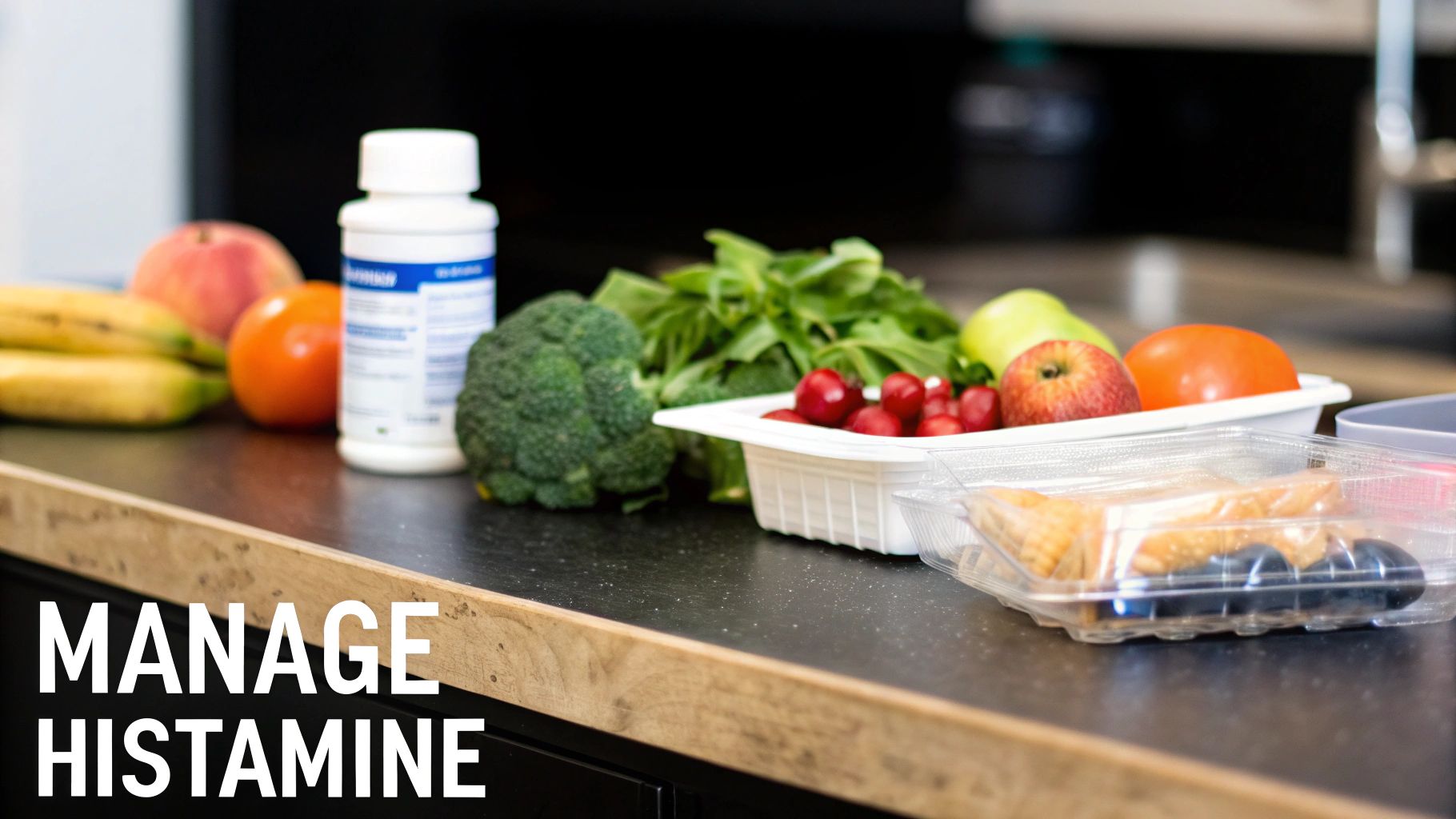
Moving from understanding the problem to taking practical action is a powerful step. Managing your intake of histamines in food doesn't mean you're doomed to a life of bland, restrictive eating. It’s really about crafting a personalised strategy that helps you feel your best while still enjoying a varied, nourishing diet.
For many people, the journey starts with a professionally guided elimination diet. This isn't about cutting things out forever. Think of it as a short-term investigation to pinpoint your specific triggers and work out your personal histamine threshold. It's so important to do this with a doctor or dietitian, as they can make sure you’re getting all the nutrients you need while you figure out what works for your body.
Prioritise Freshness Above All Else
If there’s one single habit that can make the biggest difference, it’s this: focus on fresh food. Histamine levels can skyrocket as food ages and bacteria get to work. What starts as a low-histamine meal can quickly become a problem if it sits around for too long.
Here are a few simple but effective habits to get into:
- Cook Fresh: Whenever possible, try to prepare your meals from fresh, whole ingredients. The less time food spends being processed and stored, the lower its histamine content will be.
- Handle Leftovers Wisely: Got leftovers? Cool them down quickly and freeze them straight away in single-serve portions. Freezing essentially presses 'pause' on histamine production, whereas the fridge only slows it down.
- Be Mindful of Ripeness: Some fruits and veggies, like avocados and bananas, gather more histamine as they ripen. It’s better to eat them when they are just ripe, not when they’re starting to go soft and spotty.
This focus on freshness is especially critical for things like fish. In Australia, the Food Standards Code sets a maximum histamine level of 200 mg/kg for fish products. But even with these rules, improper handling can cause problems. Between 2005 and 2014, there were six recalls for high histamine in products like imported tuna and anchovies, which just goes to show how vital it is to get your food from a trusted, fresh source. You can read more about how Australian standards protect consumers from high histamine levels in fish.
Support Your Body’s Natural Pathways
Beyond simply avoiding high-histamine foods, you can also support your body’s own ability to break histamine down. Instead of just turning down the "tap," you can help make sure your internal "drain" is working as efficiently as possible.
A few key nutrients and supplements might play a supportive role here. Of course, it's essential to have a chat with your healthcare provider before starting anything new to make sure it's the right choice for you.
Potential Supportive Supplements:
- Vitamin C: This well-known antioxidant actually helps degrade histamine. Loading up on vitamin C-rich, low-histamine foods like capsicum, broccoli, and kiwi fruit is a great place to start.
- Quercetin: A natural plant pigment found in foods like onions and apples, quercetin is known for its ability to help stabilise mast cells—the very immune cells that release histamine in the first place.
- DAO Enzymes: For some people, supplementing with the diamine oxidase (DAO) enzyme can be a game-changer. Taken just before a meal, these supplements get to work breaking down histamines in food right there in your gut, before they can be absorbed and cause symptoms.
Key Takeaway: A successful management plan is about so much more than avoidance. It's a combination of choosing fresh food, being smart about storage, and supporting your body's natural histamine-clearing abilities for a sustainable, long-term solution.
Ultimately, the goal is to find a balanced approach that fits your life. Reducing your histamine load can make a huge difference, particularly if you suffer from frequent head pain. By making more conscious food choices, you can often lessen how often your symptoms pop up and how severe they are. For more ideas on managing head pain, you can check out our guide on how to prevent headaches naturally.
Finding your unique path to feeling better is a journey of discovery. By combining these practical strategies with professional guidance, you can regain control and build a lifestyle that truly nourishes your body without feeling like you're missing out.
When It’s Time to See a Doctor
Figuring out your food triggers is a big step, and managing your diet can make a world of difference when it comes to symptoms from histamines in food. But it's just as important to know when self-management isn't enough.
Sometimes, all you need is a bit of at-home relief for an uncomfortable headache. A drug-free cold therapy device, like a Headache Cap, can be a great help. The gentle cold helps constrict the blood vessels in your head, which can take the edge off the pain. But remember, this is about managing the discomfort, not diagnosing the cause.
Knowing when to reach for a comfort measure versus when to pick up the phone and call a professional is key to looking after your health properly.
Spotting the "Red Flag" Symptoms
Most of the time, the symptoms of histamine intolerance are unpleasant but not dangerous. However, some reactions can look a lot like a true, potentially life-threatening food allergy, and these should never be ignored.
You need to get medical help straight away if you experience:
- Trouble Breathing or Wheezing: Any feeling of your throat closing up or being unable to get a full breath is an emergency.
- Swelling of your Lips, Tongue, or Throat: This is a classic sign of a severe allergic reaction and needs immediate attention.
- A Sudden Outbreak of Severe Hives: While mild hives can be part of an intolerance, a rash that appears suddenly, is intensely itchy, or spreads quickly needs a professional opinion.
- Feeling Dizzy, Fainting, or a Racing Heartbeat: These symptoms can signal a sudden drop in blood pressure, which is a sign of a serious reaction called anaphylaxis.
These are not the kind of symptoms you see with a simple intolerance. They point to a much more serious immune system response. Only a doctor or an allergist can run the right tests to tell the difference between an intolerance and a true allergy—and that's a critical distinction for your safety.
When to Schedule a Chat with Your GP
Even if your symptoms aren't an emergency, it’s still a smart move to see your doctor if they’re persistent or seriously impacting your day-to-day life. It's easy to go down a rabbit hole trying to self-diagnose, and what seems like a simple reaction to histamines in food could be masking something else entirely.
Consulting a healthcare professional isn’t just about getting a label for your symptoms. It's about working together to create a safe, effective, and manageable plan for the long haul. They can guide you through an elimination diet properly, so you don't miss out on important nutrients, and rule out any other underlying health issues.
If your symptoms are severe, don't seem to be getting better even after you've changed your diet, or are just making it hard to get on with your life, book that appointment. It’s the best way to get a clear diagnosis and a solid plan that’s built around you.
Common Questions About Histamines
As you start connecting the dots between your diet and how you feel, it’s completely normal for a heap of questions to pop up. Let's tackle some of the most common ones to give you a bit more clarity on your journey.
Can Histamine Intolerance Suddenly Appear Later in Life?
Yes, absolutely. It's actually quite common for histamine intolerance to surface in adulthood, even if you've spent your whole life eating whatever you wanted without a problem. It’s not necessarily something you’re born with.
Things can change. Your body's ability to break down histamine can be thrown off balance by a few different factors. This could be triggered by shifts in your gut health, taking certain medications that block the DAO enzyme, or even just going through a long, stressful period.
Is a Low-Histamine Diet a Lifelong Sentence?
Not at all. It’s much more helpful to think of a low-histamine diet as a short-term tool for investigation, not a permanent lifestyle. The strict elimination phase is really just about giving your body a reset—calming down symptoms so you can figure out what your personal triggers are.
The real goal isn't to stay on a super restrictive diet forever. It's to figure out your own tolerance level and slowly bring back a wider variety of foods, all while keeping symptoms under control. The key to long-term relief often lies in fixing the root cause, like working on your gut health.
Can I Just Cook the Histamines Out of My Food?
This is a really common and understandable misconception. Unfortunately, histamine is very stable when heated. This means that cooking methods like grilling, boiling, or frying do not reduce or destroy the histamines that have already formed in a food. So, if that piece of fish is already high in histamine, cooking it won't change a thing.
Your best bet is to stop histamines from developing in the first place. That all comes down to prioritising freshness and making sure your food is stored properly in the cold from the moment you get it home.
How Fast Do Leftovers Become a Problem?
You’d be surprised how quickly histamine levels can climb in leftovers. A meal that was perfectly fine when you first made it can easily become a trigger after just a day or so in the fridge. The bacteria that produce histamine don't stop working in the cold; they just work a lot slower.
A good rule of thumb is to eat leftovers within 24 hours. If you want to keep them longer, the freezer is your best friend. Popping leftovers straight into the freezer stops histamine production in its tracks, making it a much safer bet than the fridge.
When a histamine headache hits, getting fast, soothing relief can make all the difference. The Headache Cap provides drug-free comfort with gentle cold therapy, which can help constrict blood vessels and take the edge off that throbbing pain. Find your perfect fit and feel the difference at https://headachecap.com.au.


