


Pressure Points for Nausea A Practical Guide
When that awful wave of nausea hits, you want relief, and you want it now. That's where acupressure comes in—a simple, drug-free method for settling your stomach that you can do yourself. We’re going to get straight into the practical stuff: how to find and use specific pressure points for nausea to get you feeling better, fast.
So, What Exactly Is Acupressure for Nausea?
At its heart, acupressure is a technique from Traditional Chinese Medicine (TCM). The theory is that our body has energy pathways, and when the flow of this energy (called "qi") gets blocked or disrupted, it can cause physical symptoms—like nausea.
Applying firm, steady pressure to certain points along these pathways helps get things moving smoothly again, easing the discomfort. Think of it as a way to send a calming signal to your digestive system. The best part? It's a non-invasive technique you can use on yourself anytime, anywhere.
In Australia alone, nausea and vomiting are responsible for about 1.5 million GP visits every year, stemming from everything from a stomach bug to motion sickness. Having a natural, effective tool like acupressure in your back pocket can make a real difference.
Why It's So Effective
People turn to acupressure for a few key reasons when they're feeling queasy:
- It works quickly. Most people feel a difference within just a few minutes of applying pressure to the right spots.
- It’s drug-free and generally safe. This makes it a great alternative to over-the-counter medications, especially for situations like pregnancy (though it's always best to be cautious and check with your doctor).
- It puts you in control. Knowing these points gives you the power to manage your symptoms whether you're a passenger in a car, stuck on a boat, or just feeling off at home.
"Acupressure is like having a first-aid kit at your fingertips. By learning just a few key points, you can address common ailments like nausea and headaches without reaching for a pill bottle."
This guide will walk you through the most effective and easiest-to-find pressure points for nausea, starting with the famous P6 point on the inner wrist.
And if your nausea is tied to headaches or migraines, combining acupressure with other natural remedies can be even more powerful. You might find our guide on 5 soothing herbal teas for migraine relief helpful, too.
Mastering The P6 Point For Immediate Relief
When that dreaded wave of nausea hits, there's one pressure point that's become a lifesaver for so many people: Pericardium 6, or P6. You might also hear it called Neiguan. This is the big one—the most reliable and well-known spot for quickly easing everything from motion sickness and morning sickness to general queasiness.
Forget about trying to memorise complex anatomical charts. Finding it is surprisingly simple, and you can do it anywhere.
Just turn one hand over so your palm is facing up. Take the first three fingers of your other hand and lay them across your wrist, right at the crease where your hand begins. The P6 point is right there, just below your index finger, nestled between the two main tendons. You'll feel them pop up if you flex your wrist slightly.
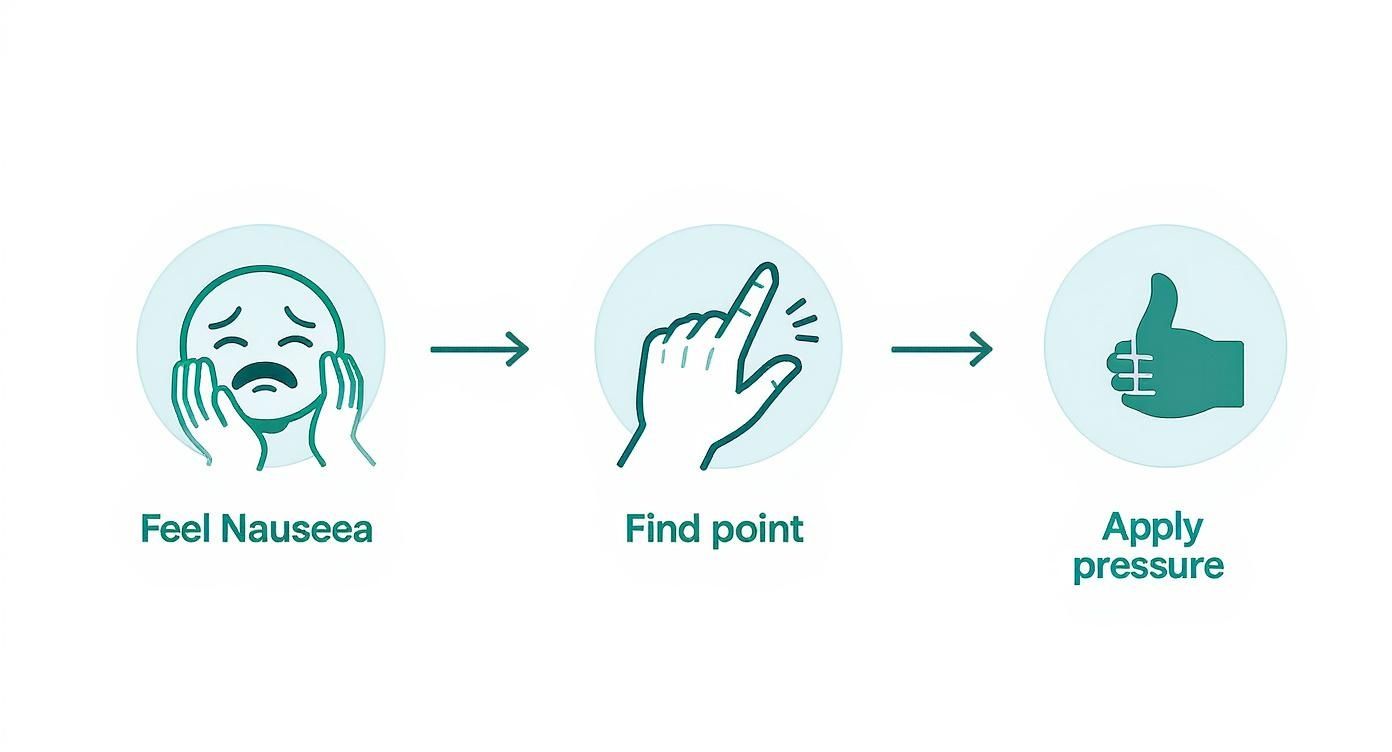
It’s a simple process: feel the nausea coming on, find that spot on your inner wrist, and apply some firm, steady pressure. You'll be surprised how quickly you can start to feel the discomfort ease.
How To Apply Pressure Correctly
Once you’ve locked onto the P6 point, how you apply pressure is what really counts. Use your thumb to press down firmly. You’re aiming for a strong, deep pressure—enough to feel a distinct sensation, but it should never be painful. A light touch just won't cut it here.
You can stimulate the point in a couple of ways:
- Steady Pressure: Just press and hold the point without any movement. This is perfect for when you need to be discreet, like during a work meeting or on a crowded train.
- Circular Massage: Apply that same firm pressure but gently move your thumb in a small, slow circle. I’ve found this works brilliantly for my kids when they get car sick; the rhythmic motion seems to soothe and distract them more effectively.
Give both techniques a try and see which one feels right for you. The main goal is to create a noticeable sensation that helps your body’s nervous system focus on something other than the nausea signals.
For the best results, hold the pressure for one to three minutes, or until you feel that queasy feeling start to subside. Try pairing it with slow, deep breaths to really help calm your system and amplify the effect.
Practical Tips For Maximum Effectiveness
Getting the technique right can make all the difference. I’ve personally relied on this for everything from choppy flights to helping friends navigate the rough seas of first-trimester morning sickness. Along the way, I've learned a few things that really boost its effectiveness.
First, act fast. The moment you feel that first hint of queasiness, start applying pressure. Don’t wait for it to build into a full-blown crisis. Getting in early can often stop nausea in its tracks before it has a chance to escalate.
Second, don't forget you have two wrists! While pressing one side will definitely help, you'll often get more complete relief by stimulating the P6 point on both sides. You can alternate between your left and right wrists, or if you have someone with you, ask them to press both at the same time.
Finally, think about consistency. If you're on a long car journey or a boat trip, you might need to reapply pressure every hour or so as a preventative measure. This is where those acupressure wristbands really shine—they provide continuous, hands-free pressure, which is a fantastic option for longer-lasting situations.
Beyond P6: Other Effective Pressure Points
While the P6 point is a true superstar for tackling nausea, it’s not the only player on the field. Think of it as your first line of defence. But for more targeted relief, especially when your nausea is tangled up with other digestive troubles, it helps to know a couple of other key spots.
Two other powerhouse points, Stomach 36 and Conception Vessel 12, offer relief that perfectly complements the work of P6. I like to think of P6 as a general nausea signal jammer, brilliant for motion sickness or that first wave of queasiness. These other points are more specialised, getting closer to the source of digestive upset and bloating.
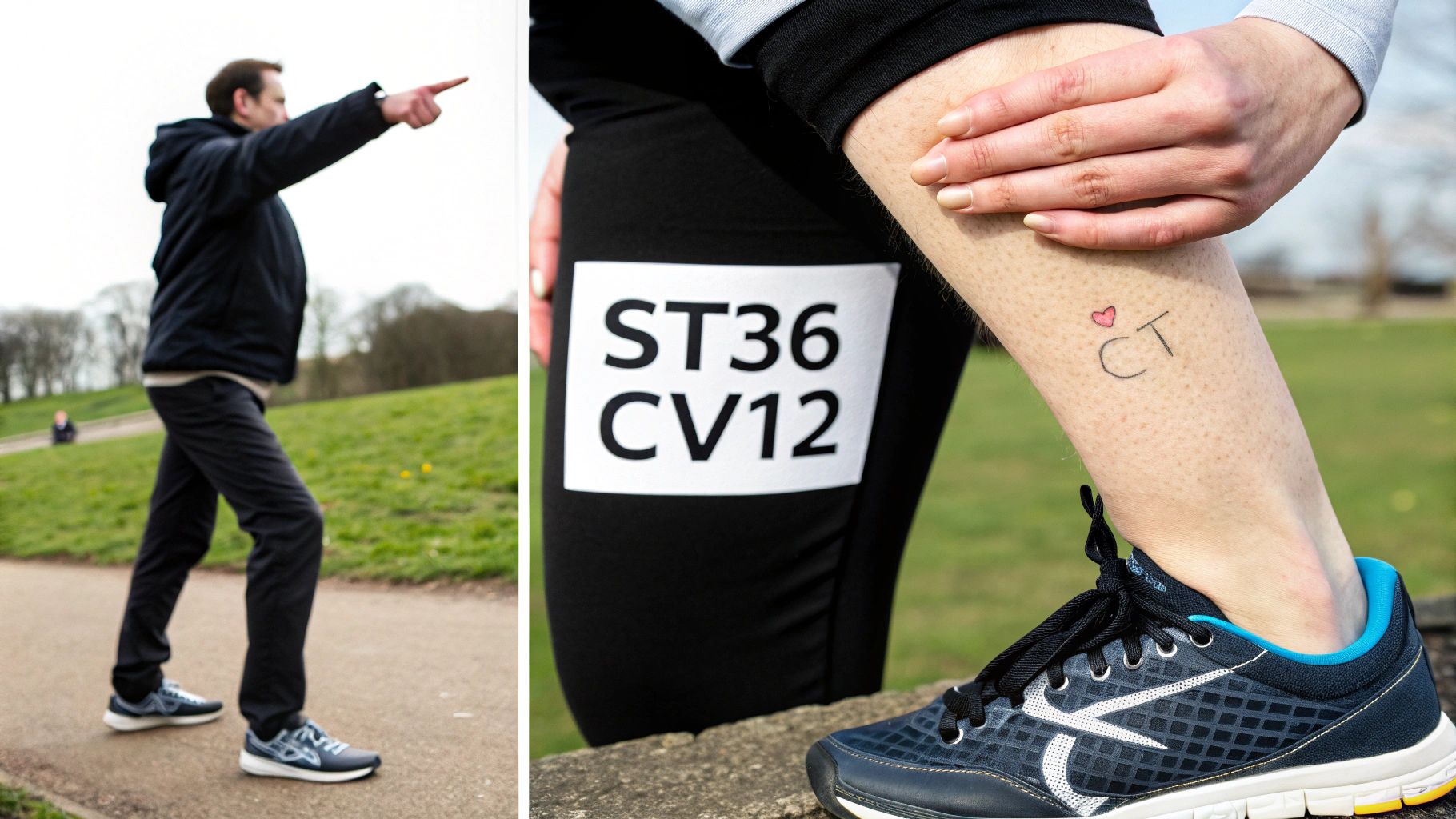
Learning how to find these spots is simple, and it gives you more control over how you manage your symptoms. Let's dive into where they are and how to use them.
Finding Stomach 36 for Digestive Wellness
The Stomach 36 (ST36) point, also known as Zusanli, is one of the most celebrated points in acupressure, not just for digestion but for overall energy. It’s my go-to when nausea comes with stomach pain, indigestion, or even that wiped-out, fatigued feeling. If you have that heavy, sluggish sensation in your gut, this is the point you want.
Finding it is pretty straightforward:
- Sit down comfortably and place the heel of one hand on top of your kneecap, letting your fingers point down your leg.
- The ST36 point is right where the tip of your ring finger lands, just to the outside of your prominent shinbone.
- You’ll likely feel a small dip or a tender spot in the muscle when you press into it.
Once you’ve got it, apply firm, deep pressure with your thumb or even a knuckle. I find a slow, circular massage for one to three minutes works best. You’re aiming for a noticeable, even strong sensation, but it should never be outright painful. Stimulating this point can feel incredibly grounding, almost like it’s reconnecting you to your body and settling everything down.
I often turn to the ST36 point after a big meal that leaves me feeling bloated and off. It genuinely feels like it kickstarts my digestion and eases that sluggishness that can quickly turn into nausea.
Targeting Conception Vessel 12 for Stomach Upset
When your nausea feels like it's camped out right in the middle of your stomach—think bloating, cramping, or that tight, uncomfortable fullness—the Conception Vessel 12 (CV12) point is your best bet. Its traditional name is Zhongwan, and it’s located right over the stomach, making it perfect for immediate, localised relief.
To find CV12, it’s easiest to lie down on your back. The point is on the midline of your body, about halfway between the bottom of your breastbone (your sternum) and your belly button. It can be quite a tender spot, especially when you’re not feeling well.
Because this area is often sensitive, a gentler approach is needed here:
- Place two or three fingers flat over the point.
- Apply gentle but firm pressure, pressing straight down.
- Hold this steady pressure for a couple of minutes while you focus on slow, deep belly breaths. Feel your abdomen rise and fall.
This combination of gentle pressure and deep breathing is a wonderfully calming ritual. It’s fantastic for indigestion and that "stuck" feeling, and it can soothe an upset stomach before nausea really takes hold.
Comparing P6, ST36, and CV12 for Nausea Relief
To help you decide which point to use and when, here’s a quick comparison of the three main players for nausea relief. Each has its own strengths, depending on what’s causing your discomfort.
| Acupressure Point | Best For | How to Stimulate | Duration |
|---|---|---|---|
| P6 (Neiguan) | General nausea, motion sickness, morning sickness, post-op queasiness. | Firm, steady pressure or small circular massage on the inner wrist. | 2-3 minutes per wrist |
| ST36 (Zusanli) | Nausea with indigestion, bloating, fatigue, and general digestive weakness. | Deep, firm pressure with a circular massage just below the knee. | 1-3 minutes per leg |
| CV12 (Zhongwan) | Nausea centred in the stomach, bloating, cramping, and feelings of fullness. | Gentle but firm, sustained pressure on the upper abdomen. | 2-3 minutes while breathing deeply |
Having all three of these points in your self-care toolkit means you’re well-equipped to handle whatever kind of nausea comes your way, whether it's from a bumpy car ride, a heavy meal, or a nervous stomach.
Acupressure for Morning Sickness: A Safe Guide
https://www.youtube.com/embed/8dhvkGGTnHU
Wrestling with morning sickness is one of the toughest parts of pregnancy for many women. The good news is that acupressure offers a drug-free, completely safe way to manage that persistent nausea, giving you a bit of control back when you’re feeling rotten. The most well-known and researched point for this is P6, found on your inner wrist.
Its effectiveness is a huge reason why so many expecting mums give it a go. Rather than reaching for medication, you can often find significant relief from that constant queasiness just by stimulating this one spot.
It's amazing how common nausea and vomiting in pregnancy (NVP) really is. A recent Australian study found that 72% of women go through it. Surprisingly, only 39% used any kind of treatment, and most of those were non-prescription options. This really shows how much of a need there is for safe, non-medical methods like acupressure. If you're interested in the details, you can read more about pregnancy nausea management.
The P6 Point for Pregnancy
When you're dealing with pregnancy nausea, the only point you really need to focus on is P6 (Neiguan). We’ve already covered how to find it on your inner wrist, and the method is exactly the same: apply firm, steady pressure for two to three minutes whenever a wave of sickness hits.
You can easily do this yourself, get your partner to help, or even try acupressure wristbands for a more continuous, gentle pressure throughout the day. The bands are a fantastic option because they’re discreet and give you hands-free relief.
Acupressure is all about gentle rebalancing. You want to press hard enough to feel a definite sensation—like a dull ache or a bit of tingling—but it should never hurt. Your body will tell you what’s right, so just listen to it and ease up if you need to.
While acupressure is generally safe, it's always wise to be cautious when managing any pregnancy symptoms. If headaches are also part of your experience right now, it helps to understand what's behind them. We cover this in our article on what to know about pregnancy headaches.
Important Points to Avoid During Pregnancy
Nothing is more important than safety during pregnancy. While some pressure points are a huge help, a few others are thought to potentially stimulate uterine contractions and should be left alone. Knowing which areas to avoid will help you feel confident and secure.
Here are the main points you should steer clear of:
- Large Intestine 4 (LI4): This one’s in the fleshy bit between your thumb and index finger.
- Spleen 6 (SP6): You'll find this about four of your own finger-widths up from your inner ankle bone.
- Bladder 60 (BL60): Located in the dip between your Achilles tendon and the outer ankle bone.
- Bladder 67 (BL67): Right on the outer corner of your pinky toenail.
By sticking only to the P6 point on your wrists, you’re using the safest and most proven strategy for keeping morning sickness in check. If you ever have any doubts, it's always best to chat with your doctor, midwife, or a qualified acupuncturist who has experience with prenatal care.
Getting the Most Out of Acupressure (and When to Call the Doctor)
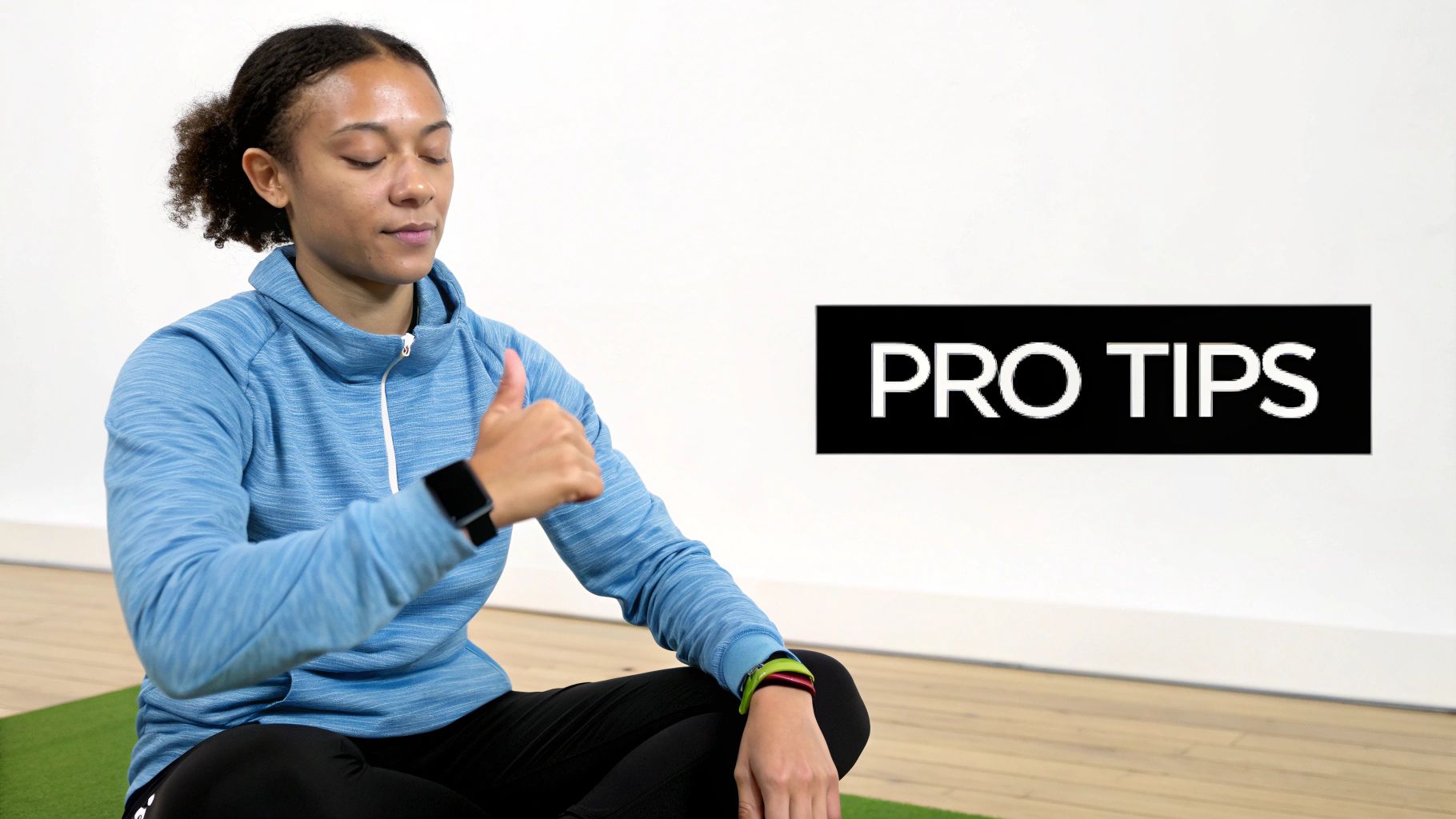
Knowing where the pressure points for nausea are is one thing, but how you apply that pressure can really make all the difference. It's less about just pushing a button and more about finding that perfect level of firm, steady contact.
A little tip from experience: when you're working on a point like P6, try using the flat pad of your thumb instead of a fingertip. It covers a broader area and gives you a more consistent, deep pressure. You're aiming for a sensation that's strong, maybe even a little achy, but it should never be outright painful. Think of it as sending a clear, firm message to your nervous system, not trying to leave a mark.
A Few Ways to Boost Your Results
To really amplify the benefits, you can layer in a couple of simple techniques. These small additions can make a surprisingly big impact on how quickly you start to feel relief.
- Don't Forget to Breathe: As you're applying pressure, focus on taking slow, deep breaths. A long inhale through your nose that fills your belly, followed by a slow exhale through your mouth. This calms your entire nervous system and makes the acupressure that much more effective.
- Consider Acupressure Wristbands: For those times when you need ongoing relief—think long car rides or a rough bout of morning sickness—acupressure wristbands are a game-changer. They apply continuous, gentle pressure to the P6 point, so you get the benefits without having to do a thing.
I've found that the real magic happens when you pair the physical stimulus of acupressure with the mental calm of deep breathing. It's a powerful combination that tackles nausea from two different angles.
Knowing Your Limits: When to See Your GP
While acupressure is a fantastic tool for managing mild to moderate nausea, it’s not a cure-all and certainly isn't a substitute for proper medical advice. It's so important to recognise when your body is sending you signals that something more serious is going on.
It’s time to put self-treatment aside and call your doctor if you notice any of these red flags:
- Vomiting is severe or just won't stop for more than 24 hours.
- You see signs of dehydration, like dark-coloured urine, feeling dizzy, or being intensely thirsty.
- The nausea comes with a severe headache, a really stiff neck, or a high fever.
- You literally can't keep any liquids down.
- You're experiencing sharp, intense pain in your abdomen.
These symptoms could point to an underlying issue that needs to be properly diagnosed and treated. Using pressure points for nausea is a brilliant first-response strategy, but always trust your gut—if something feels seriously wrong, it's time to get professional help.
Your Acupressure for Nausea Questions, Answered
When you first start exploring pressure points for nausea, it's completely normal to have a few questions pop up. Getting your head around the little details is what gives you the confidence to actually use these techniques when you need them most. Let's run through some of the most common things people ask.
A lot of people are curious if this is all just a placebo effect. While everyone’s body is different, the relief you can get from acupressure often feels very real and can come on quite quickly, making it a go-to for many.
How Quickly Does This Actually Work?
This is probably the number one question. The good news is, you don’t have to wait long. Most people feel their queasiness start to fade within just one to three minutes of applying steady, firm pressure to the P6 point.
Think of it less like an instant "off switch" and more like slowly turning down the volume on your discomfort.
For the best results, my advice is to get onto it as soon as you feel that first wave of nausea. Nipping it in the bud early, along with some slow, deep breaths, really seems to accelerate the calming effect.
The feeling of relief can be subtle at first—maybe just a slight easing of that churning sensation. Stick with it for a few minutes, as the benefits often build with consistent pressure.
Can Acupressure Help With Medically Induced Nausea?
Absolutely. Acupressure, especially targeting the P6 point, is often used to help manage the nausea that comes with chemotherapy or post-surgery recovery. Because it’s non-invasive, it can be a fantastic complementary therapy that works alongside medical treatments without getting in the way.
In fact, many cancer treatment centres across Australia now include acupressure in their supportive care programs. That said, it's absolutely essential to speak with your doctor or oncology team first. They need to give you the green light and confirm it’s a safe and appropriate choice for your specific health plan.
Are There Any Side Effects to Worry About?
Acupressure is incredibly safe, which is a huge part of its appeal. The most common side effect is a little bit of soreness or maybe a small bruise at the pressure point if you've been pressing a bit too hard for too long. Remember, the goal is firm but comfortable pressure—it should never be painful.
As we covered earlier, certain points should be avoided during pregnancy. And if you have a serious medical condition like a bleeding disorder or you're on blood thinners, having a quick chat with your GP is always the wisest move before starting any new therapy. For other general questions, you might find the answer on a dedicated FAQs page about wellness practices.
What Is the Difference Between Acupressure and Acupuncture?
This is a great question, as it's easy to mix them up. Both therapies are based on the same principles of Traditional Chinese Medicine and work on the very same points on the body.
The difference is all in the technique:
- Acupressure is non-invasive. It relies on the firm pressure from your fingers, thumbs, or a special tool. Best of all, it's something you can easily do yourself.
- Acupuncture involves a trained and licensed practitioner inserting very thin, sterile needles into these specific points.
Both can be incredibly effective for nausea, but acupressure is the one you can do anywhere, anytime you need it. It's your DIY relief tool.
At Headache Cap, we're all about finding natural, drug-free relief. If your nausea is tied to headaches or migraines, our hot and cold therapy caps can offer that soothing comfort while you put these pressure point techniques to work. You can explore our range of solutions at https://headachecap.com.au.


