


What Causes Tension Headaches and How to Find Relief
So, what’s actually happening in your head when that familiar, vice-like grip of a tension headache takes hold?
It's not just some random ache. The most common culprit is muscle contraction around your head and neck. Imagine the muscles in your scalp, jaw, and neck as a network of small elastic bands. When you’re stressed, tired, or even just hunched over a desk for hours, these bands get pulled tight and stay that way. Over time, this constant tension can make the nerves in that area hypersensitive, and that’s when the pain signals start firing.
Unpacking the Causes of Tension Headaches
While that tight-band feeling is a pretty universal experience, getting to the root of a tension headache means looking at how often it happens. This is a crucial distinction that helps you and your doctor figure out the best way to manage them. We generally break them down into two main types.
Episodic vs Chronic Headaches
The real difference between the two boils down to one thing: frequency. How often these headaches show up determines their classification and, more importantly, how much they can impact your life.
-
Episodic Tension Headaches: This is the garden-variety headache most of us know. They occur on fewer than 15 days per month and can last anywhere from a quick 30 minutes to a few days. They’re annoying, for sure, but often respond well to simple changes or an occasional over-the-counter painkiller.
-
Chronic Tension Headaches: This is a whole different ball game. To be classified as chronic, you need to be experiencing headaches on 15 or more days a month for at least three months straight. While the pain might not be as severe as a migraine, its relentless, near-constant presence can seriously interfere with your work, sleep, and overall well-being.
And this isn't a rare problem. Tension-type headaches are incredibly common here in Australia. A 2016 estimate suggested that a staggering 33.5% of Australians—that’s around 8.1 million people—dealt with them in a single year. You can dive deeper into the headache prevalence in Australia to see the full picture.
At its heart, a tension headache is often a vicious cycle. A trigger—like stress or staring at a screen—causes your muscles to tighten up. This sustained tension then makes your nervous system more sensitive to pain, which creates the headache itself.
To help you connect the dots between the underlying cause and what might be kicking it off in your daily life, here’s a quick summary.
Tension Headache Causes and Triggers at a Glance
This table breaks down the fundamental physical issues and the common, everyday situations that can set off a tension headache.
| Cause or Trigger | Common Examples |
|---|---|
| Physical Stress | Poor posture (especially 'tech neck'), jaw clenching, eye strain |
| Emotional Stress | Anxiety, depression, work pressure, fatigue |
| Lifestyle Factors | Dehydration, skipping meals, lack of sleep, alcohol use |
| Environmental Triggers | Bright lights, loud noises, strong smells |
Seeing it laid out like this can often help you start to identify your own personal patterns and take the first step towards getting some relief.
The Physical Roots of Your Headache Pain

While it’s easy to blame a single tight muscle in your neck or shoulders, the real story behind tension headaches is a bit more involved. The pain actually comes from a complex web of muscles and tissues that wrap around your entire skull, known as the pericranial myofascial tissues. It helps to picture this network as a snug-fitting cap made of muscle.
When these muscles are held tight for long periods—thanks to stress or poor posture—they don’t just get sore. This constant strain sends a steady stream of distress signals up to your brain. After a while, your central nervous system can become overly sensitive and essentially turn up the volume on how it perceives pain.
This phenomenon is called central sensitisation. It’s your brain starting to interpret even normal, everyday signals from these muscles as painful. This is precisely why a tension headache feels so persistent and widespread, creating that classic "tight band" sensation around your head.
How Everyday Strains Lead to Headache Pain
This heightened pain sensitivity isn't just a theory; it’s directly tied to specific physical habits and problems many of us deal with every day. The link between your body's posture and the pain you feel is surprisingly direct. These physical stressors are often the main culprits tightening that "muscle cap" around your head.
Here are a few of the most common physical triggers that kickstart this cycle:
- Poor Neck Alignment or 'Tech Neck': We spend so much time looking down at phones and computers. This forces the muscles at the back of your neck and the base of your skull to work overtime just to hold your head up. This chronic strain is a huge contributor to pericranial muscle tension.
- Temporomandibular Joint (TMJ) Dysfunction: Clenching your jaw or grinding your teeth, often a subconscious reaction to stress, puts incredible pressure on your jaw muscles. These powerful muscles are directly connected to the ones in your temples and scalp, feeding right into the tension headache network.
- Persistent Eye Strain: When your eyes have to fight to focus for hours on end, the tiny muscles around them get exhausted. That fatigue can easily radiate outwards to the larger muscles across your forehead and temples, sparking that all-too-familiar headache pain.
Understanding these deeper physical connections is the first real step toward getting control over your headaches. Once you start to see how different parts of your body are contributing to the pain, you can take much more targeted steps toward finding relief. To dig deeper into this, you can learn more about why headaches happen in our detailed guide.
The key takeaway is that a tension headache is rarely just a "head" problem. It’s a full-body issue where strain in your neck, jaw, or even eyes overloads the system and makes your brain more reactive to pain signals.
Right, let’s get this sorted. You know what a tension headache feels like, but figuring out why it's happening is a whole other story. It’s about becoming a bit of a detective in your own life to uncover the specific habits and situations that are flipping the switch on your pain.
Often, it's not one big thing. It's usually a combination of smaller, seemingly innocent factors that pile up throughout your day or week. Once you start spotting these patterns, you gain the power to break the cycle, often before the headache even has a chance to set in.
The Usual Suspects Behind Your Headache
Most triggers fall into a few predictable buckets: your lifestyle, your surroundings, and how you're feeling emotionally. When that familiar ache starts to creep in, these are the first places to look.
Here are some of the most common culprits:
- Stress, the Obvious One: That big project at work or a worry you can't shake can make you clench your jaw and tighten your shoulders without you even realising it.
- A Bad Night's Sleep: Tossing and turning all night means your muscles never get the chance to properly relax and recover. You wake up already primed for tension.
- Forgetting the Basics: Not drinking enough water or skipping lunch can throw your body completely out of whack, making you much more vulnerable to headache pain.
- Your Environment: Think harsh fluorescent lights, a computer screen that won't stop flickering, or even just constant noise. This kind of sensory overload leads directly to eye strain and muscle tension.
And this isn't a small problem. In Australia, headaches lead to over 1.7 million GP visits every year. A huge number of Aussies say headaches make them less productive at work. In fact, studies show about 1 in 5 of us are dealing with headaches at least once a week, which is a massive disruption. You can read more about the burden of headaches in Australia to see the full picture.
How to Become Your Own Headache Detective
Honestly, the best tool you have is simple awareness. For one person, it might be that third coffee of the day. For someone else, it's the awkward way they hold their neck while scrolling on their phone. Try keeping a simple headache diary for a couple of weeks—the connections it reveals can be genuinely surprising.
Think of it like this: by jotting down when your headaches start and what you were doing, eating, or feeling at the time, you're essentially creating a personal map. This map shows you exactly where the trouble spots are, empowering you to make small, specific changes that bring big relief.
Is It a Tension Headache or a Migraine?
It’s tempting to call any nasty headache a migraine, but telling the difference between that and a tension headache is the key to getting proper relief. They can feel similar at first, but their symptoms tell completely different stories about what causes tension headaches versus the more complex web of migraine triggers.
Getting it wrong can send you down a frustrating path of trying treatments that simply don't work. The trick is to play detective and pay close attention to what you're feeling and where.
A tension headache usually feels like a dull, constant ache or pressure. Many people describe it as a tight band squeezing their head. Migraines, on the other hand, often bring a severe, throbbing or pulsing pain that’s typically camped out on one side of the head.
Key Differences at a Glance
To make it easier to tell them apart, let's break down the main characteristics of each headache type. Being able to spot these differences is the first step toward managing them effectively and having a clearer conversation with your doctor.
This visual guide can help you sort through common triggers and pinpoint what might be behind your head pain.
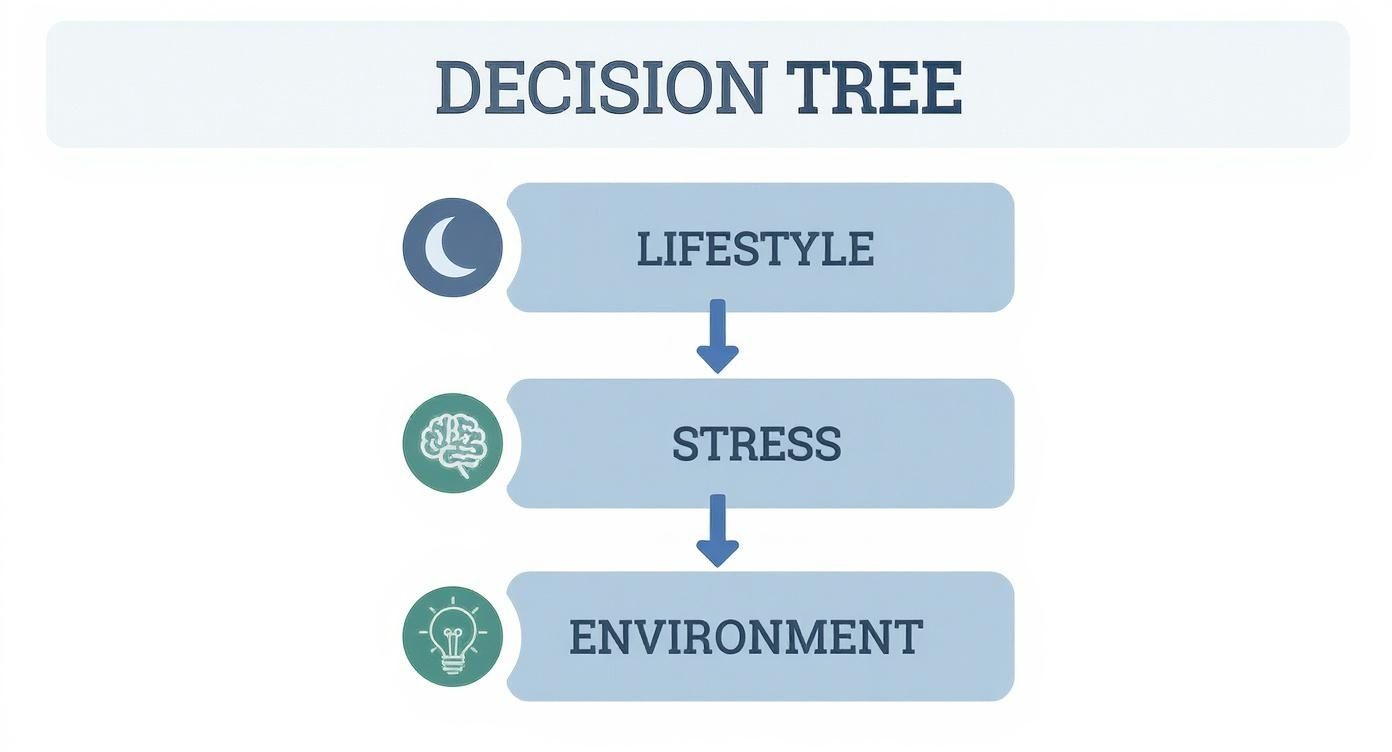
As you can see, factors like lifestyle, stress, and your environment are often the culprits behind those nagging daily headaches.
Tension Headache vs Migraine Key Differences
Here’s a side-by-side comparison to help you understand the unique characteristics of each headache type.
| Symptom | Tension Headache | Migraine |
|---|---|---|
| Pain Quality | Dull, aching pressure; a "squeezing" sensation | Severe throbbing or pulsing pain |
| Pain Location | Both sides of the head (bilateral); feels like a tight band | Usually one side of the head (unilateral) |
| Pain Severity | Mild to moderate; annoying but usually not debilitating | Moderate to severe; often disabling |
| Nausea or Vomiting | Rare | Common |
| Light & Sound Sensitivity | Possible, but usually mild | Common and often severe |
| Aura (Visual Changes) | No | Yes, in about one-third of cases |
The most telling difference is often the company the headache keeps. Tension headaches usually arrive on their own, while migraines bring along disruptive friends like nausea, extreme sensitivity to light, and sometimes visual disturbances known as an aura.
By carefully noting these distinctions, you can get a much clearer idea of what you’re dealing with. This knowledge helps you choose the right self-care strategies—like grabbing a cold compress for tension versus retreating to a dark, quiet room for a migraine—and allows you to seek the right medical advice when you need it.
Actionable Strategies for Relief and Prevention
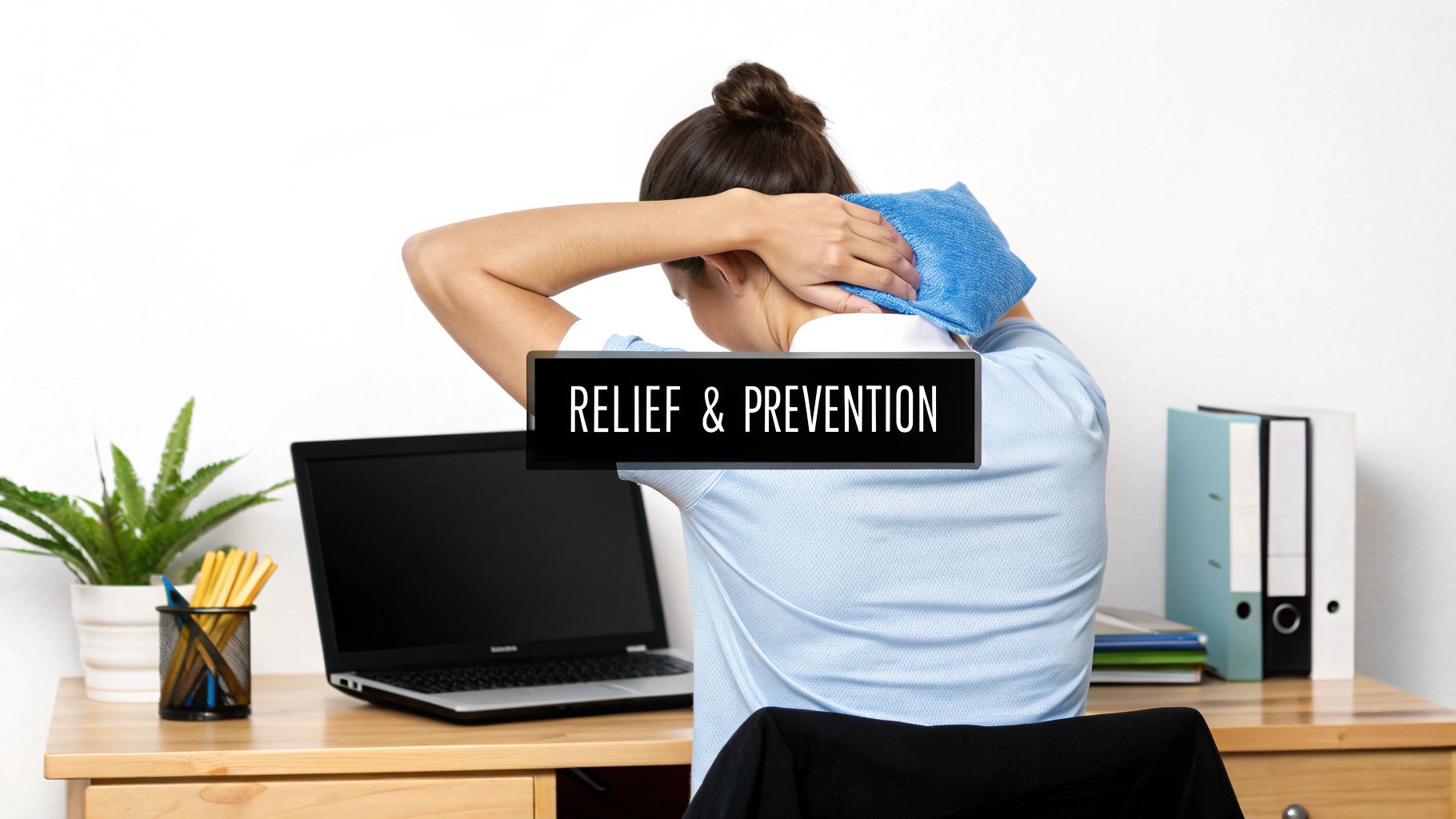
Knowing what causes your tension headaches is a great first step, but it’s only half the battle. Now, let's talk about building a practical toolkit—one for getting rid of the pain when it hits, and another for stopping it from coming back in the first place. A smart approach always tackles both sides of the coin: immediate relief and long-term prevention.
It’s tempting to reach straight for the painkillers, and for an occasional headache, they can certainly help. But relying on them too often isn't a sustainable plan. In fact, it can backfire. Frequent use can lead to something called a medication overuse headache, where the very thing you're using for relief starts causing more pain.
This is exactly why drug-free strategies are so valuable. They offer safe, effective ways to manage the pain you’re feeling right now and help you build healthier habits for good.
Finding Immediate Headache Relief
When a tension headache is squeezing your head, you need relief, and you need it fast. The immediate goal is to calm down those tense muscles and soothe the sensitised nerves around your head, neck, and shoulders. Luckily, there are a few simple, powerful things you can do without opening the medicine cabinet.
One of the most effective methods is temperature therapy. Whether you go for hot or cold really comes down to what feels best for you and your body at that moment.
-
Cold Therapy: Applying something cold, like a gel-filled Headache Cap, can be incredibly soothing. The cold helps constrict blood vessels and reduces inflammation, which works to numb that sharp, throbbing pain, particularly around your forehead and temples.
-
Heat Therapy: On the other hand, a warm pack placed across the back of your neck or shoulders can feel like a godsend. The warmth helps to gently relax those tight, knotted muscles that are so often the real culprits, boosting blood flow and easing the tension at its source. If you want to dive deeper, our guide on what heat therapy is and how it helps explains it all.
A great trick many people swear by is alternating between hot and cold. Try using a cold pack on your forehead for 15 minutes, then switch to a warm compress on your neck. This gives you a one-two punch: the cold numbs the pain while the heat gets to work on relaxing the trigger muscles.
Building Your Long-Term Prevention Plan
Real freedom from tension headaches isn’t about just treating the pain; it’s about preventing it from ever starting. This comes down to making small, consistent changes in your daily life and becoming more mindful of your body and your surroundings.
Your desk setup is a fantastic place to start. An ergonomic chair, a screen at eye level, and proper keyboard placement can make a world of difference in reducing neck and shoulder strain. And don’t forget to get up! Set a timer to remind yourself to stand, stretch, and walk around every hour.
Weaving simple stretches into your day can also work wonders:
- Neck Tilts: Slowly and gently tilt your ear towards your shoulder, holding for 15-20 seconds before switching sides.
- Shoulder Rolls: Roll your shoulders backwards in a big, slow circle a few times, then roll them forwards to release pent-up tension.
- Chin Tucks: Sit up straight and gently pull your chin back as if you're trying to make a double chin. This stretches the small muscles at the base of your skull.
Finally, you can’t ignore stress. It's a massive trigger. Finding a stress management technique that works for you is key. Whether it’s deep breathing exercises, a five-minute meditation, or just a quick walk outside, these practices help calm your nervous system and stop your muscles from clenching up.
By combining these immediate relief tricks with a solid long-term prevention plan, you can take back control and significantly reduce the hold tension headaches have on your life.
Here's the rewritten section, designed to sound like an experienced human expert while meeting all your requirements.
When to See a Doctor About Your Headaches
Most tension headaches are just life’s little annoyances—unpleasant, but not usually a cause for panic. Still, it’s smart to know when a headache is just a headache, and when it might be your body’s way of waving a red flag. Being able to tell the difference is key to looking after yourself properly.
We all get used to our own brand of headache. For most of us, tension headaches are triggered by the usual suspects: a stressful week at work, a long drive, or sleeping in a funny position. But if that familiar pattern suddenly changes, or the pain ramps up to a level you've never felt before, it's time to book an appointment. You're the expert on your own body, so if something feels off, it’s always worth getting it checked out.
Don't Ignore These Warning Signs
Some symptoms are more than just a bad headache; they’re urgent signals that you need to seek medical help right away. If your headache comes with any of the following, please get immediate medical attention:
- A sudden, explosive headache that feels like the "worst pain of your life." This is sometimes called a thunderclap headache and needs to be investigated immediately.
- Any head pain that starts after a knock to the head, no matter how minor it seemed.
- A headache paired with a stiff neck, high fever, confusion, seizures, or trouble getting your words out.
- Changes in your vision, or any weakness or numbness down one side of your face or body.
It's also a good idea to chat with your doctor if you notice your headaches are popping up more often, getting worse over time, or starting to interfere with your work or home life. If your usual over-the-counter pain relievers have stopped working, that's another sign to get a proper diagnosis and make sure nothing else is going on.
Common Questions About Tension Headaches
Even when you've got a good handle on what causes tension headaches, a few common questions always seem to come up. Getting clear, straightforward answers can make all the difference in feeling confident about managing your pain.
Let's clear up some of the most frequent queries.
Can Dehydration Really Cause a Tension Headache?
You bet it can. Your brain is mostly water, and when you're dehydrated, it can actually shrink a little. As it pulls away from the inside of your skull, it puts pressure on sensitive nerves, which can easily trigger a headache.
In fact, a headache is one of the very first signals your body sends when it's crying out for water. Simply staying on top of your hydration is one of the easiest and most effective ways to prevent them from starting in the first place.
Are Tension Headaches Hereditary?
This is a great question. While tension headaches don't have the strong genetic link we see with migraines, some studies do suggest there might be a genetic component. If they run in your family, you could be slightly more prone to them.
But here’s the thing: lifestyle and environmental factors almost always play a much bigger role. Things like your personal stress levels, posture (that dreaded 'tech neck'), and sleep patterns are far more powerful triggers than your family tree.
The key takeaway is that while genetics might set the stage, your daily habits and environment direct the show. You have significant control over the most common factors that lead to tension headaches.
How Long Is Too Long for a Headache to Last?
A typical tension headache can stick around for anywhere from 30 minutes to a full week, but most tend to clear up within a few hours. The bigger concern is frequency. If you're experiencing headaches on more than 15 days a month for three months straight, it's considered chronic, and that's a definite cue to chat with your doctor.
You should also seek medical advice if a headache is suddenly severe, hangs on for days without any relief, or if you notice your headache patterns changing for the worse. For day-to-day management, non-drug options like targeted cold therapy can be a fantastic first line of defence. To see the science behind it, you can learn more about how a Headache Cap works to soothe pain.


