


Using an Ankle Cold Pack for Fast and Effective Relief
That sudden twist, the sharp, searing pain, and the almost instant swelling—it's a scenario that's painfully familiar to many of us. When you've rolled your ankle, what you do in those first few minutes is absolutely critical. Reaching for an ankle cold pack is almost always the right first move to manage the pain and get the healing process started on the right foot.
Your First Move for Ankle Injury Relief
When you sprain your ankle, your body's natural alarm system kicks in, rushing blood and fluids to the site, which causes inflammation. While this is a normal part of healing, too much swelling can ramp up the pain and seriously limit your movement. This is where an ankle cold pack becomes your best friend.
Applying cold, a technique known as cryotherapy, works by constricting the blood vessels. This simple action slows down the rush of fluid to the injured area, helping you get a handle on the swelling right from the start.
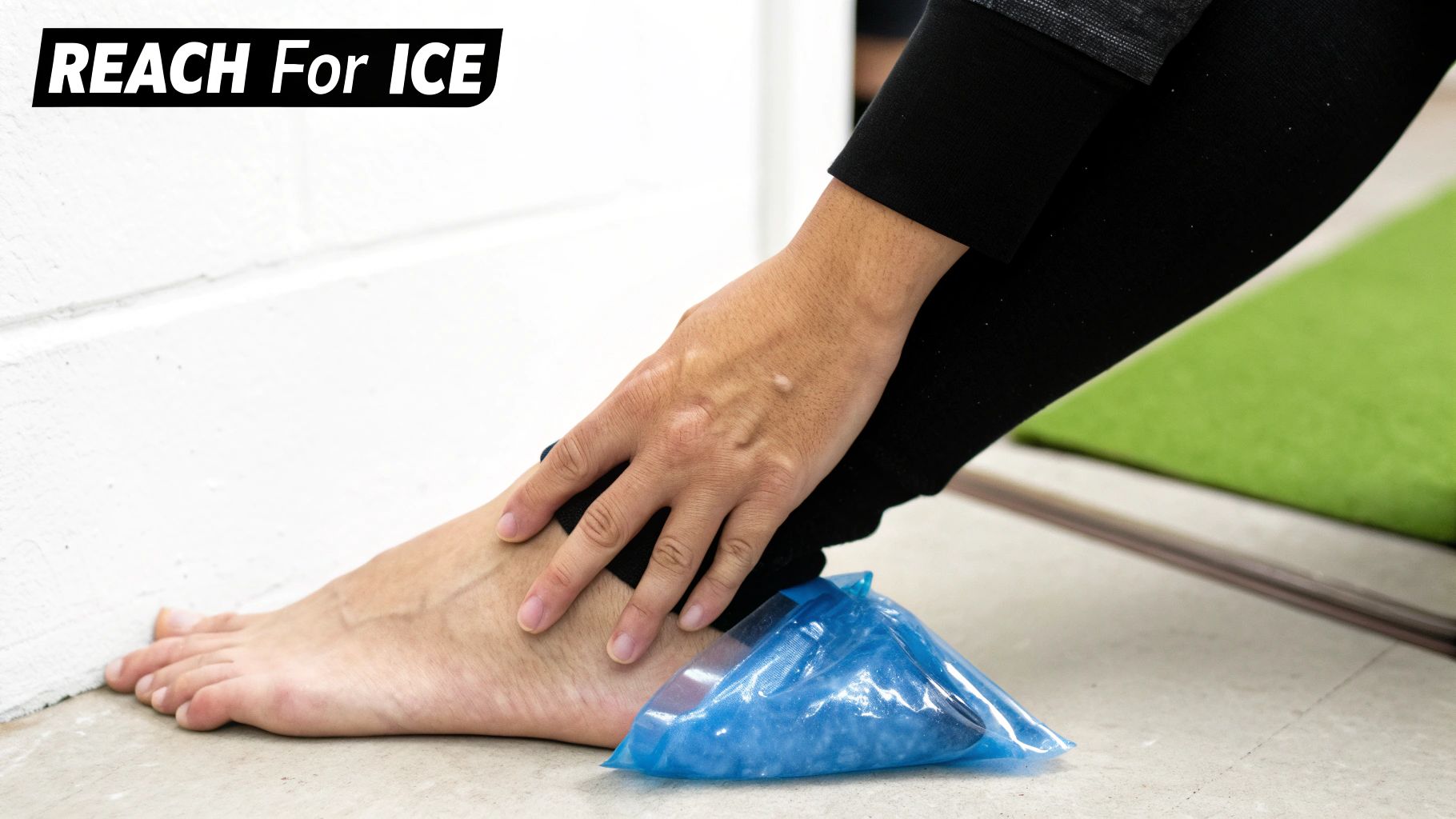
But it's not just about swelling. The cold provides immediate, targeted pain relief. It gently numbs the nerve endings in the tissue, which effectively dulls the pain signals travelling to your brain. This numbing effect offers some much-needed respite, especially in those first few intense hours after the injury.
The Science Behind Cold Therapy
The power of cold therapy isn't just an old wives' tale; it's a cornerstone of first aid for acute soft tissue injuries. The benefits really boil down to two key things:
- Reduced Inflammation: By narrowing blood vessels (a process called vasoconstriction), applying cold slows down that initial inflammatory response. This is most crucial within the first 48-72 hours.
- Pain Alleviation: The numbing sensation acts as a natural painkiller, which can reduce your reliance on other forms of non-pharmaceutical pain management.
Here in Australia, using cold packs is standard practice for common musculoskeletal injuries. Ankle sprains are incredibly common; in fact, soft tissue injuries accounted for nearly 25% of all injury-related hospital stays back in 2022.
By applying an ankle cold pack quickly, you're doing more than just treating the symptoms. You're actively limiting secondary damage from excessive swelling and laying the groundwork for a smoother, faster recovery.
A Holistic Approach to Recovery
While an ankle cold pack is a must-have for immediate relief, a full recovery plan is about more than just ice. To really look after your ankle and promote long-term joint health, it's smart to think about the bigger picture.
Once the initial pain and swelling subside, incorporating complementary strategies like effective cross-training activities can be a game-changer. These exercises strengthen the supporting muscles without putting too much strain on the healing joint, helping to prevent future sprains and get you back to full strength faster. This kind of holistic approach ensures you’re not just fixing the current problem but fortifying your body against the next one.
How to Choose the Right Ankle Cold Pack
When you’re staring down at a swollen, throbbing ankle, the last thing you need is a complicated decision. But believe it or not, there's a world of difference between cold packs, and picking the right one can seriously impact your comfort and recovery.
It's not as simple as grabbing a bag of frozen peas. Think about your lifestyle, the specific injury you're dealing with, and how often you'll need it. Getting this right from the start means faster, more effective relief.
Reusable Gel and Clay Packs
For everyday aches and injuries at home, a reusable gel or clay ankle cold pack is your best bet. These are specifically designed to stay pliable straight out of the freezer, which is crucial. A stiff, blocky pack won't wrap properly around the bony contours of your ankle, but a flexible one gives you that deep, penetrating cold right where you need it.
- Gel Packs: These are the classic choice you’ll find everywhere. They’re filled with a non-toxic gel that gets intensely cold and reliably holds that temperature for the recommended 15-20 minutes.
- Clay Packs: A fantastic alternative, clay packs are filled with a natural compound that many people find holds the cold longer and more evenly. They often feel a bit softer and don't "sweat" as much as some gel packs can.
The real win here is long-term value. Buy one, and it’s sitting in your freezer, ready to go for the next sprain, strain, or bout of post-exercise soreness.
Instant and Disposable Packs
What happens when you roll your ankle on a bushwalk or during Saturday sport? You're not exactly near a freezer. This is where single-use instant cold packs are absolute lifesavers. You just give them a firm squeeze or a snap, and an internal chemical reaction makes them cold on the spot.
They are an essential item for any first-aid kit, sports bag, or even the car's glovebox. They might not get as icy-cold or last as long as a reusable one, but for immediate, on-the-go first aid, you can't beat their convenience.
Ankle Wraps with Cold Inserts
If you want the gold standard in ankle icing, look no further than a specialised ankle wrap. These are clever all-in-one solutions that combine cold therapy with compression in a single, easy-to-use device. Most have a comfortable fabric wrap with strong Velcro straps and custom pockets that hold specially shaped gel packs.
The combination of cold and compression is a game-changer for swelling. The wrap locks the cold pack firmly in place while applying gentle, even pressure, which is brilliant for helping to reduce that painful fluid buildup.
Here in Australia, we're seeing a big shift towards these more advanced therapy products, especially as people focus more on health and sports recovery. There's a growing demand for eco-friendly, textile-covered packs that fit our sustainable mindset. In fact, projections show that versatile therapy pads—the kind used in these wraps—are set to capture over 26.3% of market revenue by 2025. You can read more about these trends in thermal delivery on Fortune Business Insights.
Ultimately, the best choice depends on your situation. A reusable pack is perfect for reliable home treatment, disposable packs are for being prepared anywhere, and a dedicated wrap offers the most targeted therapy. Understanding what cold therapy is will also help you decide which option will bring you the most relief.
Mastering Your Cold Pack Application Technique
Knowing how to properly use an ankle cold pack isn't just a trivial detail—it's what separates fast, effective relief from a wasted effort or even skin damage. Getting the technique right ensures the cold penetrates deep into the tissue to calm inflammation, but a misstep can lead to an ice burn or simply won't give you the relief you're looking for.
First, and this is the golden rule: never, ever put a frozen pack directly onto your bare skin. It’s a fast track to an ice burn, which is essentially a form of frostbite that can seriously damage skin cells.
Always create a buffer. A thin, slightly damp tea towel or a soft t-shirt works perfectly. I find that a slightly damp cloth actually helps conduct the cold a bit better than a dry one, giving you the best of both worlds—protection and performance.
Positioning for Maximum Impact
How you position your ankle and the pack itself can make a world of difference. It’s not enough to just plonk the pack on top of the swelling. You need to make sure it’s in full contact with the entire injured area, moulding around all the bony bits and curves of your ankle joint.
For the best results, get comfortable and prop your leg up on a few pillows. This simple elevation uses gravity to your advantage, helping to drain fluid and reduce swelling. Next, carefully wrap or mould your cold pack so it envelops the ankle—covering the front, sides, and maybe even part of the heel if the injury is extensive. If you're using a basic gel pack without a strap, you might need to hold it gently in place or use a light bandage to keep it secure.
As you can see, different types of packs are designed for different situations, from a reusable gel pack you keep in the freezer to an instant one you can crack for immediate use.
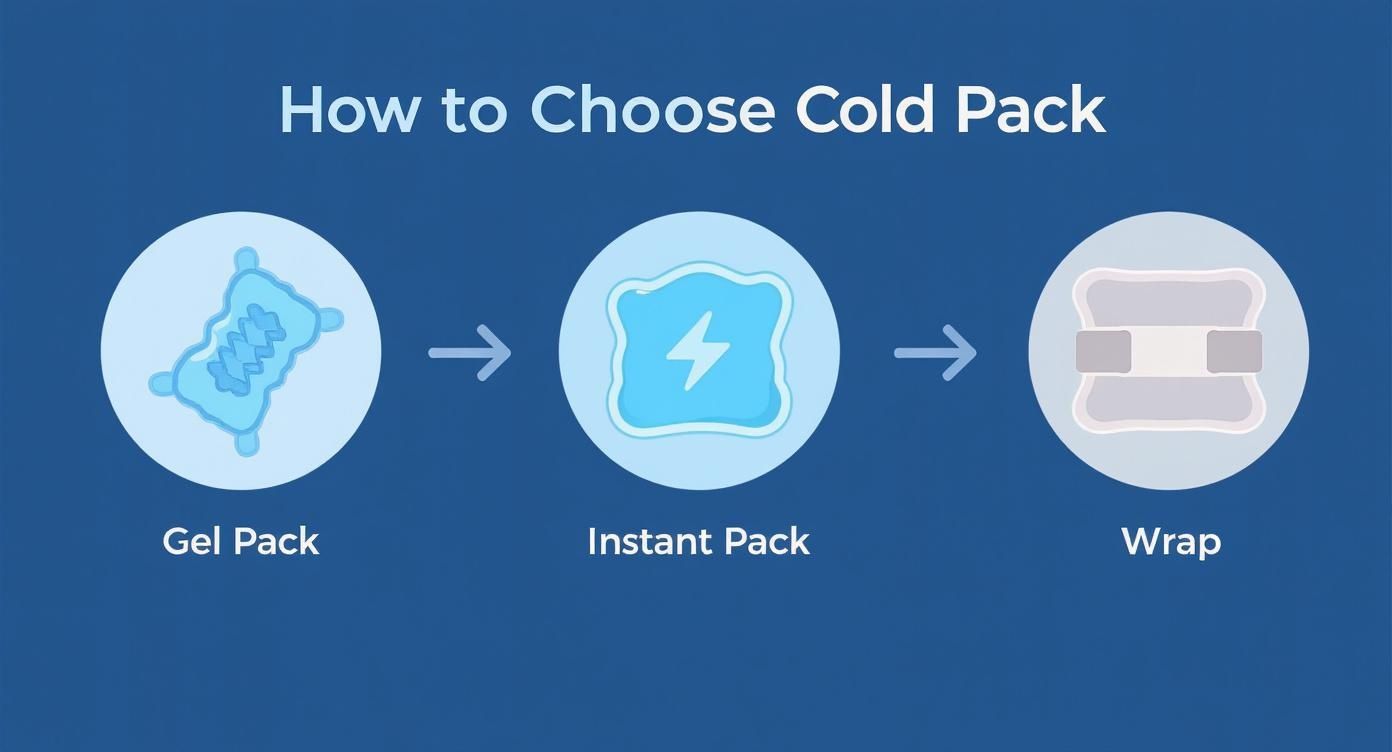
The image above highlights how your choice—be it a mouldable gel pack, a single-use instant pack, or a dedicated wrap—influences how well you can achieve that crucial coverage and compression.
The R.I.C.E. Method: A Proven Framework
Applying a cold pack is a cornerstone of the time-tested first-aid strategy known as the R.I.C.E. method. Each part of this acronym works in harmony to get an acute injury under control.
- Rest: Stop what you're doing immediately. Keeping weight off the injured ankle is critical to prevent making things worse.
- Ice: This is your cold pack's moment to shine. Apply it for 15 to 20 minutes at a time to bring down swelling and numb the pain.
- Compression: When you’re not icing, gently wrapping the ankle with an elastic bandage gives support and helps manage swelling. Just be careful not to wrap it so tight that you cut off circulation.
- Elevation: Whenever you can, keep your ankle propped up above the level of your heart. It’s a simple but incredibly effective way to help drain excess fluid from the injury site.
Integrating your icing routine into the full R.I.C.E. protocol is a powerful, multi-pronged attack on a fresh injury. It’s not just about the cold; it's the synergy of all four steps that really kickstarts the healing process in those crucial first 48 hours.
The ideal time to keep a cold pack on is between 15 and 20 minutes. Medical consensus shows this is the sweet spot for constricting blood vessels and easing inflammation without causing problems. If you ice for much longer than 20 minutes, you risk a rebound effect where your body tries to overcompensate, widening blood vessels and potentially increasing inflammation.
This is why the breaks are just as important as the icing sessions. You need to give your skin at least 30 to 40 minutes to return to its normal temperature before going again. A simple cycle of 20 minutes on, 40 minutes off is a reliable and effective rhythm for managing pain and swelling.
Creating an Effective Icing Schedule
Figuring out how often to ice a sore ankle can seem a bit tricky at first. But getting into a simple, consistent rhythm is your best bet for managing pain and swelling, especially in the first couple of days after you've hurt it. The main idea is to keep that inflammation in check without overdoing it and causing skin irritation.
The most crucial time for cold therapy is within the first 48 to 72 hours of the injury. This is when your body's inflammatory response is kicking into high gear. Regular icing during this window can make a massive difference to both the swelling and the pain levels. It's all about a cycle: short, targeted bursts of cold, followed by a decent break for your tissues to recover.
The "On and Off" Protocol
A good rule of thumb that most physios stand by is 15 to 20 minutes of icing, followed by at least an hour off. There's a solid reason for this timing. That first 15-20 minutes is just long enough to get the job done—it constricts the blood vessels in the area and helps numb the nerve endings, which gives you that powerful one-two punch of reduced swelling and pain relief.
It's tempting to think that longer is better, but leaving a cold pack on for too long can actually work against you. Your body, in its effort to protect itself from the prolonged cold, can trigger a rebound effect where the blood vessels rapidly expand. This is called reactive vasodilation, and it can unfortunately bring the swelling right back.
Remember, the "off" time is just as vital as the "on" time. It allows your skin and the tissues underneath to warm back up to their normal temperature, preventing any potential damage like frostnip or an ice burn.
So, on that first day, a good schedule might look something like this:
- 9:00 AM: Pop the cold pack on for 20 minutes.
- 10:00 AM: Take the pack off and let the area rest.
- 11:00 AM: Back on for another 20-minute session.
- Keep this cycle going as much as you can throughout your waking hours.
What Happens After the First 72 Hours?
Once you've pushed through those first three days, you can usually ease up on the intense, clockwork-like icing schedule. By this stage, the worst of the acute swelling should be under control.
From here, you can switch to using your ankle cold pack more on an "as-needed" basis. You might find it helpful after a bit of movement or at the end of a long day when things tend to swell up a bit.
This is also when people start thinking about switching from cold to heat. Once that initial, angry inflammation has settled down, some find that introducing warmth feels fantastic. While cold is your go-to for fresh injuries, you can learn more about how heat therapy helps with things like muscle stiffness and encouraging blood flow later on. The best advice is to listen to your body. If your ankle still feels hot and looks puffy, stick with the cold pack. If it's starting to feel more stiff than swollen, a gentle introduction to heat might be what it needs.
Common Cold Therapy Mistakes and How to Avoid Them
It seems straightforward enough—slap a cold pack on your sore ankle and let it work its magic. But I've seen plenty of people make simple mistakes that can either slow down their recovery or, even worse, cause more harm than good. Getting it right is the key to getting back on your feet faster.
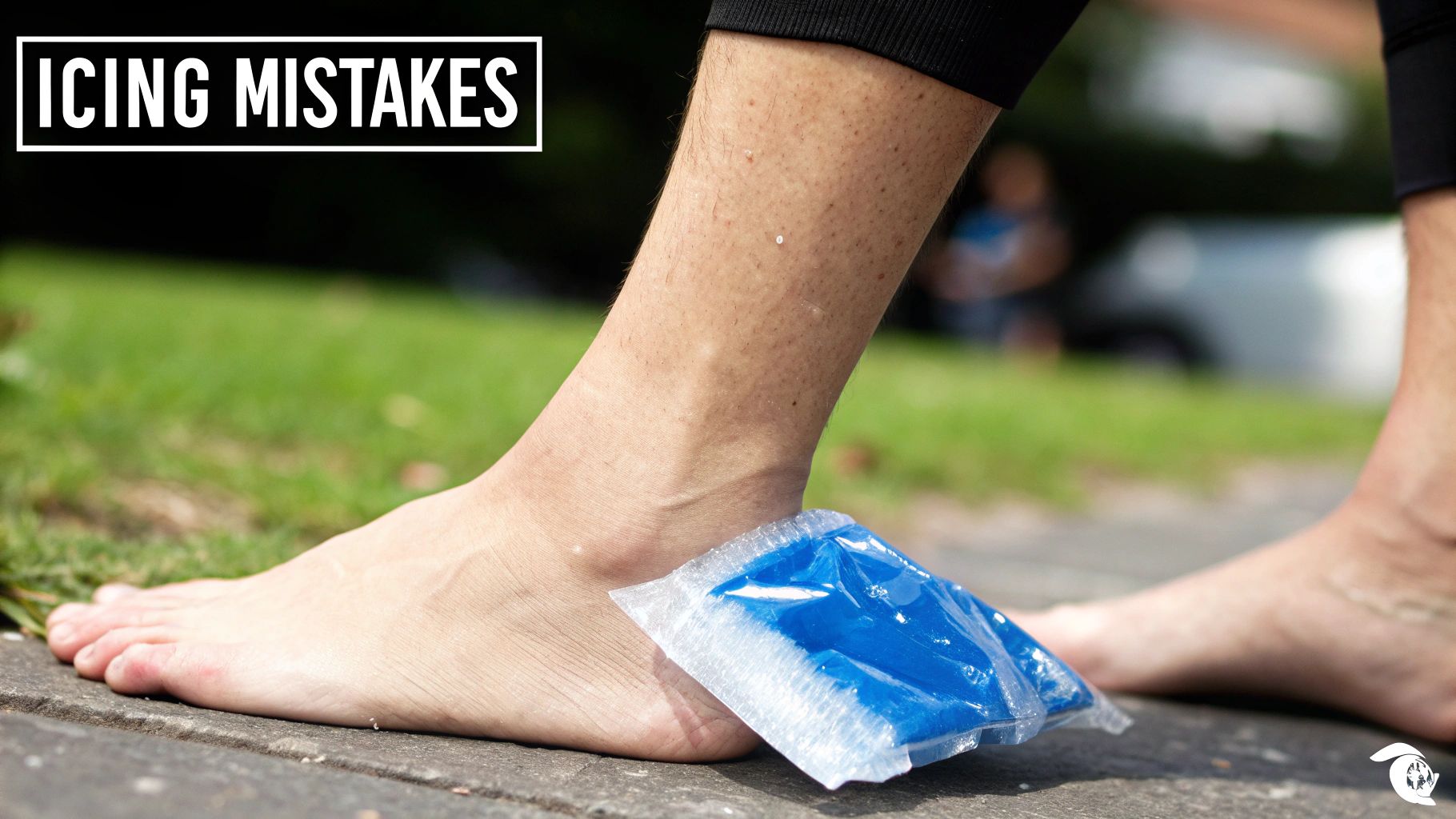
One of the biggest blunders, and one I see all the time, is putting a frozen pack straight onto your skin. It might feel like you're getting a more intense treatment, but that direct, intense cold can easily cause an ice burn, which is essentially a type of frostbite. Always, and I mean always, wrap the pack in a thin tea towel or a bit of t-shirt first.
Overdoing It with Time and Temperature
Another classic mistake is thinking that longer is better. It's not. Keeping an ice pack on for more than 20 minutes at a time can backfire spectacularly. Your body's natural defence mechanism kicks in and tries to warm the area up by flooding it with blood—a process called reactive vasodilation. The result? You can actually bring all that swelling right back.
And please, never, ever fall asleep with an ice pack on. The prolonged exposure is a fast track to serious skin and nerve damage. It's a simple fix: just set a timer on your phone for 15-20 minutes every time you ice.
Knowing When Icing Is the Wrong Choice
Cold therapy isn't a cure-all, and there are times when you should steer clear of it completely. It's really important to know when icing isn't the right move for your body.
Here are a few situations where you should avoid it:
- Circulatory Issues: If you have a condition that affects your circulation, like Raynaud's disease or peripheral vascular disease, icing can be risky because it constricts blood vessels.
- Nerve Problems: When an area has nerve damage or you've lost some sensation, you might not be able to feel if the skin is getting dangerously cold. This massively increases your risk of an ice burn.
- Open Wounds: Don't put a cold pack directly over an open cut or graze. It can slow down the healing and potentially introduce bacteria into the wound.
Key Takeaway: The whole point of cold therapy is to manage that initial, acute inflammation safely. If you have any ongoing health conditions, particularly anything that affects your circulation or skin sensation, it's always smart to check in with your doctor before you start a regular icing routine.
Here in Australia, we see a lot of sports injuries, and ankle sprains are right at the top of the list. In 2023, the Australian Sports Commission reported that sports injuries led to about 1.3 million hospital presentations. Ankle injuries accounted for a massive 28% of those cases, and proper icing is a cornerstone of that initial first aid.
If you're interested in the broader picture, you can read more about the global trends in disposable ice pack usage.
By simply avoiding these common pitfalls, you can make sure your recovery is heading in the right direction.
Your Ankle Cold Pack Questions Answered
Even when you think you've got the technique down, questions always come up when you're nursing an injury. Let's run through some of the most common things people ask about using an ankle cold pack so you can feel confident you're doing it right.
Can I Make a DIY Ankle Cold Pack at Home?
You absolutely can, and a homemade version can work wonders in a pinch. The classic go-to is filling a sturdy, sealable plastic bag with crushed ice and wrapping it in a damp tea towel. Simple, but effective.
Another old-school favourite is a bag of frozen peas or corn. There's a reason it's so popular—it moulds perfectly to the bony contours of your ankle. If you want a reusable DIY option, try mixing one part rubbing alcohol with two parts water in a freezer bag. The alcohol prevents it from freezing solid, creating a slushy gel that’s brilliant for wrapping around the joint. Just remember to always, always place a cloth barrier between the pack and your skin.
When Should I See a Doctor for an Ankle Injury?
This is a big one. Cold therapy is fantastic for managing the initial symptoms, but it's first aid, not a cure for a serious injury. You need to know when to stop self-treating and get a professional opinion.
It's time to see a doctor or a physio if you're experiencing any of these red flags:
- The pain is so bad you can't put any weight on your foot at all.
- You heard or felt a loud "pop" or "snap" when the injury happened.
- Your ankle looks misshapen, deformed, or clearly out of place.
- You have ongoing numbness, tingling, or that "pins and needles" feeling that won't go away.
Also, if the swelling and pain haven't started to get better after 48 to 72 hours of diligent rest and icing, that's your cue to get it checked out. A professional can properly diagnose the issue and rule out something more serious, like a fracture or a complete ligament tear.
As you move into long-term recovery, getting a handle on your ankle's mechanics is incredibly helpful. For instance, understanding how to measure ankle dorsiflexion can be a great way to track your rehab progress and help prevent problems down the road.
How Do I Clean and Store My Reusable Cold Pack?
Looking after your cold pack means it will be there for you when you need it next. It's pretty straightforward. After you use it, just give it a wipe-down with a bit of mild soap and water, then make sure it's completely dry before you put it away.
Store your pack flat in the freezer. This stops the gel from settling into a weird clump at one end and ensures it's ready to go for immediate relief. Before using it again, just do a quick check for any leaks or tears. If you see any damage, it's best to toss it to avoid any potential mess or skin irritation from the gel.
Should I Use a Hot or Cold Pack for My Ankle?
The "hot vs. cold" debate can be confusing, but for a new injury, the rule is crystal clear. For any acute sprain or strain within the first 48 to 72 hours, it's cold, cold, cold. An ankle cold pack constricts blood vessels, which is exactly what you need to calm down that initial swelling, inflammation, and throbbing pain.
Using heat too early will have the opposite effect. It opens up the blood vessels and can make the swelling and inflammation dramatically worse. Heat therapy has its place, but it's for chronic aches, lingering stiffness, or for much later in the healing journey to improve flexibility. For a fresh ankle injury, always reach for the cold pack first.
At Headache Cap, we're passionate about the power of targeted temperature therapy. While our caps are designed for head relief, the principles of effective, drug-free pain management are universal. We are committed to providing high-quality, reusable solutions to help you feel better, faster. Find out more at https://headachecap.com.au.


