


Your Complete Guide to Using a Migraine Ice Head Wrap
A migraine ice head wrap is a clever, drug-free tool designed to give you fast relief when a headache hits. It works by applying targeted cold and gentle compression to key pressure points around your head. This combination helps to reduce inflammation and dull that awful throbbing pain that comes with a migraine, offering a completely natural way to manage your symptoms.
How Cold Therapy Actually Eases Migraine Pain

When a migraine takes hold, the pain can be completely debilitating. It’s helpful to understand why something as simple as a cold wrap works so well, because it's all grounded in solid science. The magic is in how your body reacts to cold therapy, also known as cryotherapy.
Basically, cold therapy changes how your body is responding to the pain and inflammation. The intense cold from the gel packs inside the wrap causes the blood vessels in your head and neck to narrow. This process is called vasoconstriction.
This is a big deal during a migraine. Why? Because many migraines involve those exact blood vessels expanding, which then presses on highly sensitive nerves. The wrap counteracts this by constricting them, which can ease that relentless, pounding pressure.
Taming Inflammation and Numbing the Nerves
Beyond just shrinking blood vessels, the cold has a direct anti-inflammatory effect. It slows down the metabolic processes in your cells that cause swelling and pain, getting right to the source of the problem. It’s the same reason you’d grab an ice pack for a sprained ankle.
The cold also acts as a local anaesthetic. It numbs the nerve endings in the area, which interrupts the pain signals being fired off to your brain. This creates a soothing, dulling sensation that can take the sharp edge off even a truly nasty migraine.
If you're keen on the nitty-gritty of how cold temperatures can help the body, it's worth reading up on understanding the science behind cold therapy for recovery.
A migraine ice head wrap is like creating your own personal cool, dark, quiet cave. It bundles the power of cold therapy with gentle pressure and light-blocking, tackling several migraine triggers all at once.
A Growing Trend in Aussie Migraine Management
Here in Australia, more and more people are looking for effective, non-pharmaceutical ways to manage their pain. And it's no wonder—migraines affect a staggering 4.9 million Australians, and for many, medication either isn't enough or brings on side effects they'd rather avoid.
This search has led many to discover complementary solutions like the migraine ice head wrap. By directly addressing the physical symptoms of inflammation and blood vessel dilation, these wraps offer a practical and reusable way to fight back against an attack. They give you a sense of control, letting you take immediate action the moment you feel a migraine coming on.
To learn more about the specifics, you can check out our guide on what is cold therapy.
Getting the Most From Your Ice Head Wrap
Using your ice head wrap effectively is about more than just yanking it out of the freezer when a migraine hits. A bit of forward-thinking and the right technique can genuinely transform how much relief you get. Think of it less as a simple cold pack and more as a targeted tool in your migraine toolkit.
The secret is finding that sweet spot where the wrap is intensely cold but still flexible. Most gel-based wraps need about two to four hours in the freezer to reach this point. This ensures they're cold enough to work their magic without becoming a stiff, uncomfortable block of ice. You want it to mould perfectly to the unique shape of your head for maximum contact and comfort.
Mastering Your Application Technique
Migraine pain doesn't always show up in the same spot. Knowing a few different ways to wear your wrap means you can direct that cooling relief precisely where you need it most, customising the approach to whatever that particular migraine is throwing at you.
Here are a few ways I've found work best:
- For Temple and Forehead Pain: This is the classic for a reason. Position the wrap so the gel packs are sitting squarely over your temples and across your forehead. This directly targets the trigeminal nerve, a major player in migraine pain, and the gentle compression from the wrap adds an extra layer of soothing relief.
- For Pain at the Base of the Neck: You know those migraines that feel like they start as a knot of tension in your neck? For these, drape the chilled wrap around the back of your neck. This focuses the cold on the suboccipital muscles, which can help ease the tension and cervicogenic headaches that often trigger or go hand-in-hand with a migraine.
- For Full Coverage Relief: When the pain feels like it's everywhere, a full-coverage approach is a lifesaver. Many wraps are designed like a cap for this exact reason. Just pull it down over your entire head, making sure it covers your forehead, temples, and the back of your skull for 360-degree cooling comfort.
The goal is consistent, gentle cold therapy. Aim to wear your migraine ice head wrap for about 20-30 minutes at a time. This is the ideal window to help constrict blood vessels and numb the area without risking any irritation to your skin from the cold.
Cold vs Warm Therapy: A Versatile Approach
While ice is usually the first thing we reach for to deal with that throbbing migraine pain, some headaches actually respond better to warmth. Understanding when to use which gives you more control over managing your pain. Luckily, many modern wraps are designed for both.
Ice caps and wraps are becoming a go-to non-drug option for migraine relief here in Australia. They work by using the cold to reduce inflammation and narrow blood vessels (a process called vasoconstriction). Most experts suggest a 20 to 30-minute session is plenty to numb the area and provide effective relief during an attack.
Knowing when to grab a cold pack versus a heat pack is a crucial part of your headache management plan. We’ve put together a quick guide to help you decide.
A Quick Guide to Hot vs Cold Therapy
Learn when to grab an ice wrap versus a heat pack for different types of head and neck discomfort.
| Therapy Type | Best For | How It Works | When to Use |
|---|---|---|---|
| Cold 🧊 | Migraines, throbbing pain, inflammation | Constricts blood vessels, numbs nerve endings, reduces swelling. | Use at the first sign of a migraine or during an acute throbbing headache. |
| Hot 🔥 | Tension headaches, muscle stiffness | Increases blood flow, relaxes tight muscles, soothes soreness. | Use for dull, aching tension headaches or when your neck and shoulders feel tight. |
Ultimately, having both options available means you're prepared for whatever kind of head pain comes your way. For a deeper dive, check out our guide on using a cold compress for headache relief.
How to Choose the Right Ice Head Wrap for You
Not all migraine ice head wraps are created equal. With so many options popping up in Australia, picking the right one can feel a bit overwhelming when you're already in pain. But trust me, finding the perfect wrap comes down to understanding your own migraine patterns—where you feel the pain, what triggers you, and what feels most comforting during an attack.
Getting this choice right from the start means faster, more effective relief when a migraine strikes. It's all about matching the design to your specific needs.
Comparing Popular Migraine Ice Wrap Styles
Let's break down the common styles you'll find. To figure out which one is for you, think about where your pain usually camps out. Is it a sharp, stabbing pain behind one eye? Maybe a tight, constricting band around your forehead? Or does it start as a dull ache in your neck and creep upwards? Where you hurt is your best clue.
Use this feature comparison to select the ideal wrap design for your specific migraine needs.
| Wrap Style | Key Feature | Best For... | Potential Drawback |
|---|---|---|---|
| Full Coverage Caps | 360-degree cooling and light-blocking design, like a beanie. | All-over, throbbing pain and severe light sensitivity. | Can feel too intense or enclosing for some people. |
| Open-Top Designs | Provides targeted cold therapy while letting heat escape from the top. | People with long hair or those who overheat easily. | Doesn't offer the same complete light-blocking effect. |
| Adjustable Velcro Wraps | Customisable fit with adjustable pressure control. | Targeting specific pain points with precise compression levels. | Velcro can sometimes snag long hair if not secured properly. |
Choosing the best style really is about knowing yourself and what works for your body during a migraine episode. There's no single "best" option—just the best one for you.
The good news is, no matter which style you land on, using it is incredibly straightforward.
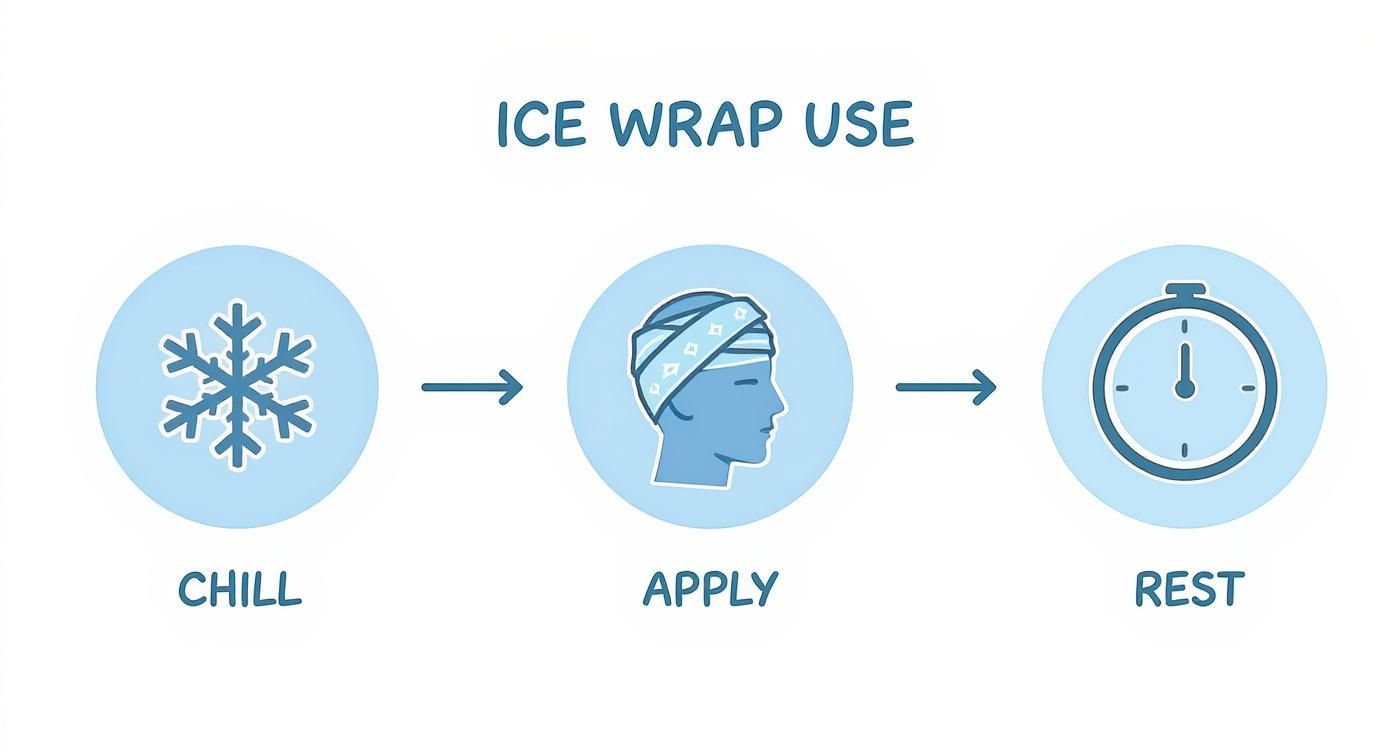
The key takeaway is that preparation is simple—just chill it, slip it on, and let yourself rest.
Material and Build Quality Matter
Beyond the actual shape, the materials used in a migraine wrap play a huge role in both its effectiveness and how comfortable it feels. You'll be wearing this directly against your skin when you're already feeling sensitive, so quality is absolutely essential.
Look for wraps made from soft, flexible fabrics like Lycra or specialised blends that don't feel harsh or turn rock-solid when frozen. The gel inside is just as important. High-quality, medical-grade gels are designed to stay colder for longer while remaining pliable, which helps the wrap mould perfectly to the unique contours of your head and face.
A well-made wrap is also a durable one, meaning it will hold up through countless trips to the freezer. You can learn more about how a well-designed headache cap helps with migraine relief in our detailed article.
Choosing a wrap is a really personal decision. Focus on a style that targets your main pain areas and is made from materials that feel genuinely soothing against your skin. The end goal is to create a small sanctuary of comfort and relief just for you.
Getting the Most Out of Your Cold Therapy
https://www.youtube.com/embed/34qyITFzphc
A migraine ice wrap is an incredibly helpful tool, but a few simple tips can make a world of difference. Think of it less as a rigid set of rules and more as fine-tuning your approach to get the absolute best relief from every single session.
First and foremost, always protect your skin. This is non-negotiable. Pulling a wrap straight from the freezer and slapping it on your skin is a recipe for an ice burn or frostnip, which can do more harm than good.
A thin, dry tea towel or a soft cloth between the wrap and your skin is all you need. Many modern wraps come with a soft fabric lining built-in, but an extra layer is never a bad idea, especially if you have sensitive skin.
Know When to Take a Step Back
Cold therapy is a game-changer for most migraine sufferers, but it isn't for everyone. If you have a pre-existing condition that messes with your circulation or nerve sensitivity, it pays to be cautious.
It’s a good idea to chat with your doctor before using an ice wrap if you have:
- Raynaud's disease: This condition can cause blood vessels to clamp down in the cold, and a wrap could make things worse.
- Poor circulation: If your blood flow is already sluggish, intense cold might restrict it even further.
- Peripheral neuropathy: This can dull your ability to sense temperature, meaning you might not realise your skin is in trouble until it's too late.
You also need to learn the signs of overdoing it. If your skin turns bright red or white, or you start to feel a pins-and-needles numbness, it's time to take the wrap off. Let your skin warm up naturally.
The whole point is to find soothing relief, not to power through discomfort. If it feels too intense or genuinely painful, take a break. Your body knows best.
Target Your Pain Points for Better Results
To really amplify the relief, think strategically about where you place the wrap. We all instinctively go for the forehead, and that's great, but don't underestimate the power of targeting your neck.
Research has actually backed this up. A 2013 clinical study discovered that applying a frozen wrap to the neck, right over the carotid arteries, made a significant dent in migraine pain. On average, participants felt a 31.8% reduction in pain after just 30 minutes. Even better, a massive 77% of them said the wrap helped. You can read the full research about these migraine findings for yourself.
It just goes to show how a simple tweak in placement can be a fantastic addition to your migraine management plan here in Australia.
Keeping Your Ice Head Wrap Clean and Ready
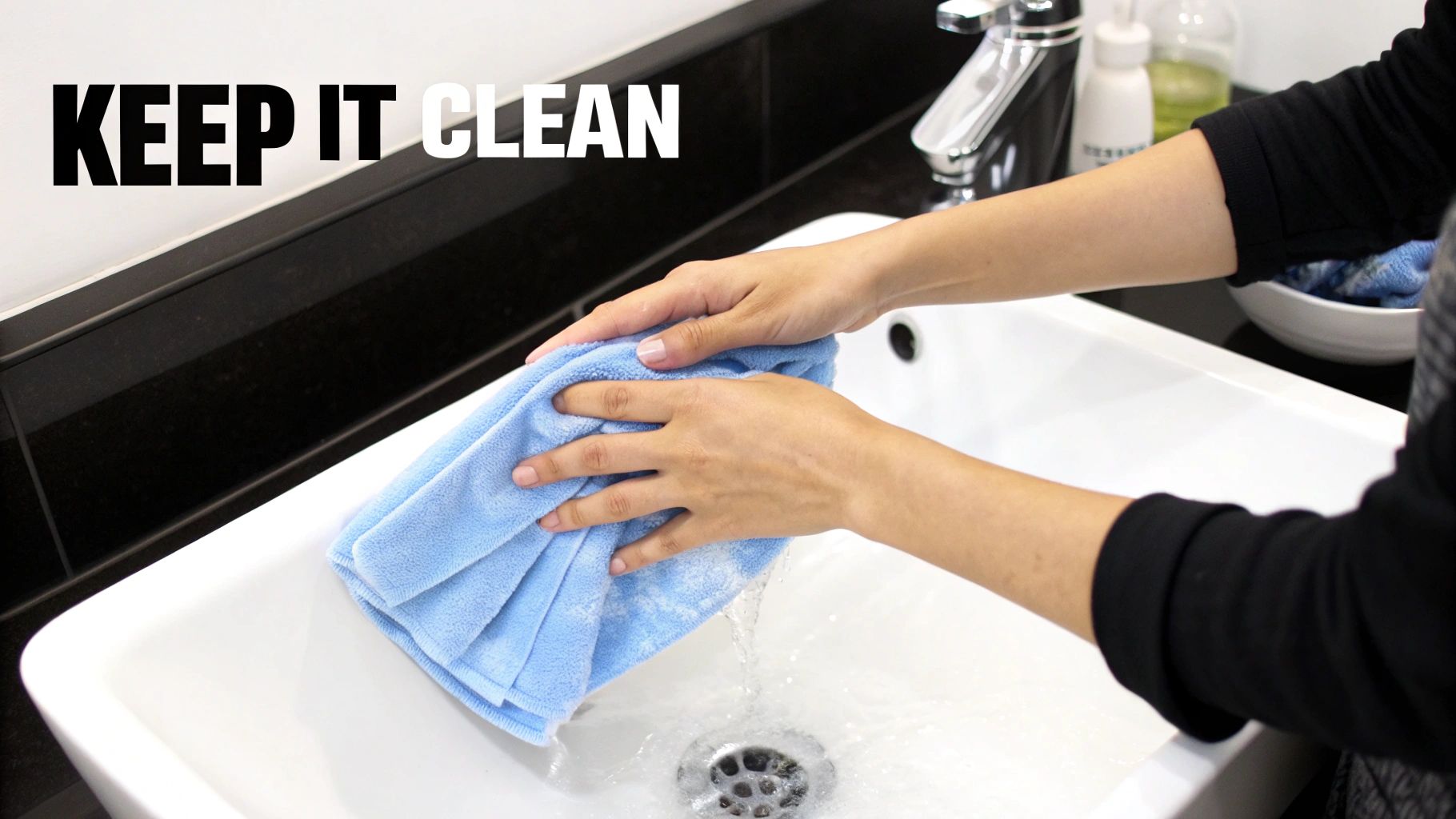
To keep your migraine ice head wrap effective and hygienic, a little care goes a long way. When a migraine strikes, the absolute last thing you need is to pull out your wrap only to find it’s dirty or smells faintly of last night's frozen dinner.
A simple cleaning routine will make sure your wrap lasts for ages and is always ready to go. Think of it this way: a clean wrap is a comforting wrap, and that’s exactly what you need when your head is pounding.
Simple Steps for Washing Your Wrap
Good news—most wraps are a breeze to clean. The outer fabric sleeve usually just needs a gentle hand-wash to keep it soft and stretchy.
Here’s my go-to method:
- Cool Water is Key: Fill a sink or basin with cool water and add just a tiny squirt of mild, pH-neutral soap.
- A Gentle Swish: Pop the fabric sleeve in and give it a gentle swish. You don't need to scrub hard; harsh detergents and rough handling can wear out the material.
- Rinse Well: Hold the sleeve under cool, running water until you're sure all the soap is gone.
- Air Dry Only: Gently squeeze out the extra water (don't wring it out!) and lay it flat or hang it up to dry. Never be tempted to throw it in the machine dryer—the heat will ruin it.
Keeping your wrap clean is crucial for it to remain a safe and effective tool. For more ideas, you might find these general tips for keeping various sensory items clean and hygienic helpful.
As for the gel packs, just give them a quick wipe-down with a damp cloth and a bit of soap. Make sure they are totally dry before you slide them back into the sleeve.
My #1 Tip: Always make sure every part of your wrap is 100% dry before it goes back in the freezer. This is the single best thing you can do to stop mildew and weird smells from developing.
Smart Freezer Storage for a Fresh Wrap
How you store your wrap in the freezer matters just as much as how you clean it. If you just toss it in there unprotected, it’s going to soak up all sorts of freezer smells.
The fix is incredibly simple: just use the sealable freezer bag it came with. Storing it in the bag keeps it pristine, odour-free, and protects the gel packs from freezer burn. It’s a tiny habit that makes a huge difference in keeping your wrap ready for when you need it most.
Got Questions About Migraine Ice Wraps?
It’s completely normal to have a few questions before you dive in and make a migraine wrap part of your go-to relief plan. Getting the right info helps you use it with confidence, so you know you're getting the best possible result when a headache tries to ruin your day.
We've pulled together the most common questions we get from Aussies just like you, with some straight-up, practical answers to get you started.
How Long Should I Freeze My Ice Head Wrap?
For most gel wraps, a sweet spot of two to four hours in the freezer is perfect. This gets it properly cold for powerful relief but keeps it soft and flexible enough to mould comfortably around your head. If you freeze it for too long, it can become a bit rigid and won't contour as well.
A top tip is to always keep your wrap in its freezer bag when you pop it in. This little step protects it from getting that yucky freezer burn smell and keeps the material in good nick. And of course, it never hurts to have a quick squiz at the manufacturer's instructions for your specific wrap.
Can I Use an Ice Head Wrap for Tension Headaches?
You bet. While they’re a lifesaver for migraine pain, these wraps are brilliant for other types of head pain, too. The mix of cold therapy and light compression is fantastic for easing tension headaches, sinus pressure, and even just that general fuzzy feeling from stress.
The cold helps numb the area and bring down inflammation, which is often what’s causing the pain. Plus, many newer wraps can be popped in the microwave for a bit of gentle warmth. This can be incredibly soothing for tight neck and shoulder muscles, which are notorious for triggering tension headaches in the first place.
A good rule of thumb is to aim for about 20 minutes of use at a time. It can feel so good you might be tempted to leave it on for ages, but prolonged exposure to intense cold isn't great for your skin. If you’re feeling a bit drowsy, setting a gentle timer is a smart move.
Is It Okay to Fall Asleep Wearing the Ice Wrap?
It’s best to take it off before you nod off. For cold therapy to be safe and effective, that 20-minute window is really what you should aim for. Leaving a frozen wrap on for hours, especially when you’re asleep and can’t feel any discomfort, could lead to skin irritation or a mild ice burn.
You’ll find that a solid 20-minute session often provides lasting relief long after you've removed the wrap. This gives your skin plenty of time to get back to its normal temperature safely.
Where Can I Find a Good Wrap in Australia?
You’ve got a few great options here in Australia for finding a quality migraine ice head wrap. Many of the bigger pharmacies and chemists carry them, usually in the pain relief aisle, which is handy if you want to see one up close before buying.
You'll find an even bigger range online. Local Aussie e-commerce sites, Amazon Australia, and websites for specialised health brands are all excellent places to browse. When you're shopping online, I'd recommend really digging into the reviews from other Aussies and checking the product details for the materials. This helps make sure you’re getting something that’s not only effective but also comfortable and built to last.
Ready to experience fast, drug-free relief for yourself? The Headache Cap is designed in Australia to deliver soothing cold or hot therapy exactly where you need it. Discover the perfect Headache Cap for your needs and get back to your day.


