


How Much Caffeine Is in Coffee? A Guide for Aussies
Ever wondered how much caffeine is really in your daily coffee? It’s a simple question with a surprisingly complex answer. While an average 250 ml cup of brewed coffee typically has about 80-95 milligrams (mg) of caffeine, that number is far from fixed.
Your Quick Guide to Caffeine in Australian Coffee
If you've ever felt a massive jolt from one café’s flat white but barely a flutter from another, you're not imagining things. The caffeine in your cup isn't a standard measure; it’s a moving target influenced by everything from the bean's origin to the barista's technique.
Think of it like a recipe. Tiny tweaks to the ingredients or method can completely change the final dish, and coffee is no different. This guide will be your go-to reference for decoding the caffeine content in your favourite Aussie coffee orders, from a quick instant at home to a professionally pulled espresso.
Caffeine Content at a Glance
In Australia, the caffeine kick you get from your coffee changes dramatically depending on how it’s made. A simple instant coffee might give you around 60 mg per 250 ml cup, while a standard brewed coffee is closer to 80 mg for the same size.
But even those are just averages. Research has shown a 250 ml brewed coffee can swing anywhere from 130 mg to a staggering 282 mg. On the other hand, a single espresso shot delivers a concentrated burst of roughly 145 mg. For a deeper dive into how Aussies consume caffeine, the Alcohol and Drug Foundation has some fantastic resources.
This visual guide breaks down the typical caffeine levels in common coffee types.
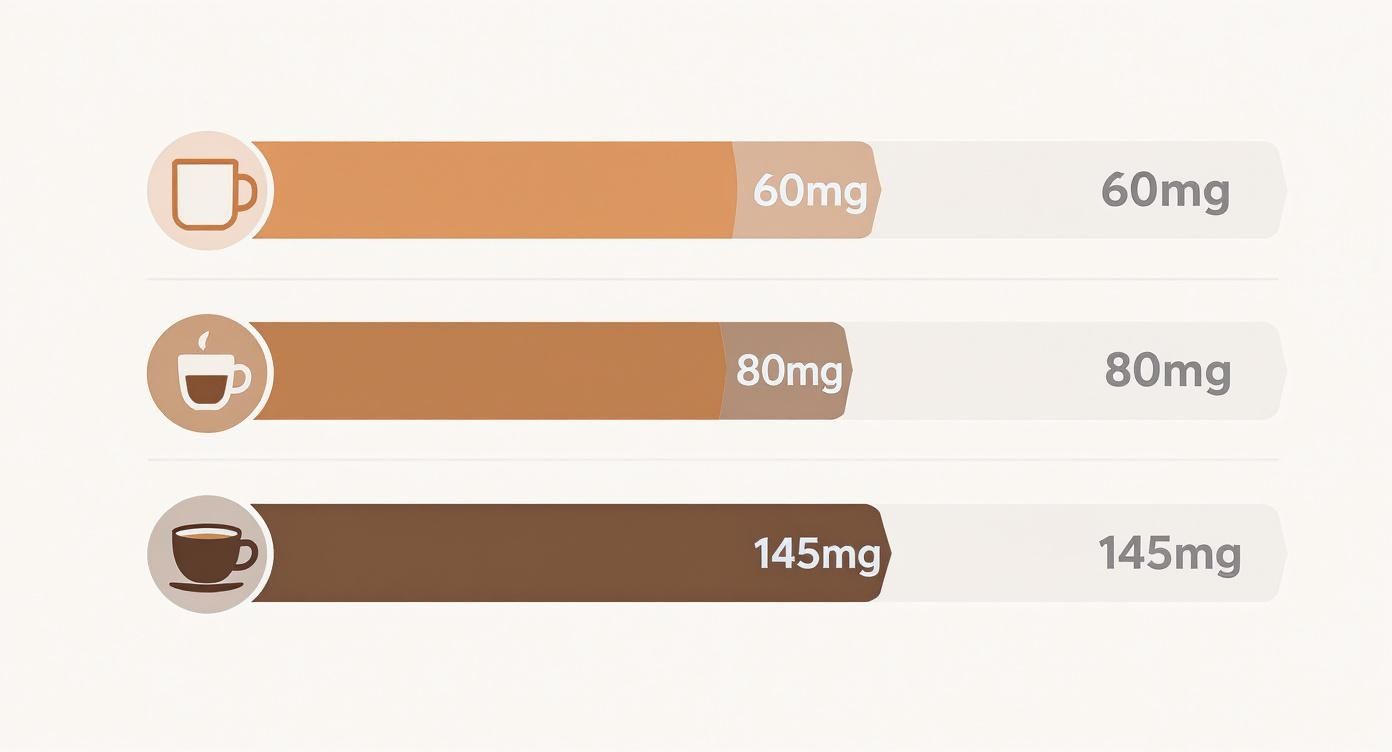
As you can see, espresso packs the most punch in the smallest package, delivering more than double the caffeine of an instant coffee. This gives you a great starting point, but now let's explore what's really going on behind the scenes to create these numbers.
What Really Changes Your Coffee's Kick
Ever wondered why one flat white barely registers, while another has you bouncing off the walls? The secret isn't just what you order; it’s a fascinating mix of science and art. A bunch of hidden variables control your coffee's final potency, turning each cup into a completely unique experience.
Figuring out these factors helps to explain how much caffeine is in coffee and why that amount can vary so wildly. It’s not magic. It’s a combination of the bean itself, how it's roasted, and the way it’s all prepared. Let's break down the main players that determine the strength of your daily brew.
The Bean Itself: Robusta vs Arabica
The journey starts with the coffee bean, and right from the get-go, not all beans are created equal. The two heavyweights in the coffee world, Arabica and Robusta, have completely different chemical makeups.
- Arabica Beans: These are the darlings of the specialty coffee scene, loved for their smooth, complex, and aromatic flavours. They contain around 1.2% caffeine by weight, which makes for a more balanced cup.
- Robusta Beans: As the name suggests, these are much hardier beans with a stronger, more bitter taste. You'll often find them in espresso blends and instant coffee. They pack a serious punch, containing about 2.2% caffeine by weight—nearly double that of Arabica.
So, if you’ve ever had a coffee that felt unusually strong, there's a good chance it had a decent amount of Robusta in the blend. This single choice can dramatically alter the caffeine count before a single drop of water is even heated.
The Impact of Roasting: Light vs Dark
There's a common myth floating around that the bold, intense flavour of a dark roast coffee means it has more caffeine. It actually works the other way around. The roasting process itself burns off a small amount of caffeine.
Lighter roasts retain slightly more of their original caffeine content. While the difference isn't massive, if you're measuring your beans by weight, a light roast will consistently deliver a bigger caffeine hit than a dark roast.
It gets a little tricky because dark roast beans are less dense. If you measure by volume (like with a scoop), you might accidentally use more beans, which can even things out. At the end of the day, though, you should pick your roast based on the flavour you enjoy most.
Why Grind Size Matters
Finally, how finely you grind your coffee plays a huge role in how much caffeine gets into your cup. Think of it like trying to dissolve sugar in water.
A sugar cube will take its sweet time, but a spoonful of fine caster sugar disappears almost instantly. The same principle applies here. A finer grind exposes more of the coffee's surface area to the hot water, leading to a quicker and more efficient extraction of both caffeine and flavour. This is exactly why espresso requires a very fine grind to work with its super-fast, high-pressure brewing method.
How Your Brew Method Impacts Caffeine Potency
https://www.youtube.com/embed/NShimEnXxNg
Think of your coffee brewing method as the director of a play. It controls everything from the flavour profile to, most importantly, the final caffeine kick. This isn't just about taste; it's a simple bit of kitchen chemistry. The way you brew your coffee has a massive impact on how much caffeine gets extracted from the beans and into your morning mug.
Essentially, it all comes down to a trio of factors: water temperature, pressure, and how long the water hangs out with the coffee grounds. Each brewing technique has its own unique recipe for these three elements, which is why a tiny, sharp espresso can pack a bigger punch than a large, mellow pour-over.
Comparing Australia's Favourite Brews
So, how do Australia’s most beloved coffee rituals stack up? From the lightning-fast espresso machine to the slow, patient cold brew steeping in the fridge, every method offers a completely different caffeine experience.
There's a common myth that a longer brew time automatically means more caffeine. While time is definitely a big player, it's not the whole story. The intensity of pressure and heat can dramatically speed up extraction, creating a complex dance that dictates the final potency of your drink.
Espresso is the perfect example. It blasts hot water through finely-ground coffee at incredibly high pressure for just 25-30 seconds. This intense, rapid process creates a super-concentrated shot, even though the contact time is incredibly short.
From Gentle Wake-Up to Full Throttle
Knowing how these variables work together lets you choose the right brew for the right moment. Take the French press, for instance. It’s a full-immersion method where the grounds steep for a good few minutes, giving the caffeine plenty of time to dissolve into the water without any extra pressure.
Then you have cold brew, which is a whole different beast. It flips the script entirely, swapping high heat for a super-long steeping time—we're talking 12 to 24 hours. This slow, gentle extraction results in a smooth, less acidic coffee that, surprisingly to some, is often one of the most caffeinated options out there.
To help you visualise this, here’s a breakdown of how the different methods compare.
Brewing Method and Caffeine Content Comparison
This table gives you a clear look at how your brewing choice influences the caffeine in your cup. It’s a quick guide to understanding the relationship between time, temperature, pressure, and that all-important buzz.
| Brewing Method | Typical Caffeine Range (mg per 250ml) | Key Factors (Time, Temp, Pressure) |
|---|---|---|
| Espresso | ~145 mg per 30ml shot* | Short Time, High Temp, High Pressure |
| Cold Brew | 150–200+ mg | Long Time, Cold Temp, No Pressure |
| Drip / Pour-Over | 95–120 mg | Medium Time, High Temp, Gravity Pressure |
| French Press | 90–110 mg | Medium Time, High Temp, No Pressure |
*Note: An espresso shot is much smaller, but has the highest concentration per millilitre. A standard 250ml latte with a double shot would contain around 290mg of caffeine.
As you can see, if you're chasing the biggest possible caffeine hit, cold brew is often your best bet. On the other hand, a classic drip coffee or a French press offers a more moderate, balanced start to your day. By understanding the science behind your brew, you can perfectly match your coffee to whatever your day demands.
How Much is Too Much? Staying Within Safe Caffeine Limits
For so many of us, coffee is a non-negotiable part of the day. But it's smart to know your limits to keep this beloved ritual a healthy one. Official guidelines can feel a bit clinical, so let’s break down what they actually mean for your daily coffee habit.
Keeping an eye on your caffeine intake is all about getting the good stuff—like that welcome energy boost and sharper focus—without tipping over into the not-so-great side effects, like jitters or a rubbish night's sleep.
The Magic Number for Aussie Adults
Food Standards Australia New Zealand (FSANZ) gives us a handy benchmark. For most healthy adults, up to 400 milligrams (mg) of caffeine a day is considered safe. It's important to remember this is your total daily allowance, which includes caffeine from tea, energy drinks, and even chocolate.
So, what does 400 mg look like in real terms? It might be less than you think.
- Two or three of your typical café-made flat whites or lattes (most use a double shot).
- Around four cups of coffee made with a standard home drip machine.
- About six cups of instant coffee.
Of course, these are just rough guides. The exact amount of caffeine can vary wildly depending on where you get your coffee and how it's made.
Think of it as a daily budget. That 400 mg can disappear pretty quickly, especially if you’re a fan of strong, espresso-based coffees to get you through the afternoon.
Who Needs to Be More Careful?
That 400 mg guideline isn't for everyone. Some of us need to be a bit more mindful. For pregnant women, FSANZ suggests capping daily intake at 200 mg to minimise any potential risks. Similarly, if you deal with high blood pressure or anxiety, you might find you're more sensitive to caffeine's stimulating effects.
Ultimately, your body is your best guide. If you've overdone it, it will let you know.
Common signs you've had too much caffeine include:
- Feeling jittery or shaky
- A racing heart
- A sudden spike in anxiety or restlessness
- Trouble falling asleep
- Headaches and dizziness
If these symptoms sound familiar, it could be your body's way of telling you to ease off. Pushing past your personal limit often leads to a nasty 'caffeine hangover,' which is a common headache trigger. For other ways to tackle head pain without medication, check out our tips on how to prevent headaches naturally.
A little awareness goes a long way in making sure coffee remains a positive and healthy part of your daily routine.
The Surprising Link Between Caffeine and Headaches
It's a strange paradox, isn't it? For many of us, caffeine is both the cure for a headache and, sometimes, the cause of one. That morning coffee can feel like a miracle for a dull throb, but for others, that daily habit is the very source of their pain. Let's untangle this complicated relationship and figure out when caffeine is your friend and when it's your foe.
Caffeine’s secret weapon is its ability to act as a vasoconstrictor. In simple terms, it narrows the blood vessels in your brain. Since many headaches are triggered by blood vessels expanding, caffeine’s constricting effect can bring quick, powerful relief. It's no accident that it's a key ingredient in many over-the-counter headache and pain medications.
When Your Remedy Becomes the Cause
But here’s the catch. If your body gets used to a daily caffeine hit, it starts to adapt. Your blood vessels learn to expect that daily constriction. So, when you skip your usual coffee, they can suddenly rebound and dilate, triggering a nasty caffeine withdrawal headache.
This throbbing, often intense pain is one of the most common withdrawal symptoms, and it can kick in just 12 to 24 hours after your last dose. It’s easy to get stuck in a vicious cycle: you end up drinking coffee to treat a headache that was actually caused by a lack of caffeine in the first place.
It’s a tough cycle to break. Your body essentially starts to depend on caffeine just to feel normal, and any change in that routine can lead to some serious discomfort.
Some people even call it a "caffeine hangover." You feel foggy, irritable, and your head is pounding—all because you missed your daily flat white. If you want to dive deeper into the science, you can learn more about why headaches happen in our detailed guide.
Finding Relief Beyond the Coffee Cup
So how do you manage this love-hate relationship with caffeine? It's all about being smart. If you're trying to cut back and escape the withdrawal cycle, quitting cold turkey is a recipe for pain. A much better approach is to taper off slowly—try reducing your intake by half a cup every few days to give your body time to adjust.
For those times when a headache strikes, whether it’s from withdrawal or something else entirely, having a drug-free, non-caffeine option on hand is a game-changer. This is where simple physical therapies can work wonders.
A tool like a Headache Cap can provide targeted relief exactly where you need it, using gentle compression and the power of cold therapy.
- Cold therapy naturally constricts blood vessels, giving you a similar benefit to caffeine but without any side effects or risk of dependency.
- The cap is also brilliant for blocking out light and muffling sound, creating a calm, dark space that’s incredibly soothing, especially for migraine sufferers.
- It becomes your reliable go-to when you're aiming to reduce your reliance on both caffeine and medication.
By really understanding how caffeine affects your body, you can start making smarter choices. You can manage your intake wisely and have effective, drug-free relief ready for when you need it most.
Common Questions About Coffee and Caffeine
We've covered a lot of ground, but when it comes to coffee, a few questions always seem to pop up. Let's clear up some of the most common myths and practical concerns.
Think of this as the final piece of the puzzle. Getting these details straight will give you the confidence to truly master your coffee ritual and manage your intake like a pro.
Does a Dark Roast Have More Caffeine?
It’s one of the most enduring coffee myths out there. The logic seems sound: a bolder, richer flavour must mean more caffeine, right? Surprisingly, the opposite is true. Light roast coffee actually packs a slightly bigger caffeine punch.
The roasting process itself burns off a tiny bit of caffeine. The longer and darker a bean is roasted, the more caffeine is lost. So, bean for bean, a light roast has more of a kick.
But there's a small catch. Dark roast beans are less dense. If you measure your coffee with a scoop (by volume), you might accidentally use more beans to fill it up, which can sometimes even out the caffeine levels. However, if you're measuring by weight, light roast is the clear winner.
Is There Really Caffeine in Decaf?
Yes, but it's a very small amount. The decaffeination process is incredibly effective, removing about 97% of the caffeine, but it can’t get every last bit.
A standard 250 ml cup of decaf usually contains around 2–5 milligrams of caffeine. To put that in perspective, a regular cup has 80–100+ mg. For most of us, that tiny amount is completely unnoticeable.
If you’re extremely sensitive to caffeine or have been told by a doctor to avoid it entirely, it's something to keep in mind. Otherwise, decaf is a fantastic way to enjoy the ritual and flavour of coffee without the jitters.
Does Adding Milk or Sugar Change the Caffeine Level?
Not at all. While adding milk, cream, sugar, or syrups will absolutely change the flavour, texture, and calorie count of your drink, the amount of caffeine in your cup stays exactly the same.
The caffeine is extracted from the coffee grounds when it's brewed. Anything you stir in afterwards just mingles with the final product—it doesn't remove or neutralise the stimulant.
How Long Does Caffeine Stay in Your System?
You might be surprised how long the effects of that morning coffee can stick around. For a healthy adult, caffeine has what's called a half-life of about five to six hours.
This means if you drink a coffee with 200 mg of caffeine at midday, you could still have 100 mg active in your system by 5 or 6 PM. It can easily take 10 hours or more for your body to fully clear all the caffeine.
Of course, this isn't a one-size-fits-all rule. Factors like your age, liver function, pregnancy, and certain medications can change how quickly your body processes caffeine. This explains why one person can have an espresso after dinner and sleep like a baby, while another is left staring at the ceiling from a morning latte.
Understanding your own sensitivity is crucial, especially when you need reliable pain relief that won't mess with your sleep. For anyone looking for effective, drug-free options, it's well worth exploring non-pharmaceutical pain management.
When headaches strike and another coffee is out of the question, the Headache Cap offers a simple, drug-free solution. Its targeted cold therapy provides fast, soothing relief, helping you manage pain naturally without disrupting your routine. Find your perfect fit and feel better, faster.


