


Your Guide to Orange Essential Oil Benefits
Think of the moment you peel an orange—that bright, zesty scent that instantly lifts your spirits. That’s precisely what’s captured in a bottle of orange essential oil. It’s a beautifully simple yet potent liquid, extracted directly from the rind of the sweet orange, Citrus sinensis.
What Exactly Is Orange Essential Oil
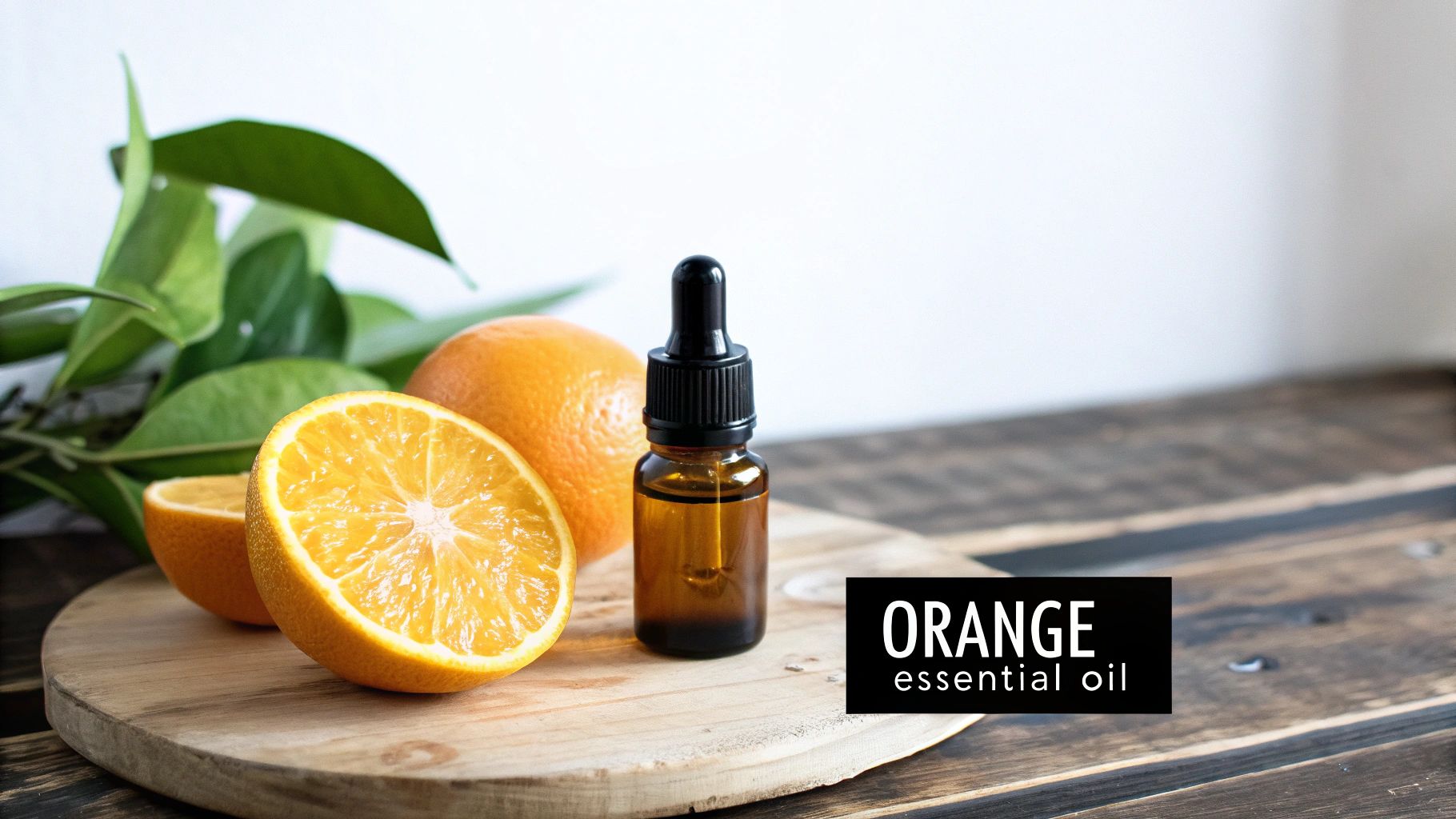
It’s easy to think of it as just a nice smell, but there’s a lot more going on. Orange essential oil is a concentrated blend of natural chemical compounds, and the way we get it is key. The most common method is cold-pressing, where the peels are mechanically squeezed to release their precious, fragrant oils. This technique is fantastic because it avoids heat, ensuring all the delicate therapeutic properties of the oil are preserved.
The final product is that familiar vibrant, golden oil, bursting with a sweet and citrusy aroma that everyone recognises. It's this cheerful scent that makes it a go-to for creating a refreshing and happy atmosphere.
The Powerhouse Compound: Limonene
So, what gives orange oil its magic? It's largely down to one powerful compound: limonene. This natural chemical is the star of the show, making up a massive 85-96% of the oil.
Think of limonene as the oil’s main engine. It’s responsible for that unmistakable citrus scent and is the component most studied for its uplifting and purifying effects. When you pop a few drops into your diffuser, it's the limonene molecules that fill the air, working their magic on your senses to help you feel a bit brighter and calmer.
Orange essential oil is one of the most popular choices in aromatherapy, valued not just for its delightful scent but for its versatility in promoting emotional well-being and a clean environment.
A Growing Favourite in Australia
It's no secret that natural wellness solutions are gaining traction, and orange oil is no exception. Here in Australia, there's been a clear shift towards more organic and natural products in our homes.
The market for Australian orange essential oil reflects this trend perfectly. It grew from around $9.47 million in 2012 to $16.87 million in 2022—that's a jump of about 78% in a decade. It really shows how much Aussies are embracing the benefits of this sunny little oil. If you're interested, you can learn more about these market insights and the growing demand for natural products.
What Science Says About Its Benefits
That bright, happy scent of orange essential oil does more than just smell nice—it’s actually having a direct conversation with your brain. When you breathe it in, those tiny aromatic molecules make a beeline for the brain's limbic system, which you can think of as your emotional switchboard. This is where the magic really happens, and it’s the key to its incredible mood-lifting power.
This connection explains why a simple smell can have such an immediate and positive effect on how you feel. Research has shown that limonene, the main chemical compound in orange oil, can help take the edge off feelings of anxiety and stress. Studies have even observed that inhaling the scent can create a real calming effect, helping to lower pulse rates and stress hormone levels when things get a bit much.
It's a wonderfully simple way to find a bit of emotional balance during a hectic day. The science really just confirms what we intuitively feel: that uplifting aroma helps bring on a sense of calm and well-being.
A Natural Ally Against Headaches
Beyond putting a smile on your face, orange essential oil is also a fantastic option for managing headaches. Its power here comes down to two key actions: it's a natural anti-inflammatory and a gentle muscle relaxant.
Think about tension headaches—they're often caused by tight, unhappy muscles in your neck, shoulders, and scalp. The relaxing qualities of orange oil can help to gently soothe that muscular tension, which is often the root cause of the pain. This makes it a great choice for anyone looking for non-pharmaceutical methods to manage discomfort.
On top of that, its anti-inflammatory properties can help reduce some of the underlying inflammation that can come with certain types of headaches, offering a two-pronged approach to feeling better.
More Than Just a Mood Booster
The benefits don't stop there. Orange essential oil also packs a punch with its antimicrobial and antibacterial properties, making it a surprisingly useful addition to your home toolkit.
Studies have shown it can stop the growth of certain nasty bacteria and fungi, including common culprits like E. coli and Salmonella. It's no wonder it's such a popular ingredient in DIY natural cleaning sprays.
Here are a few other science-backed perks:
- Skin Health: Its antiseptic qualities can help keep skin clean and clear, though you must always dilute it properly before putting it anywhere near your skin.
- Digestive Support: For centuries, the aroma has been used to ease an unsettled stomach, largely by promoting a state of relaxation.
- Immune Support: That high concentration of limonene is also being looked at for its potential to support the body’s natural defence systems.
This impressive versatility has turned orange essential oil into a real star. In fact, it’s the biggest earner in the Australian essential oils market, holding an 8.19% share of an industry valued at over USD 41.5 million. It just goes to show how many people are turning to this humble citrus for its wide-ranging benefits.
Practical Ways to Use Orange Oil Safely
So, you're ready to bring the bright, uplifting power of orange essential oil into your life? That's fantastic. Knowing how to use it safely is the key to unlocking its full potential. Let's walk through the two best and most popular methods: enjoying its aroma and applying it to your skin.
Each approach gives you a different experience. One fills your whole space with a cheerful scent, while the other lets you target specific areas for relief. Once you get the hang of these, you'll feel confident using this wonderfully versatile oil.
It’s amazing how quickly a scent can shift your mood. Inhaling an aroma like sweet orange sends a direct signal to your brain’s emotional centre.
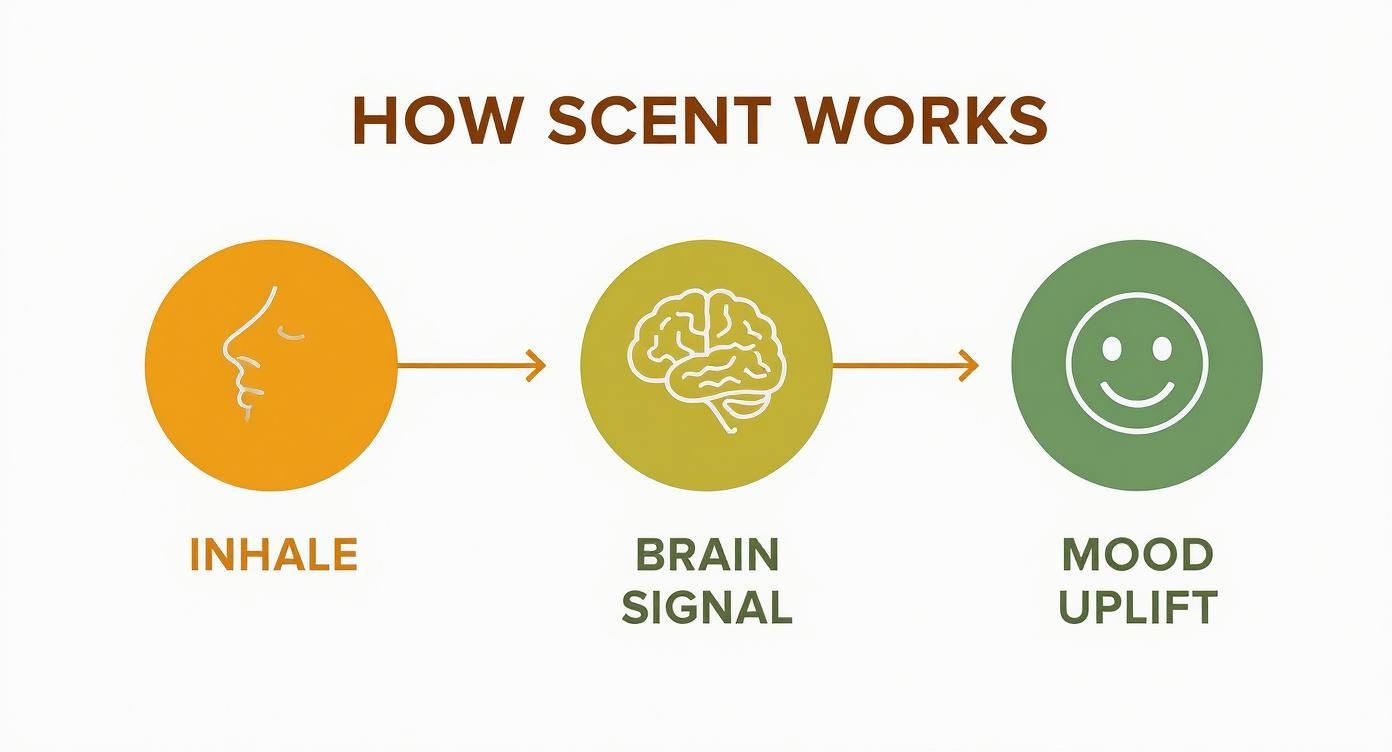
This simple diagram shows that powerful connection in action. It's why aromatherapy feels so immediate—it bypasses a lot of noise and gets straight to work on your sense of well-being.
Aromatic Use: Creating an Uplifting Space
By far the easiest way to enjoy orange oil is with an ultrasonic diffuser. These clever devices mix the oil with water to create a fine, cool mist, scattering those beautiful aromatic molecules throughout the room for you to breathe in. It's perfect for setting a positive vibe, freshening the air, or creating a calm atmosphere before you settle down for the night.
Ready to get started? It couldn't be simpler:
- The Right Ratio: A great starting point is 3-5 drops of orange essential oil for every 100ml of water in your diffuser. Feel free to adjust this slightly depending on your room size and how strong you like the scent.
- Diffuse Mindfully: It’s actually better to diffuse in bursts rather than all day long. Try running it for 30-60 minutes, then switching it off for at least half an hour. This little trick helps prevent olfactory fatigue—that’s when your nose gets so used to a smell it stops noticing it (and its benefits!).
This approach ensures you get the maximum therapeutic punch without overwhelming your senses.
Topical Application: The Golden Rule of Dilution
Applying orange oil directly to your skin can be a game-changer for localised tension in your neck or shoulders. But there’s one rule that is absolutely non-negotiable: never, ever apply it undiluted. Essential oils are incredibly potent, and putting them "neat" on your skin can lead to irritation or sensitivity down the track.
First things first, you need to dilute it in a carrier oil. These are gentle, neutral, plant-based oils that help "carry" the essential oil safely onto your skin.
Think of it like mixing cordial. You wouldn't drink the concentrate straight from the bottle; you dilute it with water to make it safe and pleasant. A carrier oil does the exact same thing for an essential oil.
Some excellent, easy-to-find carrier oils include:
- Jojoba Oil: Its structure is surprisingly similar to our skin’s natural oils, making it a brilliant all-rounder.
- Sweet Almond Oil: A light, nourishing oil that absorbs beautifully without feeling greasy.
- Fractionated Coconut Oil: Stays liquid, has no scent of its own, and feels incredibly smooth on the skin.
Once you’ve mixed your blend, you can gently massage it into your temples, the back of your neck, or your shoulders to help release tension. It’s a fantastic hands-on technique if you're exploring how to prevent headaches naturally by tackling stress points directly.
Before you go all in, always do a quick patch test. Just dab a tiny amount of your diluted oil on a discreet patch of skin, like your inner elbow, and wait 24 hours to make sure there's no reaction. It’s a simple, two-second step that acts as your best safety net.
Soothing Headaches with Aromatherapy
When a headache starts to creep in, it’s often your body’s way of saying it’s had enough. More often than not, the culprit is a tangled web of stress and physical tension that coils around your neck, shoulders, and scalp, creating that all-too-familiar throbbing pain. Reaching for **orange essential oil** can be a beautiful, gentle first step to help your body and mind unwind before the discomfort really takes hold.The bright, sunny scent is brilliant for calming a racing mind, and at the same time, its muscle-relaxing qualities begin to address the physical tightness. By tackling both the mental and physical triggers, you create a peaceful space that naturally encourages relief.
Simple Techniques for Fast Relief
When you feel that first twinge of a headache, having a few simple tricks up your sleeve can make all the difference. These methods are designed to be quick and effective, so you can find comfort without any fuss.
One of the most direct ways to find relief is by applying it topically. Just mix 2-3 drops of orange essential oil into a teaspoon of a carrier oil like jojoba or sweet almond to create a simple massage blend. Gently rub this into your temples, the back of your neck, and across your shoulders. Use slow, circular motions to help melt away that built-up tension.
Another fantastic option is diffusion. Pop 5-7 drops of orange essential oil into your diffuser and let its calming aroma drift through your room. This is a great set-and-forget approach, especially when all you want to do is rest in a quiet, dark space.
Simple DIY Headache Relief Blends
While orange oil is wonderful on its own, blending it with other essential oils can create an even more targeted remedy for headache relief. Each oil contributes its own therapeutic strengths, giving you a more well-rounded approach to soothing your symptoms.
Here are two easy-to-make recipes to get you started:
- For Tension Headaches: In your diffuser or a carrier oil, combine 3 drops of orange essential oil with 2 drops of peppermint essential oil. The peppermint delivers a cooling, almost numbing sensation that works wonders on pain, while the orange oil gets to the root of the muscle tension.
- For Stress-Related Headaches: Try a mix of 3 drops of orange essential oil and 2 drops of lavender essential oil. Lavender is legendary for its deeply calming effects, helping to settle the nervous system and promote true relaxation when stress is the main trigger.
You can use these blends in a diffuser or dilute them in a carrier oil for massage. Just remember to do a quick patch test on your skin before applying a new blend to make sure you don't have a reaction.
If you're curious to learn more about how other oils can help, our guide to natural headache relief with essential oils has plenty of extra tips and recipes.
Combining Aromatherapy with Your Headache Cap
For the ultimate comfort, you can easily pair the therapeutic benefits of aromatherapy with the soothing cold or heat from a Headache Cap. The key is to keep these two therapies separate to protect the cap’s specialised fabric and materials.
You should never apply essential oil blends directly onto your Headache Cap. Instead, think of them as two powerful tools working side-by-side. You can wear your chilled Headache Cap to help numb the pain and reduce inflammation while, at the same time, running your diffuser with a calming essential oil blend. This combination creates a true sanctuary for relief, allowing you to tackle headache pain from multiple angles for faster, more profound results.
How to Choose a High-Quality Oil
As orange essential oil has grown in popularity, the market has become flooded with options. The trouble is, not all of them are the real deal. Getting your hands on a pure, high-quality oil is the only way to experience its true therapeutic benefits. It's a bit like choosing fresh, juicy oranges over artificial orange flavouring – the difference is night and day.
The best place to start is by becoming a label detective. Any reputable bottle of sweet orange essential oil will clearly state its botanical name: Citrus sinensis. This little detail is your guarantee that you're getting the right plant extract and not a different, less effective citrus variety.
Next, have a look for the extraction method. When it comes to citrus oils, cold-pressed (sometimes called expressed) is the gold standard. This method mechanically squeezes the precious oil from the rind without any heat, which is crucial for preserving the delicate aromatic compounds that hold all the therapeutic power.
Reading Between the Lines
Once you’ve got the basics down, a few more clues on the label can point you toward a genuinely superior product. It's incredibly important to understand the difference between a true essential oil and a synthetic "fragrance oil." Fragrance oils are just lab-made chemicals designed to smell nice; they have absolutely no therapeutic value.
Here are a few signs of an authentic, high-quality oil:
- Third-Party Testing: The best brands will proudly mention GC/MS (Gas Chromatography-Mass Spectrometry) testing. This is a scientific analysis that confirms the oil’s purity and chemical profile, giving you peace of mind that it’s free from pesticides or synthetic additives.
- Dark Glass Bottles: Pure essential oils are sensitive to UV light, which can break them down and reduce their potency. Always opt for oils packaged in dark amber or cobalt blue glass.
- Clear Sourcing Information: Brands that are transparent about where their oranges are grown and how their oil is produced tend to be the most trustworthy.
A bottle vaguely labelled "orange oil" or "fragrance" is a major red flag. True essential oils are powerful plant extracts, and good brands will always provide the details to prove it.
Preserving Your Oil's Potency
After you've found a quality orange essential oil, you need to store it properly to protect your investment. Think of it like a good bottle of olive oil – its worst enemies are light and heat.
To keep its bright, zesty aroma and therapeutic strength intact, always store your bottle in a cool, dark place. A medicine cabinet or a bedroom drawer is perfect. Keep it away from sunny windowsills and make sure the cap is screwed on tightly after every use to stop it from oxidising. A little bit of care goes a long way in keeping your oil potent and effective.
Common Questions About Orange Essential Oil
As you start to use orange essential oil more, you'll probably have a few questions. That's completely normal. Let’s walk through some of the most common ones to make sure you feel confident and clear on how to use it safely.
Getting a solid handle on using this wonderful oil responsibly is the key to making it a genuinely helpful part of your wellness routine.
Is Orange Essential Oil Safe for Children and Pets?
This is a really important question, and the answer requires a lot of care. In short, extreme caution is needed. The way children's and pets' bodies handle essential oils is vastly different to ours. Their smaller size, faster metabolisms, and delicate skin mean they are far more prone to negative reactions.
So, when diffusing orange oil around kids, tread very carefully. Make sure the room has good airflow, only use a couple of drops, and keep diffusion times short—think 15-20 minute bursts, not hours on end. And never, ever apply undiluted orange oil directly to a child's skin.
When it comes to pets, the stakes are even higher, especially for cats and dogs. Many essential oils, orange included, can be toxic if they lick it up, breathe in too much, or get it on their skin or fur. The safest bet is to avoid diffusing oils in a room your pet can't easily leave.
Before you introduce any essential oil into a home with little ones or furry friends, your first step should always be a chat with your paediatrician or veterinarian. They can give you advice that's right for your family.
Can I Put Orange Oil in My Water?
You've probably seen this tip floating around online – adding a drop of citrus oil to your water for a bit of flavour or a health kick. Honestly, it's a practice best avoided. It all boils down to a simple bit of science: oil and water don't mix.
When you drop orange oil into a glass of water, it doesn’t spread out and dilute. It just sits on the surface as tiny, concentrated beads. As you drink, those potent little droplets can hit the sensitive lining of your mouth, throat, and stomach, which can cause some serious irritation.
Taking essential oils internally is something that should only ever be done under the guidance of a healthcare professional or a clinical aromatherapist with specific training in that area. For everyday use, it's much safer to stick to diffusing or applying it to your skin after diluting it properly.
Will Orange Oil Make My Skin Sun Sensitive?
Yes, it absolutely can. This is a critical safety point for anyone using orange oil topically. Like a lot of other cold-pressed citrus oils, sweet orange oil is phototoxic. This is just a technical way of saying that if you put it on your skin and then go out into the sun (or a tanning bed), you could end up with a nasty reaction.
Think of it like a turbo-charged sunburn. The reaction can range from simple redness and dark patches to painful blistering and swelling. The good news is, avoiding it is easy. Just follow this one simple rule:
- Wait at least 12-18 hours after applying orange oil to your skin before you expose that area to direct UV light.
So, if you use a massage blend with orange oil on your shoulders in the morning, just make sure they’re covered with clothing if you're heading outside. It’s a small step that lets you enjoy all the benefits without any of the risk.
Ready to create your own sanctuary of relief? The Headache Cap works beautifully alongside your aromatherapy practice, providing targeted cold or hot therapy to soothe headache pain while you diffuse calming scents. Discover natural, drug-free comfort today.


