


Pink Noise Sleep Your Guide to Deeper Rest
If you've been looking for a natural way to get deeper, more restorative sleep, you’ve probably heard of pink noise sleep. It’s a specific type of sound that sounds a lot like things we find in nature—a steady rainfall, rustling leaves—and it's getting a lot of attention for its potential to seriously improve sleep quality and even give your memory a boost.
Your Guide to Unlocking Better Sleep with Pink Noise
In a world that’s constantly buzzing with distractions, getting a truly peaceful night's rest can feel like a far-off dream. This is exactly where pink noise comes in, offering a simple but surprisingly effective solution. So, what is it, really? And is there any solid science to back up the hype?
Unlike the sharp, static-like hiss of white noise, pink noise has a much deeper and more balanced feel to it. It dials up the lower frequencies while toning down the higher ones, creating a sound that’s far less jarring and much more soothing to our ears. Picture the gentle, consistent sound of a steady downpour—it’s calming, constant, and fantastic at masking those sudden, sleep-wrecking noises like a car horn or a neighbour's barking dog.
The Science Behind the Sound
The power of pink noise isn’t just a feeling; it's backed by some pretty compelling research. Clinical sleep studies have started to reveal its incredible potential. In fact, a major review that looked at 34 different studies found that 81.9% of pink noise interventions led to positive sleep outcomes. To put that in perspective, the same review noted only a 33% success rate for white noise. That really makes pink noise a standout choice. Discover more insights about these sleep studies.
So how does it work? This unique sound creates a consistent auditory environment, which helps your brain relax and switch off from its high-alert mode. This steady background sound prevents sudden noises from startling you awake, allowing your body to sink into the deeper, more restorative stages of sleep.
The core benefit of pink noise is its ability to smooth out the auditory landscape of your bedroom. It doesn't eliminate noise but rather blends it into a constant, unobtrusive backdrop, helping your mind to switch off.
For many people, this gentle, humming soundscape is the key to finally getting that uninterrupted rest they’ve been craving. It’s a brilliant foundational tool that can easily be paired with other proven strategies and various sleep aid products to build your ultimate restful environment.
How Pink Noise Works with Your Brain for Better Sleep
To really get why pink noise can be so good for sleep, it helps to think about sound in terms of ‘colour’. White noise is a bit like a harsh, bright light – it contains all the sound frequencies at the exact same intensity. While it’s great for blocking out other noises, that high-frequency hiss (think of old TV static) can be grating for some people trying to wind down.
Pink noise, however, is more like a warm, soft glow. It also has a full spectrum of sound, but here's the clever part: the higher, more jarring frequencies are turned down, and the lower, deeper frequencies are boosted. The result is a beautifully balanced, steady soundscape that our brains tend to find incredibly calming. It’s the difference between a sharp hiss and the gentle whoosh of a waterfall or rustling leaves.
Syncing with Your Natural Sleep Rhythms
The real magic happens when you look at how the structure of pink noise interacts with our own brainwaves. The sound profile of pink noise, with its focus on those lower frequencies, happens to be a surprisingly close match to the slow-wave brain activity that dominates our deepest, most restorative stages of sleep.
When you play this gentle, consistent sound, you’re creating an auditory environment that basically invites your brain to sync up with it. Instead of staying on high alert for every creak and groan in the house, your mind gets a cue to relax and ease into a state that's primed for deep rest.
This is what experts call neural synchronisation. The steady rhythm of the pink noise gives your brainwaves a gentle, predictable pattern to follow, helping to guide you away from racing thoughts and deeper into sleep.
But this isn't just about drifting off a bit quicker; it’s about improving the actual quality of your sleep. There's some fascinating science linking pink noise to not just enhanced deep sleep, but to better memory, too. One key 2017 study on older adults found that playing gentle pink noise during the night significantly boosted their slow-wave activity. Even better, that increase in deep sleep was directly tied to better memory recall the following day. You can read the full research about these findings for a deeper dive.
This unique ability to work with your brain's natural cycles is what sets pink noise apart. It’s not just a passive sound blocker. It becomes an active partner in helping you get to, and stay in, the most beneficial stages of sleep, laying the groundwork for you to wake up feeling sharper and more focused.
Pink, White, or Brown Noise: What's the Difference?
With all this talk of 'sound colours' for sleep, it’s easy to get a bit mixed up. Let's break down the main differences to help you figure out what might work for you. Each one has a unique sound profile based on how it handles different frequencies.
You've probably heard of white noise. Think of the static from an old TV or the hum of an air conditioner. It plays all the frequencies we can hear at the same intensity. While it's great for masking other sounds, that full-spectrum blast can have a high-pitched hiss that some people find a bit harsh or annoying.
Then there's brown noise. This one goes in the opposite direction, dialling up the deep, low-frequency sounds and cutting the high ones right back. The result is a deep, rumbling sound, like the roar of a powerful waterfall or a clap of distant thunder. It can be incredibly grounding for some, but others find it too intense or heavy for sleep.
Finding Your Sweet Spot With Pink Noise
This is exactly where pink noise comes in as the perfect middle ground. It has more oomph in the lower frequencies than white noise but isn't as bass-heavy as brown noise. This balance creates a sound that feels much more natural to our ears, a bit like a steady, gentle rain or the sound of leaves rustling in the wind.
This diagram shows how the gentle, consistent sound waves of pink noise can help soothe the brain and encourage it to enter a state of deep sleep.
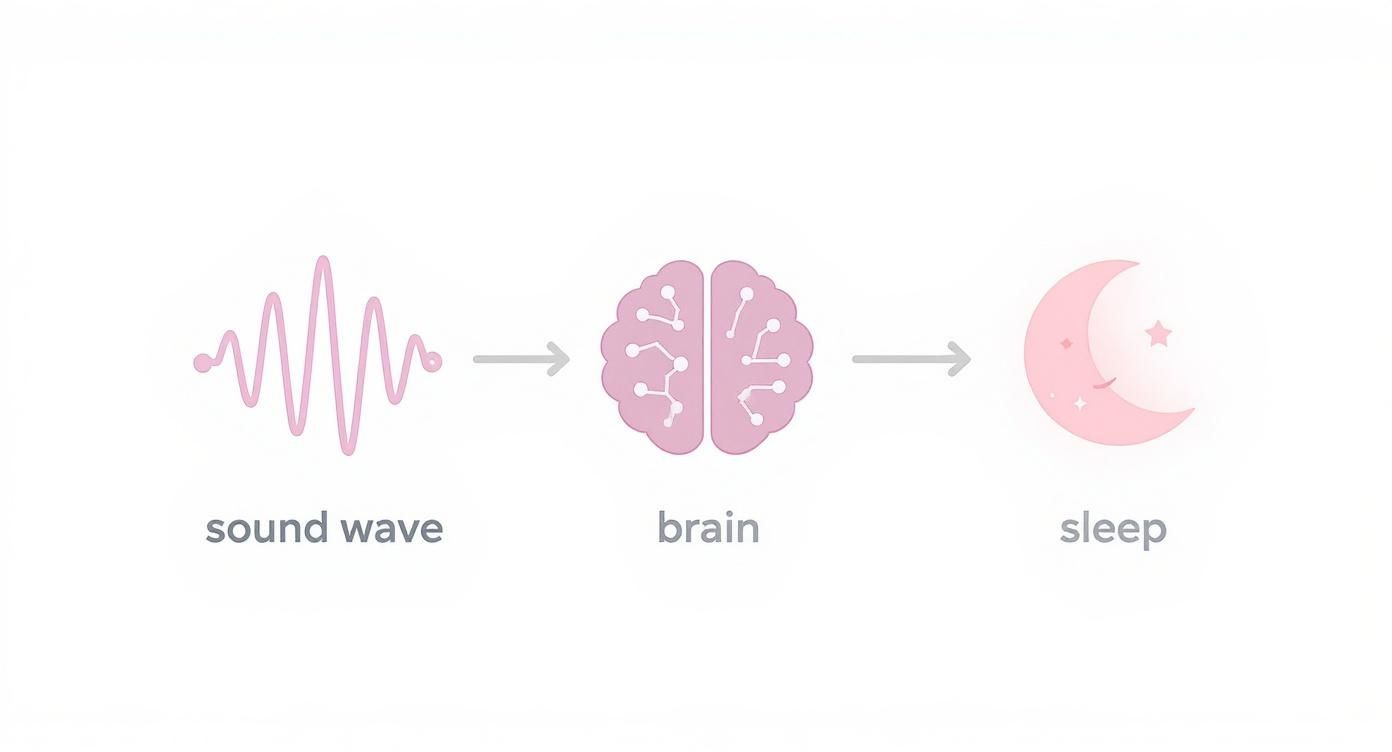
The key is that the sound is soothing enough to calm an active mind without becoming a distraction itself.
For a lot of people, this balanced profile makes pink noise the best choice. It’s brilliant at drowning out annoying background sounds—like traffic or a snoring partner—but it does so gently. It just fades into the background, creating a stable and peaceful sonic environment that lets your brain finally switch off.
Comparing Sound Colours for Sleep
To make it even clearer, let's look at them side-by-side. Each sound colour offers a different experience, and personal preference plays a big role in what you'll find most relaxing.
| Sound Colour | Frequency Profile | Sounds Like | Best For |
|---|---|---|---|
| Pink Noise | Balanced, with more power in lower frequencies | Steady rain, rustling leaves | People who find white noise too harsh or brown noise too deep. |
| White Noise | All frequencies at equal intensity | TV static, whirring fan | Maximum sound-masking for loud, disruptive environments. |
| Brown Noise | Emphasises low frequencies, reduces high frequencies | Roaring waterfall, thunder | Those who prefer a very deep, bass-heavy ambient sound. |
Ultimately, the goal is to find a sound that creates a calming, consistent backdrop for your sleep.
By laying down this predictable soundscape, pink noise stops sudden noises from startling you awake. This helps you spend more time in those deeper, more restorative stages of sleep, guiding you toward a truly peaceful night's rest.
The Science Behind Pink Noise for Sleep and Memory
The buzz around pink noise isn't just about helping you drift off a little quicker. The real magic happens deep within your sleep cycle, where this particular sound supports your brain’s most critical work. It’s all about enhancing the quality of your rest, not just the quantity.
At the heart of this is slow-wave sleep (SWS), what most of us simply call deep sleep. This is the powerhouse stage of your night. It’s when your body focuses on physical repair, regenerates cells, and shores up your immune system. If you miss out on quality SWS, you’ll know it—that groggy, drained feeling you get even after a full night in bed is a classic sign.
The fascinating part is how pink noise seems to synchronise with your brain's natural rhythms. Research suggests its frequency profile is quite similar to your brain's own slow-wave activity, gently encouraging your mind to enter—and stay in—this deeply restorative state.
Boosting Your Brain’s Nightly Filing System
But slow-wave sleep is just as crucial for your mind as it is for your body. Think of your brain during SWS as a meticulous librarian, working the night shift to sort and file every piece of information you encountered that day. This essential process is known as memory consolidation.
As you sleep, your brain sifts through temporary memories, decides what’s worth keeping, and strengthens the neural pathways for those important bits. It then transfers them into long-term storage. This is precisely how you lock in new skills, recall important facts, and make sense of your experiences.
Pink noise creates the perfect, undisturbed atmosphere for this mental "librarian" to do its job. By improving the length and quality of your slow-wave sleep, you're essentially giving your brain the uninterrupted time it needs to sort, file, and secure the day's memories.
Scientific studies have put this idea to the test. When researchers played pink noise timed to participants' brainwaves, they didn't just see an increase in SWS. They also recorded significant boosts in memory recall the next day. This shows that using pink noise for sleep goes way beyond just blocking out a noisy neighbour; it's about actively supporting your cognitive function.
Waking Up Sharper and More Focused
The knock-on effect of better sleep quality is something you'll feel the very next day. When you optimise your SWS, you’re allowing your brain to complete its vital memory work far more effectively.
You wake up feeling sharper and more focused. Your ability to learn and hold onto new information is noticeably better.
The steady, predictable sound of pink noise also means you're less likely to be startled awake by sudden sounds in the night. This stability is vital for letting your brain move through its sleep stages without interruption. By enhancing the most restorative part of your night, pink noise becomes a surprisingly powerful tool for sharpening your memory and looking after your cognitive health.
How to Use Pink Noise in Your Nightly Routine
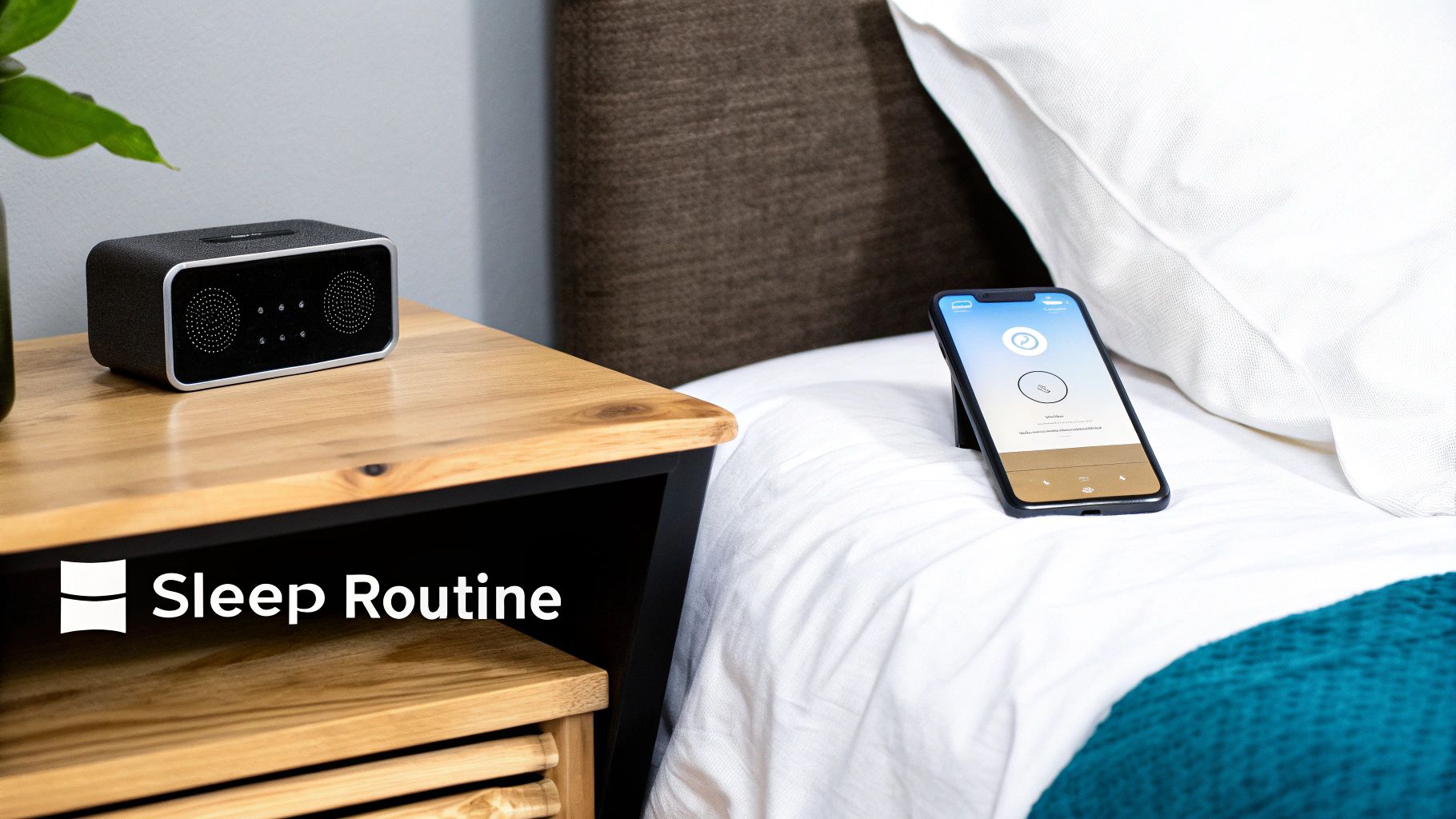
So, you're ready to see how a steady, gentle sound might transform your night's rest? Bringing pink noise into your wind-down routine is surprisingly simple, but getting a few key details right makes all the difference. It really boils down to finding that sweet spot between volume, timing, and your choice of device to create the perfect sleep sanctuary.
The whole point is to build a consistent and soothing soundscape that smooths over jarring noises from the outside world without becoming a distraction itself. While getting started is as easy as pressing play, a few small tweaks can turn a good night's sleep into a truly restorative one.
Finding the Right Volume
If there’s one thing to get right, it’s the volume. This is non-negotiable. Too loud, and it can actually interfere with your sleep or, worse, pose a risk to your hearing over the long term. Too quiet, and it won't be strong enough to mask the very noises you’re trying to block out.
So, what’s the magic number? Aim for a level around 45 decibels (dB). To give you a real-world comparison, that’s about the same as the quiet hum of a modern fridge or the ambient sound in a library. It should be just audible enough to fade into the background, smoothing over those sudden disturbances. A simple test: if you find yourself having to speak up to talk over it, it’s way too loud.
The goal isn’t to blast your ears and drown out everything. Think of it more like smoothing out the auditory landscape, so a barking dog or a neighbour's slamming car door doesn’t jolt you awake.
Choosing Your Device and Sound Source
You really don't need to invest in any high-tech gear to give this a try. Good quality pink noise is easy to find, and you've probably got a few options at your fingertips already.
- Dedicated Sound Machines: These little devices are built for one job: creating high-quality, consistent sound for sleep. They are a fantastic, screen-free option for the bedroom and often come with a variety of different sound colours to choose from.
- Smartphone Apps: There are hundreds of apps out there offering pink noise tracks, many with handy features like timers and equalisers. It’s a super convenient way to go, just be sure to switch your phone to "do not disturb" mode to avoid any late-night pings.
- Online Streaming: A quick search on your favourite video or music platform will pull up hours-long pink noise tracks, completely free. This is the perfect way to test the waters before you commit to buying an app or a dedicated machine.
Whatever you choose, take a moment to listen to a few different tracks. You might find some have a slightly different texture or tone, so it's worth finding one that your brain finds genuinely relaxing.
Creating the Ultimate Sensory-Friendly Environment
For anyone who is especially sensitive to their surroundings—particularly people who deal with migraines—combining pink noise with other sleep tools can be a game-changer. The idea is to build a sensory cocoon that blocks out every potential trigger, giving your mind the break it needs.
This is where a gentle soundscape and a tool like a Headache Cap work beautifully together. The cap provides soft, gentle compression while blocking out 100% of light, creating a dark, quiet, and peaceful space. When you layer in some low-volume pink noise, you're also masking those sudden sounds that might otherwise trigger discomfort or wake you up.
It’s about creating the ultimate sensory-friendly haven for uninterrupted rest. Many also find that a good eye mask helps, and you can explore some great options in our guide to the best sleep mask in Australia. This combined strategy is fantastic for calming an overstimulated nervous system, paving the way for the deep, restorative sleep you deserve.
Your Pink Noise Questions, Answered
Diving into any new sleep aid is bound to bring up a few questions. To help you feel completely confident about bringing pink noise into your bedroom, I've put together answers to some of the most common queries I hear. Let's clear things up so you can get started safely and effectively.
Can Pink Noise Harm Your Hearing?
This is a really important question, and the answer comes down to one thing: volume. Just like any sound, if it’s too loud for too long, it can be a problem. The trick to using pink noise sleep safely is to keep the volume low.
For sleeping, the sweet spot is around 45-50 decibels (dB). To put that in perspective, that’s about as loud as a quiet library or a whispered conversation. A good rule of thumb? If you have to raise your voice to talk over it, it’s way too loud. Start at the lowest possible volume that still masks those annoying background sounds.
How Long Does It Take for Pink Noise to Work?
Everyone's a bit different here. Some people feel a difference on the very first night, sinking into a deeper sleep almost immediately. For others, it might take a week or so for their brain to get used to the new soundscape.
The key is to be consistent. Your brain is learning to associate this gentle, shushing sound with relaxation and sleep. If it feels a little strange at first, try turning it down even more or listening to a few different pink noise tracks to find one that feels just right for you.
Remember, the goal is to create a calming backdrop, not something you actively listen to. Give it a few nights. Let your mind adjust and start linking that gentle hum with deep, restorative rest.
Should I Use Headphones or Speakers?
For a full night's sleep, speakers are the way to go, hands down. It's a matter of both comfort and safety.
While headphones can feel more immersive, wearing them all night can get uncomfortable, and might even irritate your ears. More importantly, they can block out crucial sounds you need to hear, like a smoke alarm or a family member calling for you.
A small speaker placed a few feet from your bed will do a much better job of filling the room with a consistent, gentle sound without the risks. A dedicated sound machine is another fantastic, screen-free option.
Is Pink Noise Safe for Babies and Children?
When it comes to the little ones, it pays to be extra cautious. The developing ears of babies and children are far more sensitive than our own.
Paediatricians generally recommend placing any sound machine at least 2 metres away from the cot. It's also critical to keep the volume very low (well under 50 dB) and to use a timer so it doesn't play all night long.
While many parents find it helps soothe their baby, it's always best to have a chat with your paediatrician before making it a regular part of their sleep routine. And for adults looking for other ways to improve their wellbeing, exploring different types of non-pharmaceutical pain management can be incredibly helpful.
Ready to create your own peaceful sleep sanctuary? The Headache Cap is designed to block out 100% of light and provide gentle, cooling compression, creating the perfect sensory-friendly environment. Pair it with low-volume pink noise for the ultimate in natural, restorative rest. Discover the Headache Cap today and take the first step towards a better night's sleep.


